Walden Effect Garden
The garden is at the heart of our homestead. We use permaculture techniques to grow nearly all of the vegetables we eat and are building up our fruit production. Our goal is to eventually grow nearly everything we eat in a method that is beyond organic...healing the old farm we live on.
Black soldier fly larvae for dinner?
Posted Tue Oct 11 11:19:50 2022
by
Mark
How to Grow Ginger
Posted Tue Oct 4 06:44:04 2022
by
Anna
Fall 2022 cover crop experiments
Posted Mon Sep 5 16:14:09 2022
by
Anna
Leaf delivery
Posted Mon Aug 29 13:59:48 2022
by
Mark
Our first video course is live!
Posted Mon Aug 8 11:21:33 2022
by
Anna
Raccoons and chipmunks in the garden
Posted Mon Jul 25 11:29:22 2022
by
Anna
Bathtub worm bin makes great compost
Posted Mon Jul 18 14:11:28 2022
by
Mark
Planter box alternative to handrail
Posted Wed Jun 22 14:06:57 2022
by
Mark
Protecting strawberries from chipmunks
Posted Tue Apr 12 15:07:04 2022
by
Anna
Homegrown Humus free (and garden update)
Posted Tue Mar 17 14:25:46 2020
by
Anna
Social distance with a garden
Posted Thu Mar 12 12:24:31 2020
by
Anna
Growing winter lettuce indoors
Posted Fri Jan 24 14:43:50 2020
by
Anna
Gardening during drought
Posted Tue Oct 22 14:05:07 2019
by
Anna
Second summer joys and trials
Posted Wed May 29 16:13:23 2019
by
Anna
56 years of garden innovations
Posted Fri May 10 12:08:10 2019
by
Anna
Gardening in young soil
Posted Wed Apr 24 17:47:19 2019
by
Anna
A new organic bug book
Posted Mon Mar 18 11:19:04 2019
by
Anna
Shitake fruit brings first snow
Posted Wed Nov 14 06:00:53 2018
by
mark
Winter is coming 2018
Posted Tue Nov 13 07:15:24 2018
by
Anna
Deer friendly flower bed
Posted Sun Nov 11 06:00:35 2018
by
Anna
Carrot cleaning assembly line
Posted Fri Nov 9 06:00:51 2018
by
Anna
Perennial Kale mutation?
Posted Tue Nov 6 06:00:55 2018
by
mark
Gambling on pepper ripening
Posted Mon Nov 5 06:00:52 2018
by
Anna
Increasing spinach yields
Posted Sun Nov 4 06:00:52 2018
by
mark
Time lapse garden winterization
Posted Sat Nov 3 06:00:52 2018
by
Anna
Prelude raspberry
Posted Thu Nov 1 06:00:38 2018
by
Anna
Cooking brussels sprout tops
Posted Tue Oct 30 06:00:50 2018
by
Anna
U-post pulling
Posted Sat Oct 27 06:00:53 2018
by
mark
Cardboard cache
Posted Fri Oct 26 06:01:03 2018
by
Anna
Last summer crop
Posted Tue Oct 23 06:00:49 2018
by
mark
First 2018 freeze...maybe
Posted Sun Oct 21 06:00:36 2018
by
Anna
Flower arrangement 101
Posted Fri Oct 19 06:00:56 2018
by
Anna
Woodchip download
Posted Thu Oct 18 06:00:52 2018
by
mark
Winterizing the garden
Posted Wed Oct 17 06:00:48 2018
by
Anna
Farm Auction
Posted Tue Oct 2 06:00:43 2018
by
mark
Purple Passion update
Posted Fri Sep 28 06:00:49 2018
by
mark
Last 2018 planting
Posted Thu Sep 27 06:00:46 2018
by
Anna
How to germinate ramp seeds
Posted Wed Sep 19 06:00:29 2018
by
Anna
Water as a limiting factor
Posted Sat Sep 15 06:00:43 2018
by
Anna
Manure vs. municipal compost
Posted Tue Sep 11 06:00:54 2018
by
Anna
Saving zinnia seeds
Posted Mon Sep 3 07:29:28 2018
by
Anna
Porcine visitors
Posted Sat Sep 1 06:00:41 2018
by
Anna
Ragweed harvesting season
Posted Tue Aug 28 06:00:44 2018
by
Anna
Mulch burrito
Posted Mon Aug 20 06:00:42 2018
by
Anna
Southern cabbageworm eggs
Posted Sat Aug 18 06:00:29 2018
by
Anna
How to use coffee grounds in the garden
Posted Thu Aug 16 06:32:39 2018
by
Anna
Foster peach harvest
Posted Mon Aug 13 06:00:42 2018
by
Anna
Take that, deer!
Posted Sat Aug 11 06:00:37 2018
by
Anna
Finding room for fall broccoli
Posted Thu Aug 9 06:00:50 2018
by
Anna
Hobbit garden door protection
Posted Wed Aug 8 06:00:29 2018
by
mark
Yellow soldier fly grub close up
Posted Mon Aug 6 06:00:44 2018
by
mark
Transplanting summer flowers
Posted Sun Aug 5 06:00:32 2018
by
Anna
Pot luck garden plate
Posted Sat Aug 4 06:00:28 2018
by
mark
Wood chip garden paths revisited
Posted Wed Aug 1 06:00:40 2018
by
Anna
Asparagus help line
Posted Tue Jul 31 06:00:44 2018
by
mark
Rapiclip foam wire field test
Posted Sun Jul 29 06:00:43 2018
by
mark
Tomato blight fake news
Posted Sat Jul 28 06:00:40 2018
by
Anna
Shade-loving edibles
Posted Thu Jul 26 06:00:53 2018
by
Anna
Yardsmith watering wand
Posted Mon Jul 23 06:00:37 2018
by
mark
Manure scavenger
Posted Fri Jul 20 06:00:38 2018
by
Anna
Cucumber cages
Posted Thu Jul 19 06:00:27 2018
by
mark
Whole-cloth strawberry transplant
Posted Wed Jul 18 06:00:37 2018
by
Anna
Homegrown menu expansion
Posted Mon Jul 16 06:00:31 2018
by
Anna
Strawberry therapy
Posted Fri Jul 13 06:00:39 2018
by
mark
Mostly male flowers on squash plants
Posted Tue Jul 10 06:00:42 2018
by
Anna
Giant flood wall
Posted Mon Jul 9 06:00:36 2018
by
mark
Biomass in, biomass out
Posted Sun Jul 8 06:00:28 2018
by
Anna
Early July harvest
Posted Fri Jul 6 06:00:36 2018
by
Anna
Finishing the top 2 feet of fence
Posted Thu Jul 5 06:00:37 2018
by
mark
Cucumber monster
Posted Mon Jul 2 06:00:44 2018
by
Anna
Fence staple alternative
Posted Sun Jul 1 06:00:39 2018
by
mark
When are eggplants ripe?
Posted Sat Jun 30 06:00:36 2018
by
Anna
Cupcakes for eggplants
Posted Thu Jun 28 06:56:34 2018
by
Anna
Remedial tomato training
Posted Wed Jun 27 06:00:49 2018
by
Anna
Matching fence to incline of hill
Posted Tue Jun 26 06:00:47 2018
by
mark
Garden gate hinge installation
Posted Mon Jun 25 06:00:37 2018
by
mark
Planting a late summer garden
Posted Sun Jun 24 06:00:39 2018
by
Anna
Garden gate brace post
Posted Sat Jun 23 06:00:39 2018
by
mark
Eggplant varieties
Posted Fri Jun 22 06:00:38 2018
by
Anna
Graduated fence to keep rabbits out
Posted Thu Jun 21 06:00:56 2018
by
mark
The deer won
Posted Wed Jun 20 06:00:41 2018
by
Anna
Ratchet tension wire full view
Posted Sun Jun 17 06:00:36 2018
by
mark
Wildlife crossing
Posted Sat Jun 16 06:00:25 2018
by
Anna
Brace post tension
Posted Fri Jun 15 06:00:35 2018
by
mark
T post pounding
Posted Wed Jun 13 06:00:33 2018
by
mark
Jimsonweed
Posted Tue Jun 12 06:00:49 2018
by
Anna
Fence brace post fastening
Posted Sat Jun 9 06:00:26 2018
by
mark
Uses for half-composted horse manure
Posted Fri Jun 8 06:00:29 2018
by
Anna
New manure source
Posted Wed Jun 6 06:00:31 2018
by
Anna
Holding up a brace post
Posted Tue Jun 5 06:00:28 2018
by
mark
Busman's holiday
Posted Mon Jun 4 06:00:28 2018
by
Anna
Concrete scissors
Posted Fri Jun 1 06:00:24 2018
by
mark
Ohio deer can read
Posted Thu May 31 06:00:30 2018
by
Anna
Sika foam fence post new update
Posted Wed May 30 06:00:30 2018
by
mark
Wet post holes
Posted Tue May 29 06:00:23 2018
by
Anna
Eggplant plans
Posted Mon May 28 06:00:23 2018
by
mark
Low nitrogen compost
Posted Sun May 27 06:00:31 2018
by
Anna
Entrance greens
Posted Thu May 24 06:00:24 2018
by
mark
Three days of growth
Posted Wed May 23 06:00:23 2018
by
Anna
Long-term garden thinking
Posted Mon May 21 06:36:00 2018
by
Anna
Recycled gardening infrastructure
Posted Thu May 17 06:00:31 2018
by
Anna
Ohio University learning garden
Posted Tue May 15 06:00:26 2018
by
Anna
Truper two wheeled wheel barrow
Posted Mon May 14 06:38:00 2018
by
mark
Choosing supplies for a garden fence
Posted Fri May 11 06:00:25 2018
by
Anna
Using fresh wood chips in garden paths
Posted Wed May 9 06:00:23 2018
by
Anna
Garden fence day one
Posted Tue May 8 06:00:23 2018
by
mark
Pushing the gardening envelope
Posted Mon May 7 06:00:21 2018
by
Anna
New garden, new lessons
Posted Sat May 5 06:00:23 2018
by
Anna
Wood chip delivery
Posted Fri May 4 06:00:30 2018
by
mark
Pros and cons of the community garden
Posted Thu May 3 06:00:20 2018
by
Anna
Homemade flower pots
Posted Tue May 1 06:00:35 2018
by
Anna
Overharvesting Egyptian onions
Posted Mon Apr 30 06:00:22 2018
by
mark
Turkey traffic
Posted Thu Apr 26 06:01:11 2018
by
mark
Planting Purple Passion asparagus
Posted Sat Apr 21 06:00:46 2018
by
Anna
Egyptian Onion transplant
Posted Fri Apr 20 06:00:55 2018
by
mark
Potting up the nightshades
Posted Thu Apr 19 06:00:19 2018
by
Anna
Redbud winter coverup
Posted Tue Apr 17 06:00:23 2018
by
Anna
Did I set out my spring crops too early?
Posted Fri Apr 13 06:00:58 2018
by
Anna
Covington Sweet Potato
Posted Thu Apr 12 06:00:49 2018
by
mark
Perennial straw
Posted Tue Apr 3 06:00:16 2018
by
Anna
New source for straw bales
Posted Sat Mar 31 06:00:21 2018
by
mark
Deer discussion
Posted Thu Mar 29 06:00:12 2018
by
mark
Replicating grape successes
Posted Wed Mar 28 06:00:10 2018
by
Anna
Double decker seed starting station
Posted Tue Mar 27 06:00:09 2018
by
mark
Potting soil comparison followup
Posted Mon Mar 26 06:00:12 2018
by
Anna
Is dumpster diving cardboard legal?
Posted Sat Mar 24 06:00:09 2018
by
Anna
Precious cardboard
Posted Mon Mar 19 06:00:09 2018
by
mark
New garden zone, new planting dates
Posted Sun Mar 18 06:00:09 2018
by
Anna
Fertilizing asphalt
Posted Sat Mar 17 06:00:12 2018
by
mark
Growing basil indoors in the winter
Posted Fri Mar 16 06:00:13 2018
by
Anna
Stunted tree deletion
Posted Thu Mar 15 06:00:47 2018
by
mark
Adopt a tree
Posted Wed Mar 14 06:00:13 2018
by
Anna
Preparing a blueberry bed
Posted Mon Mar 12 10:11:33 2018
by
Anna
Laying out the new garden
Posted Sat Mar 10 07:00:11 2018
by
Anna
Compost truck loading
Posted Wed Mar 7 07:00:10 2018
by
mark
Guess that daffodil
Posted Fri Mar 2 07:00:09 2018
by
Anna
LED seed starting station
Posted Thu Mar 1 07:00:12 2018
by
mark
In search of high quality potting soil
Posted Fri Feb 16 07:00:12 2018
by
Anna
New daffodil bulbs
Posted Tue Feb 13 07:00:09 2018
by
mark
Seed germination test in flats
Posted Sat Feb 10 07:00:10 2018
by
Anna
Store seeds like a pro
Posted Fri Feb 2 07:00:11 2018
by
Anna
Village agriculture in Senegal
Posted Mon Jan 29 07:00:12 2018
by
Anna
Appalachian quinoa
Posted Sat Jan 27 07:00:08 2018
by
Anna
Hacking hybrids
Posted Thu Jan 25 07:00:11 2018
by
Anna
The history of seed legislation
Posted Tue Jan 23 07:00:12 2018
by
Anna
Snow sale on Homegrown Humus
Posted Sun Jan 21 07:00:09 2018
by
Anna
Ecuadorian seed saving
Posted Fri Jan 19 07:00:08 2018
by
Anna
Mini greenhouse movement
Posted Mon Jan 8 07:00:16 2018
by
mark
Winter insulation in the garden
Posted Wed Jan 3 07:00:14 2018
by
Anna
Setting out the raspberries
Posted Fri Dec 22 07:00:11 2017
by
Anna
Lining the walkway
Posted Tue Dec 19 07:00:13 2017
by
Anna
Growing sunflower microgreens
Posted Fri Dec 15 07:00:13 2017
by
Anna
Troubleshooting compost tumblers
Posted Mon Dec 11 07:00:10 2017
by
Anna
Quick hoops up!
Posted Thu Dec 7 07:00:10 2017
by
Anna
Hardy thornless blackberries
Posted Fri Dec 1 07:00:12 2017
by
Anna
Small greenhouse kit
Posted Tue Nov 28 07:00:11 2017
by
mark
Very late first frost
Posted Sat Nov 11 07:00:12 2017
by
Anna
Plotting out the new garden
Posted Sun Nov 5 07:00:20 2017
by
Anna
Putting down roots
Posted Wed Nov 1 07:00:14 2017
by
Anna
Buying compost in Athens, Ohio
Posted Tue Oct 31 07:00:34 2017
by
mark
Gardening around honey locusts
Posted Tue Oct 24 07:00:22 2017
by
Anna
Autumn leaf
Posted Sun Oct 1 07:00:13 2017
by
mark
Shades of red
Posted Wed Sep 27 07:27:13 2017
by
mark
Hardy kiwi taste test
Posted Sun Sep 24 06:23:40 2017
by
Anna
Red sweet peppers
Posted Mon Sep 18 15:32:26 2017
by
mark
Volunteer harvest
Posted Sun Sep 17 07:07:22 2017
by
mark
Impatient planting
Posted Fri Sep 15 07:00:10 2017
by
Anna
Ripe volunteers
Posted Tue Sep 12 07:00:10 2017
by
mark
Seed saving supervisor
Posted Mon Sep 11 07:00:13 2017
by
Anna
Concave sheet web
Posted Sun Sep 10 07:34:55 2017
by
mark
New gardening style for the future?
Posted Mon Sep 4 07:28:44 2017
by
mark
Autumn carrots
Posted Sat Sep 2 11:59:13 2017
by
mark
Butternut harvest 2017
Posted Thu Aug 31 07:24:44 2017
by
mark
Harvesting the hardy kiwis
Posted Wed Aug 30 07:21:45 2017
by
Anna
Spineless okra flowers
Posted Fri Aug 25 15:13:57 2017
by
mark
How to use a small patch of sorghum?
Posted Thu Aug 24 15:05:07 2017
by
mark
Sweet Sunday
Posted Sun Aug 20 14:44:19 2017
by
mark
Edible kousa dogwood
Posted Sun Aug 20 07:06:39 2017
by
Anna
Solarization details
Posted Sat Aug 19 14:41:46 2017
by
mark
Cox's Orange Pippin taste test
Posted Sat Aug 19 07:11:46 2017
by
Anna
Crickets are lazy
Posted Thu Aug 17 15:06:34 2017
by
mark
Lawn neglect
Posted Wed Aug 16 15:07:20 2017
by
mark
Ever bearing raspberry close up
Posted Thu Aug 10 14:59:02 2017
by
mark
Taking enough potted plants?
Posted Tue Aug 8 16:12:15 2017
by
mark
Never-ending berry season
Posted Tue Aug 8 07:13:34 2017
by
Anna
Harvesting from an unweeded garden
Posted Mon Aug 7 07:37:00 2017
by
Anna
Planting under the roof overhang
Posted Sat Aug 5 07:07:36 2017
by
Anna
Mini mushroom log fruiting
Posted Fri Aug 4 15:05:23 2017
by
mark
Saving bean seeds
Posted Fri Aug 4 06:33:14 2017
by
Anna
More kiwi testing
Posted Wed Aug 2 15:36:50 2017
by
mark
Rinsing tomato seeds
Posted Tue Aug 1 05:55:26 2017
by
Anna
Surrendering to wildlife
Posted Sun Jul 30 14:26:58 2017
by
mark
Late July garden color
Posted Sat Jul 29 14:58:37 2017
by
mark
Midway through tomato seed-saving
Posted Sat Jul 29 07:14:35 2017
by
Anna
Illicit grape snacking
Posted Fri Jul 28 07:35:55 2017
by
Anna
Potted plants thriving in pure compost
Posted Thu Jul 27 06:50:41 2017
by
Anna
Seed-saving lunch
Posted Tue Jul 25 06:54:58 2017
by
Anna
Transitional garden
Posted Mon Jul 24 07:27:12 2017
by
Anna
Privacy plantings
Posted Sun Jul 23 06:19:13 2017
by
Anna
Thick solarization plastic failure
Posted Sat Jul 22 07:38:25 2017
by
Anna
Using bathwater to irrigate the garden
Posted Thu Jul 20 06:38:08 2017
by
Anna
Gardening on a ridge versus in a valley
Posted Wed Jul 19 06:57:18 2017
by
Anna
Critter-proof garden fence
Posted Mon Jul 17 07:00:07 2017
by
Anna
Apple metrics
Posted Sun Jul 16 16:00:11 2017
by
mark
Which plants to take with us
Posted Wed Jul 12 07:23:15 2017
by
Anna
Hardy kiwi progress
Posted Thu Jul 6 15:49:04 2017
by
mark
2017 tomato waiting
Posted Fri Jun 30 15:16:45 2017
by
mark
Tasseling
Posted Fri Jun 30 05:51:25 2017
by
Anna
Roomba for weeds
Posted Thu Jun 29 14:42:39 2017
by
mark
Why raspberry patches decline
Posted Mon Jun 26 07:01:46 2017
by
Anna
A rainy garden year
Posted Sun Jun 25 06:55:24 2017
by
Anna
Summer harvest begins
Posted Sat Jun 24 07:00:37 2017
by
Anna
Celeste fig 5 year update
Posted Fri Jun 23 13:55:22 2017
by
mark
Berry break time
Posted Thu Jun 22 14:04:55 2017
by
mark
When to harvest hardy kiwis
Posted Thu Jun 22 07:30:35 2017
by
Anna
Raspberry patch expiration date
Posted Wed Jun 21 07:01:25 2017
by
Anna
Egyptian onion bulb harvest time
Posted Sun Jun 18 16:19:13 2017
by
mark
Looking ahead to the fall garden
Posted Sat Jun 17 07:28:57 2017
by
Anna
Change of seasons on the menu
Posted Fri Jun 16 07:20:17 2017
by
Anna
Garlic harvest with goats
Posted Thu Jun 15 07:04:09 2017
by
Anna
Pet tomatoes
Posted Wed Jun 14 06:39:04 2017
by
Anna
Reclaiming a weedy garden
Posted Tue Jun 13 06:56:03 2017
by
Anna
Beating the birds to the berries
Posted Mon Jun 12 06:54:34 2017
by
Anna
Sweet corn measurements
Posted Sun Jun 11 16:00:42 2017
by
mark
Who's got the apple?
Posted Sun Jun 11 07:28:10 2017
by
Anna
Apple predictions
Posted Sat Jun 10 15:29:34 2017
by
mark
Using fresh manure in the garden
Posted Sat Jun 10 07:16:47 2017
by
Anna
Goat training
Posted Sat Jun 3 15:17:35 2017
by
mark
Rain barrel metal mounting stand
Posted Fri Jun 2 15:15:35 2017
by
mark
June garden check in
Posted Fri Jun 2 06:53:38 2017
by
Anna
The berry cascade
Posted Wed May 31 06:35:34 2017
by
Anna
Becoming a broccoli-growing pro
Posted Mon May 29 06:42:24 2017
by
Anna
Trellis support details
Posted Sun May 28 13:37:14 2017
by
mark
Grape flowers
Posted Sat May 27 06:57:33 2017
by
Anna
Broccoli: One of our top producers
Posted Fri May 26 07:09:52 2017
by
Anna
The joy of a smaller garden
Posted Wed May 24 06:56:15 2017
by
Anna
Honda GCV 190 mower update
Posted Mon May 22 15:17:57 2017
by
mark
Sugar Sprint peas
Posted Mon May 22 07:51:49 2017
by
Anna
Nine years to hardy kiwi fruit...I hope
Posted Sun May 21 07:04:41 2017
by
Anna
Late May bounty
Posted Sat May 20 06:59:31 2017
by
Anna
Watering strawberries
Posted Thu May 18 06:06:37 2017
by
Anna
Backup fertility
Posted Wed May 17 07:23:21 2017
by
Anna
A friendly garden visitor
Posted Sat May 13 14:59:09 2017
by
mark
Energy leak Friday
Posted Sat May 13 06:57:37 2017
by
Anna
Chasing reflections
Posted Fri May 12 16:09:42 2017
by
mark
Spring gamblers
Posted Thu May 11 07:14:55 2017
by
Anna
Slapdash lasagna garden
Posted Wed May 10 07:36:44 2017
by
Anna
Shocked turkey
Posted Tue May 9 06:51:53 2017
by
Anna
Soggy soil garlic
Posted Sun May 7 15:52:39 2017
by
mark
First strawberries...in South Carolina
Posted Sun May 7 07:24:31 2017
by
Anna
Strawberry beginnings
Posted Sat May 6 15:57:13 2017
by
mark
Moss garden
Posted Sat May 6 07:00:10 2017
by
Anna
Strawberry bloom close up
Posted Thu May 4 16:00:13 2017
by
mark
Biochar a dud in temperate regions
Posted Thu May 4 07:00:09 2017
by
Anna
Potential
Posted Wed May 3 07:23:49 2017
by
Anna
Garden shortcuts
Posted Tue May 2 06:57:58 2017
by
Anna
Homemade potting up mixture
Posted Fri Apr 21 07:05:39 2017
by
Anna
Honda mower day one
Posted Thu Apr 20 15:30:24 2017
by
mark
Transplanted blueberries
Posted Thu Apr 20 07:17:42 2017
by
Anna
Seedling rain
Posted Wed Apr 19 07:42:51 2017
by
Anna
Three-year-old espaliered apples
Posted Mon Apr 17 07:11:10 2017
by
Anna
Greenhouse frame
Posted Sun Apr 16 16:21:03 2017
by
mark
Farm time change
Posted Sat Apr 15 06:42:09 2017
by
Anna
Root-bound seedlings
Posted Tue Apr 11 07:28:06 2017
by
Anna
Lucky miss
Posted Mon Apr 10 07:33:22 2017
by
Anna
Quick hoop close up
Posted Sun Apr 9 15:05:52 2017
by
mark
Rhubarb freeze damage
Posted Sun Apr 9 08:03:20 2017
by
Anna
High 70s today, low 30s Friday
Posted Wed Apr 5 06:59:42 2017
by
Anna
Overwintering arugula
Posted Sun Mar 26 08:04:40 2017
by
Anna
Organic dividends
Posted Wed Mar 22 14:58:14 2017
by
mark
Filling out spotty pea rows
Posted Wed Mar 22 07:41:06 2017
by
Anna
Precocious broccoli
Posted Sun Mar 19 08:02:16 2017
by
Anna
Erratic global warming
Posted Fri Mar 17 07:05:21 2017
by
Anna
Sprout watering schedule
Posted Thu Mar 16 15:21:53 2017
by
mark
Time to start dreaming in color
Posted Thu Mar 16 07:49:11 2017
by
Anna
Plum budding followup
Posted Tue Mar 14 07:32:39 2017
by
Anna
Homemade hot frame
Posted Mon Mar 13 07:16:45 2017
by
Anna
Oregano update
Posted Sun Mar 12 14:43:05 2017
by
mark
Nanking cherry: Early bloomer
Posted Sat Mar 11 07:17:06 2017
by
Anna
Flame weeder followup
Posted Thu Mar 9 06:48:36 2017
by
Anna
The slowest of the slow sprouters
Posted Wed Mar 8 07:26:46 2017
by
Anna
Weed Dragon
Posted Mon Mar 6 15:33:20 2017
by
mark
Garlic mulch
Posted Sun Mar 5 15:41:36 2017
by
mark
Straw bale seed head solution
Posted Fri Mar 3 15:56:36 2017
by
mark
Spring running two to four weeks early
Posted Fri Mar 3 07:32:15 2017
by
Anna
First of March seed starting
Posted Thu Mar 2 06:58:03 2017
by
Anna
Extra toasty
Posted Wed Mar 1 16:27:04 2017
by
mark
Finding space for seed starting
Posted Tue Feb 28 15:52:27 2017
by
mark
Robins
Posted Sun Feb 26 13:49:18 2017
by
mark
Hazel: The ultimate early bloomer
Posted Wed Feb 15 07:50:04 2017
by
Anna
Moistening potting soil
Posted Sun Feb 12 07:34:45 2017
by
Anna
Winter tomatoes
Posted Wed Feb 8 15:33:19 2017
by
mark
Snow pressure
Posted Mon Jan 30 16:28:39 2017
by
mark
2017 garden improvement
Posted Sun Jan 29 16:12:00 2017
by
mark
Aggressive digging
Posted Wed Jan 25 16:13:43 2017
by
mark
January lettuce seedlings
Posted Tue Jan 24 06:57:55 2017
by
Anna
Shitake Sunday
Posted Sun Jan 22 14:43:41 2017
by
mark
Mom rides the Kubota
Posted Sun Jan 22 07:57:30 2017
by
Anna
Garden joy planning
Posted Wed Jan 18 07:40:25 2017
by
Anna
Aquaponic daffodil
Posted Tue Jan 17 15:28:49 2017
by
mark
Mushroom Mountain University
Posted Sun Jan 15 15:18:51 2017
by
mark
Goats like carrots in the Winter
Posted Sat Jan 14 15:49:36 2017
by
mark
Arthur wall
Posted Fri Jan 13 07:33:23 2017
by
Anna
Snow Capped Shitake Mushrooms
Posted Sun Jan 8 14:05:15 2017
by
mark
Midwinter lettuce planting
Posted Sat Dec 31 08:06:14 2016
by
Anna
Moving blueberry hill
Posted Thu Dec 29 07:45:51 2016
by
Anna
Eating for two
Posted Tue Dec 27 15:28:55 2016
by
mark
Harvest help
Posted Thu Dec 15 16:54:27 2016
by
mark
December garlic
Posted Sun Dec 4 15:40:07 2016
by
mark
Quick hoop wind trouble
Posted Fri Dec 2 15:40:52 2016
by
mark
Quick hoop trouble
Posted Fri Dec 2 15:32:15 2016
by
mark
Braided redbud
Posted Fri Dec 2 07:29:49 2016
by
Anna
Garage-side sunroom add-on
Posted Thu Dec 1 07:22:13 2016
by
Anna
Kubota straw bale load limit
Posted Sun Nov 27 15:46:01 2016
by
mark
Goat broccoli
Posted Sun Nov 27 07:21:39 2016
by
Anna
Down under pumpkin pie
Posted Sat Nov 26 14:55:53 2016
by
mark
Straw pyramid
Posted Sat Nov 26 07:26:59 2016
by
Anna
Crispy oats
Posted Mon Nov 21 16:01:56 2016
by
mark
Fires and drought
Posted Sun Nov 20 07:13:44 2016
by
Anna
Longest quick hoop
Posted Sat Nov 19 12:45:21 2016
by
mark
Battery powered stump removal
Posted Fri Nov 18 15:42:51 2016
by
mark
Bonus lettuce
Posted Fri Nov 18 07:41:23 2016
by
Anna
Late hose day
Posted Wed Nov 16 06:54:39 2016
by
Anna
Hay porcupine for fig protection
Posted Tue Nov 15 07:15:25 2016
by
Anna
Hazel nut leaf treat
Posted Mon Nov 14 14:50:57 2016
by
mark
Fig protection timing
Posted Sun Nov 13 12:36:26 2016
by
mark
Broccoli close up
Posted Fri Nov 11 13:54:57 2016
by
mark
Building with living trees update
Posted Thu Nov 10 16:29:03 2016
by
mark
Loaded Brussels sprouts
Posted Wed Nov 9 14:41:24 2016
by
mark
Refrigerator root cellar carrot storage
Posted Mon Nov 7 15:28:44 2016
by
mark
Harvesting the fall carrots, 2016
Posted Thu Nov 3 06:37:07 2016
by
Anna
Fig leaf curl
Posted Thu Oct 27 15:15:24 2016
by
mark
Quick hoop timing
Posted Thu Oct 27 06:32:44 2016
by
Anna
Seed mat cat
Posted Wed Oct 26 16:05:08 2016
by
mark
When to top brussels sprouts
Posted Sun Oct 23 07:25:23 2016
by
Anna
Last tomato
Posted Sat Oct 22 15:06:27 2016
by
mark
Yet another flush of broccoli
Posted Thu Oct 20 06:58:54 2016
by
Anna
Next year's straw
Posted Tue Oct 18 06:17:36 2016
by
Anna
Cover crops in a Back to Eden garden
Posted Fri Oct 7 07:41:24 2016
by
Anna
Awesome apples
Posted Thu Oct 6 14:26:12 2016
by
mark
Dried sweet potatoes
Posted Wed Oct 5 15:11:58 2016
by
mark
Mini mushroom log experiment works!
Posted Sun Oct 2 15:15:06 2016
by
mark
Kale bounce
Posted Thu Sep 29 15:47:22 2016
by
mark
Bountiful broccoli
Posted Thu Sep 29 07:17:25 2016
by
Anna
Second spring
Posted Wed Sep 28 07:21:40 2016
by
Anna
Figs: An ancient fruit
Posted Tue Sep 27 07:28:28 2016
by
Anna
Garlic for 2017
Posted Fri Sep 23 15:39:18 2016
by
mark
Ergonomic dump bed
Posted Thu Sep 22 15:27:40 2016
by
mark
Easy Swiss chard thinning
Posted Mon Sep 19 07:20:34 2016
by
Anna
Hose tape repair failure
Posted Sat Sep 17 14:14:57 2016
by
mark
Brussels sprout recovery
Posted Sat Sep 17 07:40:20 2016
by
Anna
Can cats help with garden pests?
Posted Fri Sep 16 15:00:15 2016
by
mark
Last week of oats
Posted Fri Sep 16 07:25:31 2016
by
Anna
Sweet potato harvest time
Posted Thu Sep 15 16:50:11 2016
by
mark
Hauling manure in the Kubota
Posted Thu Sep 15 07:40:11 2016
by
Anna
Butternut squash cleaning and drying
Posted Wed Sep 14 15:39:59 2016
by
mark
Straw bale Kubota
Posted Mon Sep 12 15:08:34 2016
by
mark
Garden color
Posted Sun Sep 11 15:20:47 2016
by
mark
Last planting
Posted Sun Sep 11 07:01:46 2016
by
Anna
Fall broccoli 2016
Posted Fri Sep 9 16:06:43 2016
by
mark
Cucumber exit
Posted Thu Sep 8 16:00:14 2016
by
mark
On the mend
Posted Thu Sep 8 06:56:46 2016
by
Anna
Harvesting nuts and grains
Posted Wed Sep 7 07:26:00 2016
by
Anna
Just one more flat...
Posted Tue Sep 6 07:22:11 2016
by
Anna
Labor Day 2016
Posted Mon Sep 5 14:39:29 2016
by
mark
Red Empire apple taste test
Posted Mon Sep 5 07:25:28 2016
by
Anna
Spineless Clemson Okra notes
Posted Sat Sep 3 15:43:14 2016
by
mark
Getting ready for Winter 2016
Posted Thu Sep 1 15:52:20 2016
by
mark
Field corn harvest details
Posted Mon Aug 29 16:07:42 2016
by
mark
2016 onion harvest by the numbers
Posted Sat Aug 27 07:07:59 2016
by
Anna
Grapes still green
Posted Fri Aug 26 06:40:28 2016
by
Anna
Heavy metal brush blade cutting
Posted Thu Aug 25 15:55:44 2016
by
mark
Colorful harvest
Posted Tue Aug 23 07:12:39 2016
by
Anna
Cooldown to fall
Posted Mon Aug 22 07:02:43 2016
by
Anna
Sweet-corn ecosystem
Posted Sat Aug 20 07:03:49 2016
by
Anna
Summer harvest basket
Posted Fri Aug 19 06:35:17 2016
by
Anna
Fig comparison
Posted Thu Aug 18 15:12:02 2016
by
mark
Turbo-charged soil
Posted Thu Aug 18 07:18:48 2016
by
Anna
Tomato blight conflict
Posted Tue Aug 16 14:15:19 2016
by
mark
Make-or-break August
Posted Tue Aug 16 06:34:27 2016
by
Anna
Two-dimensional tree training
Posted Mon Aug 15 06:36:42 2016
by
Anna
The cream of the crop
Posted Fri Aug 12 07:24:25 2016
by
Anna
Bud grafting followup
Posted Thu Aug 11 06:45:14 2016
by
Anna
Keeping sunflowers from the critters
Posted Wed Aug 10 06:59:50 2016
by
Anna
Determinate tomatoes
Posted Sat Aug 6 07:22:21 2016
by
Anna
Mowing backlog
Posted Thu Aug 4 15:14:24 2016
by
mark
Tomato blight update 2016
Posted Wed Aug 3 15:32:08 2016
by
mark
A morning's harvest
Posted Tue Aug 2 06:49:55 2016
by
Anna
Drying status
Posted Mon Aug 1 16:05:09 2016
by
mark
Faerie Hybrid Watermelon taste test
Posted Sun Jul 31 15:35:30 2016
by
mark
Lovage taste test
Posted Sun Jul 31 05:58:21 2016
by
Anna
Seedless grapes without spraying
Posted Sat Jul 30 07:25:34 2016
by
Anna
Sunflower seed eaters
Posted Fri Jul 29 16:25:33 2016
by
mark
Summer grafting
Posted Thu Jul 28 07:55:59 2016
by
Anna
Brussels sprouts under the row covers
Posted Tue Jul 26 16:19:00 2016
by
mark
Harvesting onions early
Posted Sun Jul 24 07:09:58 2016
by
Anna
Solarization failure
Posted Sat Jul 23 14:41:06 2016
by
mark
Chicago Hardy Fig bounces back
Posted Fri Jul 22 15:10:56 2016
by
mark
Soil Amendments for the Organic Garden
Posted Fri Jul 22 06:51:26 2016
by
Anna
Cucumber overflow
Posted Thu Jul 21 16:53:49 2016
by
mark
Deer devastation
Posted Mon Jul 18 14:10:03 2016
by
mark
Making like ants
Posted Sun Jul 17 06:46:11 2016
by
Anna
Plant Scaper update
Posted Sat Jul 16 15:28:26 2016
by
mark
Moving the last garden bed
Posted Sat Jul 16 06:59:57 2016
by
Anna
Planning Fall broccoli
Posted Fri Jul 15 14:40:28 2016
by
mark
Wholly holy, holey cardboard
Posted Thu Jul 14 06:49:49 2016
by
Anna
Sweet corn storm results
Posted Wed Jul 13 13:58:29 2016
by
mark
Masai bean blanching
Posted Tue Jul 12 15:09:24 2016
by
mark
The passage of time
Posted Tue Jul 12 06:40:38 2016
by
Anna
Potato onion disappointment
Posted Mon Jul 11 16:36:06 2016
by
mark
Testing the Weed Dragon
Posted Sun Jul 10 17:03:24 2016
by
mark
Garden this 'n that
Posted Sun Jul 10 06:41:30 2016
by
Anna
The Ultimate Guide to Soil is live!
Posted Sat Jul 9 07:21:55 2016
by
Anna
Rainy day gardening
Posted Fri Jul 8 07:18:17 2016
by
Anna
Thinning the field corn
Posted Thu Jul 7 15:44:54 2016
by
mark
Found fruit
Posted Thu Jul 7 06:51:33 2016
by
Anna
Cold frame Brussels sprout update
Posted Wed Jul 6 15:35:08 2016
by
mark
How to tell when an apple is ripe
Posted Wed Jul 6 06:48:16 2016
by
Anna
Disease-resistant seedless grapes
Posted Sun Jul 3 13:09:54 2016
by
mark
Summer lull
Posted Sun Jul 3 06:25:50 2016
by
Anna
Not June drops after all
Posted Sat Jul 2 07:34:55 2016
by
Anna
Fighting tomato blight with fire?
Posted Thu Jun 30 14:58:13 2016
by
garden
Closing the farm fertility loop
Posted Thu Jun 30 07:29:13 2016
by
Anna
Tie down time
Posted Tue Jun 28 15:38:55 2016
by
mark
Organic insect control in the garden
Posted Tue Jun 28 07:02:28 2016
by
Anna
Dangers of horse manure, revisited
Posted Mon Jun 27 06:50:24 2016
by
Anna
Plant Scaper garden trial
Posted Sat Jun 25 15:09:09 2016
by
mark
Freddy's dump truck
Posted Fri Jun 24 15:44:35 2016
by
mark
Gaffer tape instead of hose clamps
Posted Thu Jun 23 15:49:09 2016
by
mark
Fall Brussels Sprouts
Posted Wed Jun 22 14:17:50 2016
by
mark
ATV straw bale delivery
Posted Tue Jun 21 15:48:50 2016
by
mark
Full-circle garlic
Posted Tue Jun 21 06:47:49 2016
by
Anna
A better way to elevate sprinklers
Posted Mon Jun 20 15:25:26 2016
by
mark
June apple drop
Posted Sun Jun 19 07:08:52 2016
by
Anna
Fertilizing the strawberries
Posted Sat Jun 18 14:07:57 2016
by
mark
Summer flowers
Posted Sat Jun 18 07:28:28 2016
by
Anna
Planting brussels sprouts early
Posted Fri Jun 17 14:39:11 2016
by
mark
Reading between the lines
Posted Thu Jun 16 15:47:58 2016
by
mark
Mechanical hose timer update
Posted Tue Jun 14 16:03:30 2016
by
mark
Shaping a mulberry tree
Posted Tue Jun 14 06:55:35 2016
by
Anna
Scarlet runner bean deletion
Posted Mon Jun 13 14:55:04 2016
by
mark
Huge cabbage
Posted Sun Jun 12 14:40:23 2016
by
mark
June sunflower
Posted Sat Jun 11 11:33:51 2016
by
mark
A fruitful week
Posted Sat Jun 11 07:16:23 2016
by
Anna
Every dock has its day
Posted Fri Jun 10 15:18:57 2016
by
mark
Blue
Posted Thu Jun 9 15:28:53 2016
by
mark
Ultra early tomato in 2016
Posted Thu Jun 9 06:40:04 2016
by
Anna
Field corn for the goats
Posted Wed Jun 8 05:57:37 2016
by
Anna
Super sugarsnap peas
Posted Tue Jun 7 14:39:50 2016
by
mark
Grapevine on the shade trellis
Posted Tue Jun 7 06:25:26 2016
by
Anna
Froggy weather
Posted Mon Jun 6 15:34:43 2016
by
mark
Perception vs. reality
Posted Mon Jun 6 07:02:12 2016
by
Anna
12 year weed barrier update
Posted Sun Jun 5 14:54:54 2016
by
mark
Gardening by zones
Posted Sun Jun 5 07:14:05 2016
by
Anna
Berry close up
Posted Sat Jun 4 12:05:32 2016
by
mark
Why summer train and prune apple trees?
Posted Sat Jun 4 07:14:10 2016
by
Anna
Training tomatoes for success
Posted Thu Jun 2 15:01:36 2016
by
mark
American persimmon grafting
Posted Thu Jun 2 06:13:21 2016
by
Anna
High-density apple summer pruning
Posted Wed Jun 1 07:05:33 2016
by
Anna
Oat mow
Posted Tue May 31 15:48:45 2016
by
mark
Broccoli bouquet
Posted Tue May 31 06:48:32 2016
by
Anna
Garlic scapes for lunch
Posted Mon May 30 15:16:44 2016
by
mark
Eating with my eyes
Posted Mon May 30 06:57:56 2016
by
Anna
Our favorite strawberry varieties
Posted Sun May 29 07:42:15 2016
by
Anna
14 pints of broccoli
Posted Fri May 27 15:50:38 2016
by
mark
Pristine broccoli
Posted Fri May 27 06:40:29 2016
by
Anna
Herb garden
Posted Thu May 26 06:20:14 2016
by
Anna
Risky sweetness
Posted Wed May 25 15:02:06 2016
by
mark
Flex Seal
Posted Tue May 24 15:28:44 2016
by
mark
Feed and seed storage
Posted Sun May 22 16:09:46 2016
by
mark
Fruit tree autopsy
Posted Sun May 22 06:58:04 2016
by
Anna
Berry continuity
Posted Sat May 21 14:11:47 2016
by
mark
A smaller, better manure pile
Posted Sat May 21 06:54:43 2016
by
Anna
Swisher string mower update
Posted Fri May 20 15:37:49 2016
by
mark
Squeaky wheelbarrow
Posted Thu May 19 15:37:45 2016
by
mark
Drizzly transplanting
Posted Thu May 19 06:49:48 2016
by
Anna
Rain in the garden
Posted Wed May 18 07:22:33 2016
by
Anna
Blackberry winter, round 2
Posted Tue May 17 07:20:55 2016
by
Anna
Accelerating apple variety trials
Posted Mon May 16 06:42:32 2016
by
Anna
This is not a goat post
Posted Sun May 15 16:37:14 2016
by
mark
Sugar snap flowers
Posted Sat May 14 15:52:40 2016
by
mark
Why and how to thin apples
Posted Fri May 13 07:13:25 2016
by
Anna
Big Broccoli
Posted Thu May 12 15:07:46 2016
by
mark
Transitioning to summer cover crops
Posted Thu May 12 06:17:57 2016
by
Anna
Lunchbox Pepper flower
Posted Wed May 11 15:48:56 2016
by
mark
Two soil books to consider this week
Posted Mon May 9 06:58:38 2016
by
Anna
Strawberry patrol
Posted Sun May 8 16:31:43 2016
by
mark
Grape arbor wire attachment
Posted Fri May 6 14:01:21 2016
by
mark
Fleeting light
Posted Fri May 6 07:23:41 2016
by
Anna
2x4 grape arbor
Posted Thu May 5 14:55:03 2016
by
mark
Frost protecting a grapevine
Posted Thu May 5 06:52:51 2016
by
Anna
Blackberry winter 2016
Posted Wed May 4 07:04:28 2016
by
Anna
Weeding disaster
Posted Tue May 3 06:33:31 2016
by
Anna
Anticipating homegrown fruit
Posted Mon May 2 07:00:05 2016
by
Anna
Harvest sickle tool update
Posted Sat Apr 30 16:30:42 2016
by
mark
Time-saving no-till trick
Posted Sat Apr 30 07:10:45 2016
by
Anna
Counting my apples before they hatch
Posted Thu Apr 28 06:33:48 2016
by
Anna
Risky gardening
Posted Wed Apr 27 15:42:22 2016
by
mark
Late April feasts and tasks
Posted Wed Apr 27 07:07:25 2016
by
Anna
Medicinal Herb Gardening
Posted Fri Apr 22 06:23:30 2016
by
Anna
Dwarf versus semi-dwarf apple tree
Posted Thu Apr 21 06:04:12 2016
by
Anna
Mowing the weeds
Posted Wed Apr 20 06:44:10 2016
by
Anna
It's a jungle in here
Posted Sat Apr 16 06:29:22 2016
by
Anna
Unveiling and assessing freeze damage
Posted Tue Apr 12 06:47:49 2016
by
Anna
Brussels sprout in the cold frame
Posted Mon Apr 11 07:08:47 2016
by
Anna
Scoping out possible orchard locations
Posted Sun Apr 10 07:01:31 2016
by
Anna
Spring parmesan snow
Posted Sat Apr 9 14:40:28 2016
by
mark
Punkin Patch Straw
Posted Fri Apr 8 16:21:19 2016
by
mark
Soil science for the layman
Posted Fri Apr 8 07:39:05 2016
by
Anna
One-year-old willow cuttings
Posted Wed Apr 6 07:44:09 2016
by
Anna
April sweet potato starts
Posted Sun Apr 3 15:29:53 2016
by
mark
Dog-food bag frost protection
Posted Sun Apr 3 07:23:47 2016
by
Anna
New aerial photos
Posted Sat Apr 2 07:28:28 2016
by
Anna
End of March pruning
Posted Fri Apr 1 07:28:27 2016
by
Anna
Homegrown plum rootstock
Posted Thu Mar 31 07:14:03 2016
by
Anna
Mixing oats and clover
Posted Wed Mar 30 07:26:28 2016
by
Anna
Wet paper
Posted Mon Mar 28 16:03:23 2016
by
mark
Early spring solarization
Posted Sun Mar 27 07:24:00 2016
by
Anna
Setting out broccoli and cabbage early
Posted Fri Mar 25 07:33:32 2016
by
Anna
Compost cycles
Posted Thu Mar 24 07:37:59 2016
by
Anna
Dry Spring
Posted Wed Mar 23 16:03:27 2016
by
mark
Slowing down fruit-tree flowers
Posted Wed Mar 23 07:16:38 2016
by
Anna
Blooming cabbage
Posted Mon Mar 21 15:58:13 2016
by
mark
Indoor seedling setup lessons
Posted Mon Mar 21 07:05:55 2016
by
Anna
Cold frame one year update
Posted Sat Mar 19 16:05:20 2016
by
mark
Green plastic trellis material
Posted Fri Mar 18 07:31:01 2016
by
Anna
Second looks
Posted Thu Mar 17 06:57:25 2016
by
Anna
March 11 garden
Posted Mon Mar 14 07:43:30 2016
by
Anna
Mini mushroom log update 2
Posted Sun Mar 13 19:18:21 2016
by
mark
Tennessee archaeology and native peoples
Posted Sat Mar 12 06:48:45 2016
by
Anna
176 preorders can't be wrong, right?
Posted Tue Mar 8 07:08:58 2016
by
Anna
Stump dirt vs. potting soil revisited
Posted Mon Mar 7 07:12:15 2016
by
Anna
Stump dirt vs. potting soil
Posted Sat Mar 5 07:45:56 2016
by
Anna
Blue Wind broccoli
Posted Wed Mar 2 15:52:32 2016
by
mark
Lettuce and pea frost sensitivity
Posted Wed Mar 2 07:45:15 2016
by
Anna
Best ventilation fan for seed flats?
Posted Sun Feb 28 16:57:04 2016
by
mark
A little bit of pruning
Posted Sat Feb 27 07:21:34 2016
by
Anna
LED shop light details
Posted Wed Feb 24 15:20:31 2016
by
mark
Early spring garden baby photos
Posted Wed Feb 24 07:41:06 2016
by
Anna
Sun-crazed planting
Posted Sun Feb 21 08:02:52 2016
by
Anna
How much to grow to feed goats, year two
Posted Sat Feb 20 07:17:16 2016
by
Anna
LED grow light
Posted Fri Feb 19 15:57:50 2016
by
mark
Homegrown apple rootstock
Posted Fri Feb 19 07:41:19 2016
by
Anna
Keep peas off the heating mats
Posted Wed Feb 17 06:55:52 2016
by
Anna
Soil book update
Posted Tue Feb 16 15:15:25 2016
by
Anna
Filling up the flats
Posted Thu Feb 11 07:21:19 2016
by
Anna
Winter Daffodils
Posted Wed Feb 10 16:01:54 2016
by
mark
Three soil preheating trials
Posted Wed Feb 10 07:25:38 2016
by
Anna
Cold frame warming
Posted Sun Feb 7 15:35:46 2016
by
mark
New seed-starting supplies
Posted Sun Feb 7 07:54:50 2016
by
Anna
Animal assisted February gardening
Posted Sat Feb 6 07:32:24 2016
by
Anna
First cultivated flower
Posted Fri Feb 5 07:40:06 2016
by
Anna
Soil cube tool in action
Posted Wed Feb 3 15:20:13 2016
by
mark
Frisbee seed dispersal
Posted Mon Feb 1 15:26:09 2016
by
mark
Trailside turnips
Posted Sun Jan 31 15:54:04 2016
by
mark
Sun day
Posted Sun Jan 31 07:33:00 2016
by
Anna
Lessons learned from 2015 tree tapping
Posted Sat Jan 30 14:42:12 2016
by
mark
The cold frame comes through again
Posted Sat Jan 30 08:02:32 2016
by
Anna
A hankering for hybrids
Posted Thu Jan 28 07:24:51 2016
by
Anna
Compost therapy
Posted Wed Jan 27 16:06:53 2016
by
mark
Snowy quick hoop management
Posted Wed Jan 27 07:31:43 2016
by
Anna
Fluorescent vs L.E.D. grow lights
Posted Sun Jan 24 13:38:41 2016
by
mark
Broadforks for everyone
Posted Thu Jan 21 13:44:12 2016
by
Margot Boyer, Meadow Creature
Cleaning up my seed-starting act
Posted Thu Jan 21 07:26:31 2016
by
Anna
Unanswered questions
Posted Tue Jan 19 06:37:16 2016
by
Anna
Carrot harvest failure
Posted Tue Jan 12 15:31:14 2016
by
mark
Types of oats
Posted Tue Jan 12 07:26:00 2016
by
Anna
January leaf gathering
Posted Fri Jan 8 07:08:05 2016
by
Anna
Playing in the dirt
Posted Wed Jan 6 07:46:38 2016
by
Anna
Organic vole control
Posted Sat Jan 2 13:13:05 2016
by
mark
Economics of grafting fruit trees
Posted Fri Jan 1 07:38:34 2016
by
Anna
Fertilizing a non-bearing fruit tree
Posted Thu Dec 31 06:10:32 2015
by
Anna
Twelve months of fresh greens
Posted Wed Dec 30 14:38:08 2015
by
mark
Refrigerator root cellar Winter update
Posted Sun Dec 27 16:08:56 2015
by
mark
Christmas eve snapshots
Posted Fri Dec 25 07:52:07 2015
by
Anna
Christmas summer
Posted Thu Dec 24 07:52:45 2015
by
Anna
Compost-pile maintenance
Posted Mon Dec 21 07:57:44 2015
by
Anna
High yield brussels sprouts
Posted Wed Dec 16 15:19:24 2015
by
mark
Cold frame update
Posted Tue Dec 15 16:42:04 2015
by
mark
Homesteading videos
Posted Mon Dec 14 16:29:10 2015
by
mark
A better butternut
Posted Mon Dec 14 07:38:03 2015
by
Anna
Gentle leader goat training update
Posted Sat Dec 12 16:00:25 2015
by
mark
Piling up the goat manure
Posted Fri Dec 11 07:08:20 2015
by
Anna
Willow update
Posted Thu Dec 10 14:47:32 2015
by
mark
Planting the 2020 apples
Posted Thu Dec 10 08:05:07 2015
by
Anna
Compost mountain
Posted Wed Dec 9 08:08:53 2015
by
Anna
Orchardgrass
Posted Tue Dec 8 15:05:44 2015
by
mark
Broadforking and kill mulching
Posted Tue Dec 8 07:59:26 2015
by
Anna
Greens for the critters
Posted Mon Dec 7 07:13:13 2015
by
Anna
Baby brussels sprout
Posted Sat Dec 5 12:57:26 2015
by
mark
A warm November
Posted Tue Dec 1 06:18:14 2015
by
Anna
Pulley and gambrel
Posted Sat Nov 21 16:37:20 2015
by
mark
Out of sight, out of mind
Posted Fri Nov 20 06:59:19 2015
by
Anna
Fig dormancy
Posted Thu Nov 19 06:01:41 2015
by
Anna
Beautiful straggler
Posted Wed Nov 18 15:36:13 2015
by
mark
Personality Tests For Your Soil
Posted Wed Nov 18 07:32:24 2015
by
Anna
Grow your own salad mixture
Posted Tue Nov 17 06:33:33 2015
by
Anna
When should I cover fall crops?
Posted Sun Nov 15 07:47:46 2015
by
Anna
Building a pear terrace
Posted Fri Nov 13 07:40:00 2015
by
Anna
Humanure experiment
Posted Thu Nov 12 06:51:07 2015
by
Anna
Moveable garden greenhouse?
Posted Wed Nov 11 15:58:03 2015
by
mark
Espaliering for frost protection
Posted Wed Nov 11 07:33:22 2015
by
Anna
Late planting in the cold frame
Posted Tue Nov 10 07:04:06 2015
by
Anna
Brussels Sprouts update
Posted Mon Nov 9 15:41:11 2015
by
mark
Cat supervisor
Posted Fri Nov 6 06:36:42 2015
by
Anna
Drain and wrangle
Posted Wed Nov 4 15:27:18 2015
by
mark
Thumbs down for mangels
Posted Mon Nov 2 07:28:05 2015
by
Anna
When to start brussels sprouts
Posted Sun Nov 1 06:09:20 2015
by
Anna
A sunny day at last
Posted Fri Oct 30 07:35:22 2015
by
Anna
A conversation with myself
Posted Wed Oct 28 06:54:48 2015
by
Anna
A walk through the fall garden
Posted Tue Oct 27 06:34:24 2015
by
Anna
Butternut squash protection
Posted Mon Oct 26 15:58:20 2015
by
mark
Hybrid hazelnut harvest
Posted Mon Oct 26 07:35:43 2015
by
Anna
The Ultimate Guide to Soil
Posted Sat Oct 24 08:18:33 2015
by
Anna
Gardening with goats and herbs
Posted Wed Oct 21 07:07:44 2015
by
Anna
First frost 2015
Posted Sun Oct 18 08:12:34 2015
by
Anna
Worm casting experiment
Posted Sat Oct 17 07:30:45 2015
by
Anna
Preparing for the first frost
Posted Fri Oct 16 06:56:39 2015
by
Anna
Seeking winter sun
Posted Thu Oct 15 06:48:31 2015
by
Anna
Cedar post longevity
Posted Wed Oct 14 15:51:06 2015
by
mark
Covering up the winter compost pile
Posted Sat Oct 10 06:43:11 2015
by
Anna
Stashing away root crops for the winter
Posted Fri Oct 9 06:53:13 2015
by
Anna
Harvesting the rest of the carrots
Posted Thu Oct 8 07:23:06 2015
by
Anna
How much garlic should I plant?
Posted Wed Oct 7 07:28:00 2015
by
Anna
Jumping back into the fall garden
Posted Tue Oct 6 07:16:14 2015
by
Anna
Flying over fences
Posted Wed Sep 30 13:55:37 2015
by
mark
Remineralizing with animals
Posted Wed Sep 30 06:08:59 2015
by
Anna
Jasper Red Cherry Tomato
Posted Sun Sep 27 15:14:05 2015
by
mark
Tips for starting a food forest
Posted Sun Sep 27 07:25:32 2015
by
Anna
Soy bean dog treat
Posted Sat Sep 26 18:04:57 2015
by
mark
A new raised bed from sod to planting
Posted Fri Sep 25 06:52:47 2015
by
Anna
Perfect September days
Posted Thu Sep 24 06:08:12 2015
by
Anna
27 five gallon buckets
Posted Wed Sep 23 15:55:22 2015
by
mark
Kale yield
Posted Mon Sep 21 15:48:26 2015
by
mark
Understanding Roots
Posted Sun Sep 20 07:47:31 2015
by
Anna
Sorghum harvest
Posted Sat Sep 19 07:21:50 2015
by
Anna
Turning aisles into garden
Posted Fri Sep 18 07:32:37 2015
by
Anna
Front garden flaws
Posted Thu Sep 17 07:06:46 2015
by
Anna
Butternut squash storage shelves
Posted Mon Sep 14 15:23:24 2015
by
mark
Okra height
Posted Sun Sep 13 14:54:16 2015
by
mark
Fall figs
Posted Fri Sep 11 15:50:50 2015
by
mark
Stocking up on sweet corn
Posted Fri Sep 11 06:56:33 2015
by
Anna
Chicks and oats and sweet potatoes
Posted Thu Sep 10 06:43:10 2015
by
Anna
Sweet peppery and potatoey harvest
Posted Wed Sep 9 07:08:10 2015
by
Anna
Cat's eye view of the garden
Posted Thu Sep 3 06:08:21 2015
by
Anna
Another Monday, another harvest push
Posted Tue Sep 1 06:28:50 2015
by
Anna
The Market Gardener
Posted Tue Aug 25 06:46:55 2015
by
Anna
Universal plug polarity damage
Posted Mon Aug 24 15:38:37 2015
by
mark
Garlic processing 2015
Posted Sun Aug 23 15:47:15 2015
by
mark
Peeing on the compost pile
Posted Sun Aug 23 06:33:30 2015
by
Anna
Teva sandal surgery update
Posted Sat Aug 22 14:48:47 2015
by
mark
Our first significant hazelnut harvest
Posted Sat Aug 22 07:39:13 2015
by
Anna
Fall rains
Posted Fri Aug 21 07:32:04 2015
by
Anna
A good year for Masai beans
Posted Thu Aug 20 15:23:25 2015
by
mark
When to plant a garden in zones
Posted Thu Aug 20 07:15:48 2015
by
Anna
Mangel taste test
Posted Tue Aug 18 16:00:17 2015
by
mark
Harvest, harvest, harvest
Posted Tue Aug 18 06:54:13 2015
by
Anna
When to harvest butternut squash?
Posted Mon Aug 17 14:22:48 2015
by
mark
Planting dates for the fall garden
Posted Mon Aug 17 06:39:38 2015
by
Anna
De-escalating a deer attack
Posted Sat Aug 15 15:29:26 2015
by
mark
Yellow-necked caterpillars
Posted Sat Aug 15 07:42:40 2015
by
Anna
Bokashi conclusions
Posted Fri Aug 14 06:20:12 2015
by
Anna
Straw bale storage
Posted Thu Aug 13 15:44:21 2015
by
mark
Mangels (aka fodder beets)
Posted Wed Aug 12 07:06:33 2015
by
Anna
Immersion hand blender
Posted Tue Aug 11 15:23:40 2015
by
mark
Sweet corn and tomatoes
Posted Tue Aug 11 07:05:26 2015
by
Anna
ATV load limit
Posted Mon Aug 10 15:21:39 2015
by
mark
Ornamental crops
Posted Sun Aug 9 16:23:24 2015
by
mark
Planning for fall
Posted Sat Aug 8 06:39:52 2015
by
Anna
Straw bale status
Posted Fri Aug 7 15:12:55 2015
by
mark
VHCC aquaponics
Posted Fri Aug 7 06:31:23 2015
by
Anna
Storing hay bales for Winter
Posted Tue Aug 4 16:02:33 2015
by
mark
More Everbearing Raspberries
Posted Mon Aug 3 16:30:44 2015
by
mark
Stocking up on winter-research topics
Posted Mon Aug 3 07:20:26 2015
by
Anna
Sunday Sunflower
Posted Sun Aug 2 15:10:27 2015
by
mark
August about-face
Posted Sun Aug 2 06:56:07 2015
by
Anna
Onion harvest
Posted Thu Jul 30 15:39:17 2015
by
mark
Sweet corn puzzle
Posted Wed Jul 29 05:59:10 2015
by
Anna
ATV oil observations
Posted Mon Jul 27 15:41:39 2015
by
mark
Mom and the beanstalk
Posted Sun Jul 26 07:57:57 2015
by
Anna
Sweet Corn close up
Posted Sat Jul 25 14:44:05 2015
by
mark
Friday on the farm
Posted Sat Jul 25 07:03:23 2015
by
Anna
Rabbit manure update
Posted Fri Jul 24 15:48:03 2015
by
mark
First rainy season dry pause
Posted Thu Jul 23 15:40:13 2015
by
mark
Tree day
Posted Thu Jul 23 07:03:10 2015
by
Anna
Clemson Spineless Okra
Posted Wed Jul 22 15:46:55 2015
by
mark
Basket full of carrots
Posted Tue Jul 21 15:34:47 2015
by
mark
Tomato highs and lows in mid July
Posted Thu Jul 16 07:06:59 2015
by
Anna
Bountiful butternuts
Posted Wed Jul 15 06:41:48 2015
by
Anna
4 things I don't talk about
Posted Mon Jul 13 05:38:47 2015
by
Anna
Tomato height
Posted Sun Jul 12 15:09:41 2015
by
mark
Water snake!
Posted Fri Jul 10 13:55:54 2015
by
mark
The most important plant nutrient: sun
Posted Fri Jul 10 07:06:00 2015
by
Anna
Effects of broadforking on carrots
Posted Thu Jul 9 07:08:58 2015
by
Anna
Masai bean harvesting
Posted Wed Jul 8 16:09:55 2015
by
mark
Two hours in the garden
Posted Wed Jul 8 07:02:11 2015
by
Anna
Stihl FS-90R weed trimmer update
Posted Tue Jul 7 16:10:33 2015
by
mark
Why carrots split and twist
Posted Tue Jul 7 06:58:26 2015
by
Anna
Kitchen shade trellis
Posted Mon Jul 6 15:46:32 2015
by
mark
Stunted fig support
Posted Sun Jul 5 15:13:05 2015
by
mark
Fourth of July garden
Posted Sat Jul 4 07:42:55 2015
by
Anna
A blight by any other name...
Posted Fri Jul 3 07:38:55 2015
by
Anna
Successful persimmon grafting
Posted Wed Jul 1 07:35:40 2015
by
Anna
Harvest sickle field test
Posted Tue Jun 30 15:28:35 2015
by
mark
Scarlet runner bean update
Posted Sun Jun 28 14:09:27 2015
by
mark
Compost pile, solarization, and beans
Posted Sun Jun 28 07:56:07 2015
by
Anna
Blueberry lessons
Posted Sat Jun 27 16:04:32 2015
by
mark
Tomato color
Posted Fri Jun 26 15:18:48 2015
by
mark
Persistent pear hornets
Posted Thu Jun 25 15:33:05 2015
by
mark
More good solarization results
Posted Thu Jun 25 06:48:51 2015
by
Anna
Summer solstice 2015
Posted Sun Jun 21 07:24:38 2015
by
Anna
Field Beet
Posted Sat Jun 20 15:34:19 2015
by
mark
Cabbage and lactofermenting
Posted Sat Jun 20 07:08:00 2015
by
Anna
Organic hornet control
Posted Fri Jun 19 15:47:29 2015
by
mark
Fall webworm
Posted Fri Jun 19 07:16:30 2015
by
Anna
More garlic
Posted Wed Jun 17 15:03:33 2015
by
mark
Disease-resistant tomato update
Posted Wed Jun 17 07:37:06 2015
by
Anna
2015 garlic harvest
Posted Tue Jun 16 15:47:43 2015
by
mark
Paper mulch around red raspberries
Posted Mon Jun 15 07:12:45 2015
by
Anna
Rabbit manure
Posted Fri Jun 12 15:08:09 2015
by
mark
Solarization to kill perennial weeds
Posted Thu Jun 11 15:51:31 2015
by
mark
Rainy day watering
Posted Wed Jun 10 14:54:57 2015
by
mark
Planting early strawberry varieties
Posted Wed Jun 10 06:57:35 2015
by
Anna
Summer visitor
Posted Sun Jun 7 15:30:05 2015
by
mark
Two methods for mulching perennials
Posted Fri Jun 5 06:15:19 2015
by
Anna
Worm test in solarized soil
Posted Wed Jun 3 07:16:34 2015
by
Anna
12 year weed fabric barrier?
Posted Tue Jun 2 15:31:20 2015
by
mark
Catching rain water and rooting willows
Posted Tue Jun 2 07:38:53 2015
by
Anna
Homesteading hula hoop?
Posted Mon Jun 1 15:56:14 2015
by
mark
Late Spring straw delivery
Posted Thu May 28 15:15:17 2015
by
mark
Working with a dry May
Posted Thu May 28 06:40:00 2015
by
Anna
PEX tubing drip irrigation system
Posted Wed May 27 16:08:34 2015
by
mark
Weekly tomato upkeep
Posted Wed May 27 07:05:36 2015
by
Anna
Catch-up watering
Posted Tue May 26 15:03:34 2015
by
mark
Grafting persimmons
Posted Tue May 26 07:17:34 2015
by
Anna
Blooming foxgloves
Posted Mon May 25 07:04:19 2015
by
Anna
Bad onions
Posted Fri May 22 15:48:07 2015
by
mark
Moody weather
Posted Fri May 22 07:49:59 2015
by
Anna
Late Spring production
Posted Sun May 17 14:39:47 2015
by
mark
The Cutter in the Rye
Posted Thu May 14 15:51:14 2015
by
mark
Planting, training, and flowers
Posted Thu May 14 07:42:39 2015
by
Anna
Do it yourself shoulder dolly
Posted Tue May 12 15:42:50 2015
by
mark
Hardy Kiwi update
Posted Mon May 11 15:53:15 2015
by
mark
Straw bale inflation
Posted Sun May 10 13:53:22 2015
by
mark
Bud grafting a plum
Posted Sun May 10 07:24:11 2015
by
Anna
Fancy paper mulch update
Posted Sat May 9 14:32:32 2015
by
mark
Dismantling a failed graft
Posted Sat May 9 07:01:54 2015
by
Anna
What I'm willing to do for straw
Posted Fri May 8 07:10:07 2015
by
Anna
Our most dependable fruit plants
Posted Thu May 7 07:01:36 2015
by
Anna
Naturally Bug-Free Mother's Day
Posted Wed May 6 15:58:25 2015
by
mark
Frost-free?
Posted Wed May 6 06:57:08 2015
by
Anna
Fig survival
Posted Tue May 5 14:09:17 2015
by
mark
Sprinkler lubrication
Posted Mon May 4 15:20:38 2015
by
mark
May Day planting
Posted Sat May 2 07:20:45 2015
by
Anna
Comfrey for goats
Posted Fri May 1 07:03:18 2015
by
Anna
Tadpole manure
Posted Tue Apr 28 07:09:56 2015
by
Anna
Dogwood Winter 2015
Posted Mon Apr 27 07:38:07 2015
by
Anna
Zestar apple failure
Posted Sun Apr 26 15:47:08 2015
by
mark
Garden solarization
Posted Fri Apr 24 06:59:21 2015
by
Anna
Streamlining fruit production
Posted Thu Apr 23 16:08:24 2015
by
mark
Trying out paper mulch
Posted Wed Apr 22 07:30:13 2015
by
Anna
Deadbeat fruit trees
Posted Tue Apr 21 15:56:51 2015
by
mark
Most hardy fruit plants
Posted Mon Apr 20 07:09:21 2015
by
Anna
The price of saw dust
Posted Sun Apr 19 15:06:17 2015
by
mark
Sweet potato clone
Posted Sat Apr 18 13:52:21 2015
by
mark
Bokashi experiment, phase 3
Posted Fri Apr 17 07:01:36 2015
by
Anna
Weeding in the rain
Posted Wed Apr 15 07:06:30 2015
by
Anna
A day of garden firsts
Posted Tue Apr 14 07:16:45 2015
by
Anna
Farm monorail solution?
Posted Mon Apr 13 16:01:56 2015
by
mark
Grafting plums and pears
Posted Fri Apr 10 07:17:15 2015
by
Anna
When to transplant spring seedlings
Posted Thu Apr 9 07:31:50 2015
by
Anna
Planting willow cuttings
Posted Wed Apr 8 07:27:31 2015
by
Anna
High density apple pruning
Posted Fri Apr 3 15:02:02 2015
by
mark
2020 apples
Posted Thu Apr 2 16:07:54 2015
by
mark
Easy soil microorganism test
Posted Thu Apr 2 07:19:27 2015
by
Anna
Pruning an apple tree for size
Posted Tue Mar 31 07:25:40 2015
by
Anna
Dandelion Winter
Posted Mon Mar 30 07:37:59 2015
by
Anna
More new cover crops to try
Posted Sun Mar 29 07:42:18 2015
by
Anna
Apple grafting tips
Posted Fri Mar 27 07:18:38 2015
by
Anna
Sunny broadforking
Posted Thu Mar 26 07:41:40 2015
by
Anna
Running late in the spring garden
Posted Sat Mar 21 07:28:06 2015
by
Anna
Lactobacillus bokashi
Posted Fri Mar 20 07:48:33 2015
by
Anna
Meadow Creature broadfork
Posted Thu Mar 19 08:15:44 2015
by
Anna
Cold frame protection
Posted Wed Mar 18 16:09:28 2015
by
mark
Cold frame night temperature
Posted Tue Mar 17 15:57:53 2015
by
mark
How to make a cold frame
Posted Tue Mar 17 07:51:19 2015
by
Anna
Building with living trees
Posted Mon Mar 16 07:52:50 2015
by
Anna
Late crocus
Posted Sun Mar 15 15:33:26 2015
by
mark
Seedlings running
Posted Sat Mar 14 08:11:03 2015
by
Anna
Potting up the seedlings
Posted Sun Mar 8 15:34:54 2015
by
Anna
My newest gardening paperback is live!
Posted Wed Mar 4 07:04:57 2015
by
Anna
Pummeled plum trees
Posted Mon Mar 2 15:10:25 2015
by
mark
Quick hoop snow load damage
Posted Sun Mar 1 16:08:06 2015
by
mark
Experimenting with bokashi
Posted Sat Feb 28 07:50:14 2015
by
Anna
Dealing with soil compaction
Posted Fri Feb 27 07:46:00 2015
by
Anna
Second round of seed starting
Posted Thu Feb 26 07:43:42 2015
by
Anna
Negative 22
Posted Sat Feb 21 07:47:14 2015
by
Anna
Green and sweet snow day
Posted Wed Feb 18 07:40:02 2015
by
Anna
Starting herbs from seed
Posted Tue Feb 17 07:08:26 2015
by
Anna
Full sun to white out in 24 hours
Posted Fri Feb 13 06:43:22 2015
by
Anna
$10 Root Cellar on sale
Posted Tue Feb 3 07:00:09 2015
by
Anna
When is the best time to prune?
Posted Mon Feb 2 07:52:56 2015
by
Anna
Deep bedding and fodder crops for goats
Posted Sun Feb 1 07:50:15 2015
by
Anna
Super sweet sugar maples
Posted Fri Jan 30 07:34:55 2015
by
Anna
2015 hay shortage
Posted Wed Jan 28 16:22:20 2015
by
mark
What to do with weedy manure
Posted Mon Jan 26 07:40:46 2015
by
Anna
High-density sugar maples for syrup
Posted Sun Jan 25 08:08:14 2015
by
Anna
Sprouting old garden seeds for animals
Posted Wed Jan 21 07:57:50 2015
by
Anna
Old paper becomes mulch
Posted Mon Jan 19 07:47:07 2015
by
Anna
Very tall raised beds
Posted Sun Jan 18 08:19:29 2015
by
Anna
Deep bedding for ducks
Posted Sat Jan 17 08:33:03 2015
by
Anna
Pear rootstock compatability
Posted Wed Jan 14 08:01:08 2015
by
Anna
Dolomitic limestone
Posted Sat Jan 10 07:59:40 2015
by
Anna
Deep bedding in the vegetable garden
Posted Wed Dec 31 07:48:45 2014
by
Anna
Big plans for 2015
Posted Tue Dec 30 08:07:24 2014
by
Anna
The most nutritional vegetables
Posted Wed Dec 24 08:25:29 2014
by
Anna
Do it yourself charcoal sifter
Posted Sun Dec 21 13:04:14 2014
by
mark
Planning year two's shade trellis
Posted Sun Dec 21 07:57:19 2014
by
Anna
Moving and removing the apples
Posted Wed Dec 17 08:24:53 2014
by
Anna
Anna's island
Posted Wed Dec 10 16:10:39 2014
by
mark
Improving our mulching system
Posted Fri Dec 5 05:57:34 2014
by
Anna
Time to eat out of the quick hoops
Posted Mon Dec 1 07:54:48 2014
by
Anna
High-density pear trees
Posted Wed Nov 26 08:05:38 2014
by
Anna
Roaring winds
Posted Tue Nov 25 07:40:18 2014
by
Anna
Three new high-density apple experiments
Posted Sun Nov 23 07:33:00 2014
by
Anna
Goats and sticks
Posted Sat Nov 22 15:15:08 2014
by
mark
Apple transplants
Posted Fri Nov 21 14:54:48 2014
by
mark
Cold November
Posted Fri Nov 21 07:49:19 2014
by
Anna
Learning from garden failures
Posted Wed Nov 19 08:10:33 2014
by
Anna
Banking kale with a quick hoop
Posted Sun Nov 16 15:48:04 2014
by
mark
Blueberry leaves changing color
Posted Fri Nov 14 15:53:33 2014
by
mark
What should I write next?
Posted Wed Nov 12 07:16:09 2014
by
Anna
Oats and goats
Posted Sun Nov 9 14:30:42 2014
by
mark
Kale close up
Posted Sat Nov 8 15:41:59 2014
by
mark
Uses for seaweed on the homestead
Posted Sat Nov 8 07:49:09 2014
by
Anna
Protecting a fig from winter cold
Posted Wed Nov 5 07:07:59 2014
by
Anna
Alternative root cellar year 6
Posted Mon Nov 3 16:09:36 2014
by
mark
Snaking an apple tree
Posted Mon Nov 3 06:51:16 2014
by
Anna
Faucet kink protection
Posted Sun Nov 2 14:38:41 2014
by
mark
A Halloween harvest
Posted Sat Nov 1 07:50:54 2014
by
Anna
Goats like broccoli leaves
Posted Fri Oct 31 16:16:15 2014
by
mark
Feeding sorghum to goats
Posted Thu Oct 30 15:59:59 2014
by
mark
Indian Summer 2014
Posted Thu Oct 30 07:49:21 2014
by
Anna
Stunted brussel sprouts
Posted Sun Oct 26 12:55:21 2014
by
mark
Homestead winterization list
Posted Sat Oct 25 07:54:37 2014
by
Anna
Hidden shitake treasure
Posted Mon Oct 20 16:18:59 2014
by
mark
Not quite tasting the first Celeste fig
Posted Mon Oct 20 07:52:58 2014
by
Anna
Fig height
Posted Sat Oct 18 16:04:44 2014
by
mark
Big headed
Posted Fri Oct 17 15:44:50 2014
by
mark
Harvesting carrots in the rain
Posted Fri Oct 17 07:24:41 2014
by
Anna
Six inches in seven days
Posted Wed Oct 15 07:30:32 2014
by
Anna
Winter is coming
Posted Fri Oct 10 15:06:27 2014
by
mark
Tasting a Brown Turkey fig
Posted Sat Oct 4 07:00:08 2014
by
Anna
Best pruning shears?
Posted Thu Oct 2 17:00:06 2014
by
mark
Cutting oat cover crops for mulch
Posted Wed Oct 1 07:00:11 2014
by
Anna
Garlic day 2014
Posted Sun Sep 28 07:00:13 2014
by
Anna
Pears as low-work fruit trees
Posted Sat Sep 27 06:55:29 2014
by
Anna
Sky pond- One year later
Posted Wed Sep 24 15:47:46 2014
by
mark
First fig and next wave of raspberries
Posted Wed Sep 24 07:09:05 2014
by
Anna
Sorghum
Posted Tue Sep 23 15:43:29 2014
by
mark
Two years of high-density apple growth
Posted Tue Sep 23 06:10:19 2014
by
Anna
Trimmer mower string configuration
Posted Mon Sep 22 16:25:10 2014
by
mark
Broccoli 2.0
Posted Sun Sep 21 15:18:32 2014
by
mark
Drying sweet corn
Posted Fri Sep 19 07:07:55 2014
by
Anna
Gravy season
Posted Wed Sep 17 07:12:22 2014
by
Anna
Steep hill trimmer mowing
Posted Tue Sep 16 15:57:17 2014
by
mark
Swisher trimmer mower day 1
Posted Mon Sep 15 15:47:33 2014
by
mark
Are maypops tasty?
Posted Mon Sep 15 07:33:52 2014
by
Anna
Small sunflower harvest
Posted Fri Sep 12 14:59:33 2014
by
mark
Lunchbox peppers
Posted Fri Sep 12 07:14:48 2014
by
Anna
A busy time for cover crops
Posted Thu Sep 11 07:24:50 2014
by
Anna
Vegetables that thrive in poor soil
Posted Tue Sep 9 07:41:00 2014
by
Anna
Sunshine storage
Posted Sun Sep 7 16:03:32 2014
by
mark
Sun dried Excalibur tomatoes
Posted Sat Sep 6 16:19:34 2014
by
mark
Late fig
Posted Fri Sep 5 16:13:30 2014
by
mark
Butternut squash 2014
Posted Wed Sep 3 15:47:25 2014
by
mark
Harvesting hazelnuts
Posted Wed Sep 3 07:17:48 2014
by
Anna
Two bad weeds (and what they tell me)
Posted Tue Sep 2 07:15:54 2014
by
Anna
Onion storage
Posted Mon Sep 1 15:43:02 2014
by
mark
Training newly grafted apple trees
Posted Mon Sep 1 07:14:11 2014
by
Anna
Miter saw weed trimmer
Posted Sat Aug 30 15:08:13 2014
by
mark
Carbon sinks on the homestead
Posted Sat Aug 30 07:36:30 2014
by
Anna
Danger zone
Posted Fri Aug 29 14:50:53 2014
by
mark
Mung beans are easy
Posted Thu Aug 28 15:19:43 2014
by
mark
Goldenrod leatherwing
Posted Thu Aug 28 07:07:02 2014
by
Anna
August lunch
Posted Wed Aug 27 06:56:27 2014
by
Anna
Steel crate garden wagon firewood guide
Posted Tue Aug 26 15:47:30 2014
by
mark
The first hazelnuts
Posted Fri Aug 22 07:20:52 2014
by
Anna
Snake-friendly mulch
Posted Fri Aug 15 07:19:47 2014
by
Anna
Garlic processing
Posted Thu Aug 14 15:47:38 2014
by
mark
Weedy humanure
Posted Thu Aug 14 07:15:49 2014
by
Anna
Harvesting August asparagus
Posted Wed Aug 13 07:13:29 2014
by
Anna
Two uses for ragweed
Posted Tue Aug 12 07:49:03 2014
by
Anna
Sunflower bird feeder
Posted Sat Aug 9 14:53:10 2014
by
mark
What to do with extra summer squash
Posted Fri Aug 8 07:29:33 2014
by
Anna
Beating birds to the berries
Posted Thu Aug 7 07:36:12 2014
by
Anna
Saying good bye to soil destruction
Posted Wed Aug 6 15:06:35 2014
by
mark
Straw bale Tuesday
Posted Tue Aug 5 15:51:30 2014
by
mark
A colorful summer
Posted Tue Aug 5 07:57:37 2014
by
Anna
Basket overload
Posted Mon Aug 4 15:36:48 2014
by
mark
Horse manure banking
Posted Sat Aug 2 14:46:34 2014
by
mark
Sprouting straw
Posted Thu Jul 31 08:22:39 2014
by
Anna
Black soldier fly shelf
Posted Wed Jul 30 16:43:06 2014
by
mark
Ten months of onions
Posted Wed Jul 30 07:38:28 2014
by
Anna
Half charged
Posted Tue Jul 29 15:51:49 2014
by
mark
Flywheel shaft key mistakes
Posted Mon Jul 28 15:58:03 2014
by
mark
Keeping semi-dwarf apples small
Posted Mon Jul 28 07:07:41 2014
by
Anna
Hose repair 4 year update
Posted Sun Jul 27 15:22:36 2014
by
mark
Reinvisioning the forest garden (again)
Posted Sun Jul 27 07:48:25 2014
by
Anna
Onion harvest preparations
Posted Sat Jul 26 15:04:21 2014
by
mark
More cardboard mulching
Posted Fri Jul 25 16:03:23 2014
by
mark
Using humanure in the garden
Posted Fri Jul 25 06:46:54 2014
by
Anna
Cardboard mulching
Posted Thu Jul 24 15:48:03 2014
by
mark
Hatching braconid wasps
Posted Thu Jul 24 08:20:25 2014
by
Anna
Writer's remorse
Posted Wed Jul 23 07:48:45 2014
by
Anna
A trunk full of leaves
Posted Sat Jul 19 15:34:41 2014
by
mark
Mid-July 2014 in the garden
Posted Sat Jul 19 06:52:19 2014
by
Anna
ill gotten cardboard
Posted Wed Jul 16 14:57:20 2014
by
mark
High density training
Posted Tue Jul 15 15:57:31 2014
by
mark
New blight-resistant tomatoes
Posted Tue Jul 15 07:00:54 2014
by
Anna
Cargo net update
Posted Sat Jul 12 15:43:59 2014
by
mark
Vegetable growth in first-year chinampas
Posted Sat Jul 12 07:29:41 2014
by
Anna
Backup blackberries
Posted Fri Jul 11 07:40:23 2014
by
Anna
Best garden trowel?
Posted Thu Jul 10 16:09:17 2014
by
mark
Early July 2014 in the garden
Posted Tue Jul 8 07:30:04 2014
by
Anna
Sunflower growth
Posted Sun Jul 6 15:03:22 2014
by
mark
Cucumber completion
Posted Sat Jul 5 16:28:03 2014
by
mark
Outdoor living room
Posted Sat Jul 5 07:29:46 2014
by
Anna
The end of Sugar Snaps
Posted Fri Jul 4 15:28:23 2014
by
mark
Saving seeds from hybrid cucumbers
Posted Thu Jul 3 07:37:26 2014
by
Anna
White Leghorn hen problems
Posted Sat Jun 28 15:23:33 2014
by
mark
Rooting rabbiteye blueberry suckers
Posted Sat Jun 28 07:49:16 2014
by
Anna
Weeding by zone
Posted Fri Jun 27 06:39:14 2014
by
Anna
Nice rack
Posted Thu Jun 26 15:25:32 2014
by
mark
Fall garden plans
Posted Tue Jun 24 15:38:19 2014
by
mark
Cabbage maturity
Posted Mon Jun 23 16:09:35 2014
by
mark
Homestead berries
Posted Mon Jun 23 07:14:15 2014
by
Anna
High density apple tree update
Posted Sun Jun 22 14:50:20 2014
by
mark
Beetles on squash
Posted Sun Jun 22 06:34:25 2014
by
Anna
Millipede nest
Posted Sat Jun 21 07:39:31 2014
by
Anna
Straw bale bonus
Posted Wed Jun 18 15:26:57 2014
by
mark
Mid-June in the vegetable garden
Posted Wed Jun 18 06:22:55 2014
by
Anna
Black Raspberries in June
Posted Tue Jun 17 15:24:53 2014
by
mark
Grape phomopsis
Posted Tue Jun 17 06:38:32 2014
by
Anna
Yellow Crook Neck
Posted Mon Jun 16 16:04:13 2014
by
mark
Jumping the gun with cucurbits
Posted Mon Jun 16 06:38:00 2014
by
Anna
Summer color
Posted Sun Jun 15 16:15:03 2014
by
mark
Sweet corn progress
Posted Sat Jun 14 16:12:36 2014
by
mark
Tree frog in the tomatoes
Posted Sat Jun 14 07:28:58 2014
by
Anna
Collecting cabbage worms
Posted Thu Jun 12 16:06:00 2014
by
mark
Is it safe to mulch with paper?
Posted Thu Jun 12 07:03:28 2014
by
Anna
Finding saw dust
Posted Wed Jun 11 15:36:35 2014
by
mark
Shredded paper mulch
Posted Tue Jun 10 06:58:06 2014
by
Anna
Sweet pea
Posted Mon Jun 9 16:14:28 2014
by
mark
Beautiful broccoli
Posted Sat Jun 7 15:53:46 2014
by
mark
Training tomatoes on a string trellis
Posted Fri Jun 6 07:20:50 2014
by
Anna
The first round of summer pruning
Posted Wed Jun 4 07:32:22 2014
by
Anna
Hauling horse manure
Posted Tue Jun 3 16:34:20 2014
by
mark
Rye observations
Posted Mon Jun 2 16:06:55 2014
by
mark
Biochar in the composting toilet
Posted Mon Jun 2 06:47:34 2014
by
Anna
Excalibur food dehydrator update
Posted Sun Jun 1 15:24:38 2014
by
mark
Preserving strawberries
Posted Sat May 31 07:34:56 2014
by
Anna
Best time to pull up ragweed?
Posted Fri May 30 15:36:10 2014
by
mark
Sparkle strawberries
Posted Fri May 30 07:09:59 2014
by
Anna
Rooting hardy kiwis
Posted Thu May 29 07:21:28 2014
by
Anna
Signs of life
Posted Wed May 28 14:34:20 2014
by
mark
Uses for empty feed bags
Posted Wed May 28 08:00:55 2014
by
Anna
Natural thinning
Posted Tue May 27 07:04:40 2014
by
Anna
Testing out honeyberries
Posted Sat May 24 07:59:38 2014
by
Anna
All tied up
Posted Fri May 23 16:19:33 2014
by
mark
Too hot for peas?
Posted Thu May 22 14:48:53 2014
by
mark
Helium balloon crow deterrent
Posted Thu May 22 07:19:24 2014
by
Anna
Tomatos and cold weather
Posted Mon May 19 06:57:25 2014
by
Anna
Toad hostel
Posted Sat May 17 15:42:37 2014
by
mark
Pill bugs vs. sow bugs
Posted Fri May 16 06:37:05 2014
by
Anna
Gearing up for a cooldown
Posted Thu May 15 07:09:51 2014
by
Anna
Rye appearance
Posted Wed May 14 16:06:32 2014
by
mark
Mid-May 2014 in the garden
Posted Wed May 14 07:13:33 2014
by
Anna
Rye time
Posted Mon May 12 15:51:09 2014
by
mark
New (and found) blueberries
Posted Mon May 12 07:14:30 2014
by
Anna
Cattail flower fantasy
Posted Sun May 11 15:34:13 2014
by
mark
Getting the May garden in order
Posted Sun May 11 07:15:35 2014
by
Anna
Grafting aftercare, round two
Posted Fri May 9 06:48:06 2014
by
Anna
Sweet potato propagation step 2
Posted Thu May 8 16:07:04 2014
by
mark
First sprouts from the summer garden
Posted Thu May 8 06:54:55 2014
by
Anna
Decreasing entropy
Posted Wed May 7 06:56:04 2014
by
Anna
Chicago Hardy fig Winter damage update
Posted Tue May 6 16:01:15 2014
by
mark
Tomato planting day
Posted Tue May 6 06:52:52 2014
by
Anna
Sweet potato propagation update
Posted Mon May 5 15:32:16 2014
by
mark
Causes of winterkilled fruit plants
Posted Mon May 5 07:28:29 2014
by
Anna
Mind games
Posted Wed Apr 30 07:02:07 2014
by
Anna
Nutrional benefits of maple syrup?
Posted Sat Apr 26 15:26:43 2014
by
mark
A few last tips from Carol Deppe
Posted Fri Apr 25 12:00:31 2014
by
Anna
Late-blooming apple varieties
Posted Fri Apr 25 07:40:34 2014
by
Anna
Carol Deppe's garden and diet
Posted Wed Apr 23 12:01:13 2014
by
Anna
Filling the spring garden gaps
Posted Wed Apr 23 06:43:28 2014
by
Anna
Dogwood winter aftermath
Posted Tue Apr 22 07:26:04 2014
by
Anna
Extra large tomato seedlings
Posted Mon Apr 21 16:29:47 2014
by
mark
Easter sprinkles
Posted Sun Apr 20 15:26:13 2014
by
mark
Preparing for a hot, dry summer
Posted Sun Apr 20 07:55:59 2014
by
Anna
Huckleberry Swiss
Posted Sat Apr 19 17:39:16 2014
by
mark
Care of a newly grafted apple tree
Posted Fri Apr 18 07:17:12 2014
by
Anna
Dogwood winter 2014
Posted Thu Apr 17 07:55:39 2014
by
Anna
Wardrobe malfunction
Posted Tue Apr 15 15:58:29 2014
by
mark
Small-scale chinampas
Posted Tue Apr 15 08:02:38 2014
by
Anna
Seasonal eating in mid April
Posted Sat Apr 12 08:02:17 2014
by
Anna
Sunbathing tomatoes
Posted Fri Apr 11 07:23:50 2014
by
Anna
Toads and grouse thumping
Posted Thu Apr 10 16:25:15 2014
by
mark
Three ways to get more apples
Posted Thu Apr 10 07:37:03 2014
by
Anna
Hazelnut
Posted Wed Apr 9 17:03:32 2014
by
mark
Stooling an apple rootstock
Posted Mon Apr 7 07:34:19 2014
by
Anna
The first tree flowers of 2014
Posted Sun Apr 6 07:57:34 2014
by
Anna
How to start sweet potato slips
Posted Fri Apr 4 07:50:15 2014
by
Anna
Grafting workshop 2014
Posted Thu Apr 3 07:39:17 2014
by
Anna
Best time to propagate sweet potatoes?
Posted Wed Apr 2 15:41:51 2014
by
mark
Babying a poorly rooted transplant
Posted Wed Apr 2 08:04:55 2014
by
Anna
Transplanting week
Posted Tue Apr 1 07:40:44 2014
by
Anna
IBC rainwater collection
Posted Mon Mar 31 16:28:00 2014
by
mark
A promise of spring
Posted Mon Mar 31 07:25:32 2014
by
Anna
Quick hoop interior
Posted Sun Mar 30 16:44:17 2014
by
mark
Five reasons to save seeds
Posted Sat Mar 29 07:48:56 2014
by
Anna
Taylor Red Raspberry
Posted Fri Mar 28 14:52:28 2014
by
mark
Running out of winter stores
Posted Thu Mar 27 07:42:28 2014
by
Anna
More signs of spring 2014
Posted Sat Mar 22 08:16:15 2014
by
Anna
Kimball on season extension
Posted Fri Mar 21 12:01:19 2014
by
Anna
Tire garden beds
Posted Thu Mar 20 12:01:22 2014
by
Anna
String tomato trellis
Posted Wed Mar 19 12:01:21 2014
by
Anna
Potting up
Posted Tue Mar 18 07:47:59 2014
by
Anna
Early spring gardening
Posted Mon Mar 17 07:47:10 2014
by
Anna
Slow and smooth
Posted Sat Mar 15 14:21:10 2014
by
mark
Thriving winter tomato
Posted Sat Mar 15 07:57:55 2014
by
Anna
Spring planting and bridge graft
Posted Fri Mar 14 08:16:00 2014
by
Anna
Rise of the chives
Posted Thu Mar 13 07:40:32 2014
by
Anna
Soil pH testers
Posted Sun Mar 9 08:43:17 2014
by
Anna
Seed starting window shelf
Posted Sat Mar 8 14:48:17 2014
by
mark
The most cold hardy greens
Posted Fri Mar 7 07:21:43 2014
by
Anna
Shade trellis tension
Posted Thu Mar 6 15:33:43 2014
by
mark
Heavy duty shade trellis
Posted Wed Mar 5 15:58:36 2014
by
mark
It's okay to wish for early crocuses
Posted Wed Mar 5 07:23:49 2014
by
Anna
Rooting the Brown Turkey figs
Posted Tue Mar 4 07:44:13 2014
by
Anna
Starting more seeds inside
Posted Thu Feb 27 07:34:49 2014
by
Anna
Cleaning up old barn wood
Posted Wed Feb 26 16:22:14 2014
by
mark
Highs and lows of pruning day
Posted Tue Feb 25 07:45:15 2014
by
Anna
Training young fruit trees
Posted Fri Feb 21 07:39:53 2014
by
Anna
Warming up a raised bed
Posted Wed Feb 19 16:03:19 2014
by
mark
Fence post repair update
Posted Sat Feb 15 15:20:57 2014
by
mark
Full circle onions
Posted Sat Feb 15 07:30:30 2014
by
Anna
Chicken tractor in the snow
Posted Fri Feb 14 15:41:16 2014
by
mark
Insect-resistant vegetable varieties
Posted Fri Feb 14 12:01:00 2014
by
Anna
Planning around cicadas in the orchard
Posted Thu Feb 13 12:00:57 2014
by
Anna
How to promote predatory insects
Posted Tue Feb 11 12:01:15 2014
by
Anna
Naturally Bug-Free
Posted Mon Feb 10 12:00:59 2014
by
Anna
Gardening intuition update
Posted Fri Feb 7 15:44:12 2014
by
mark
Gardening intuition
Posted Thu Feb 6 16:35:48 2014
by
mark
Mailing out scionwood
Posted Thu Feb 6 08:14:39 2014
by
Anna
Dealing with damping off
Posted Wed Feb 5 07:16:35 2014
by
Anna
Quarter-inch thaw
Posted Tue Feb 4 07:50:34 2014
by
Anna
How to keep deer out of the garden
Posted Mon Feb 3 07:20:46 2014
by
Anna
Cattle panel underground greenhouse
Posted Fri Jan 31 15:54:32 2014
by
mark
Intruder alert!
Posted Thu Jan 23 15:23:40 2014
by
mark
Preheating the garden
Posted Wed Jan 22 07:29:46 2014
by
Anna
Widening the goat path
Posted Sun Jan 19 08:26:44 2014
by
Anna
Midwinter mulching
Posted Sat Jan 18 15:01:51 2014
by
mark
Planning the 2014 garden
Posted Tue Jan 14 07:41:39 2014
by
Anna
Tree Morphogenesis
Posted Mon Jan 13 07:11:54 2014
by
Anna
Soil-life vignettes
Posted Fri Jan 10 12:02:42 2014
by
Anna
How to see invertebrates in the soil
Posted Thu Jan 9 12:00:19 2014
by
Anna
Cold weather hauling
Posted Wed Jan 8 15:53:44 2014
by
mark
Soil mixers
Posted Wed Jan 8 12:01:32 2014
by
Anna
Soil formation
Posted Tue Jan 7 12:02:23 2014
by
Anna
Chilling down
Posted Tue Jan 7 07:01:59 2014
by
Anna
Kiwi cuttings
Posted Thu Jan 2 15:42:38 2014
by
mark
Tips for 365 days of homegrown onions
Posted Mon Dec 30 08:35:32 2013
by
Anna
Miles Olson on gardening
Posted Thu Dec 26 12:02:09 2013
by
Anna
Alternative orcharding tips
Posted Fri Dec 13 12:00:52 2013
by
Anna
Disease-resistant fruit varieties
Posted Wed Dec 11 12:02:05 2013
by
Anna
Choosing fruit trees
Posted Tue Dec 10 12:02:22 2013
by
Anna
Organic Orcharding
Posted Mon Dec 9 12:00:52 2013
by
Anna
Watermelon Summer extras
Posted Sun Dec 8 07:41:19 2013
by
Anna
Why and how to grow apples from seed
Posted Fri Dec 6 07:38:31 2013
by
Anna
Digging the first nursery beds
Posted Thu Dec 5 07:47:31 2013
by
Anna
The Complete Book of Edible Landscaping
Posted Mon Dec 2 07:56:25 2013
by
Anna
Wonder wood
Posted Tue Nov 26 06:49:42 2013
by
Anna
Frozen opportunity
Posted Mon Nov 25 15:44:08 2013
by
mark
New perennials for fall 2013
Posted Mon Nov 25 07:35:50 2013
by
Anna
Fighting brown rot
Posted Thu Nov 21 07:59:28 2013
by
Anna
Feeding fruit trees in the fall
Posted Wed Nov 20 07:30:32 2013
by
Anna
Living Fences
Posted Mon Nov 18 06:25:33 2013
by
Anna
The power of comfrey
Posted Sat Nov 16 07:16:29 2013
by
Anna
It's a Long Road to a Tomato
Posted Sun Nov 10 07:26:46 2013
by
Anna
Kale protection
Posted Fri Nov 8 16:14:25 2013
by
mark
Cattle panel pasture building
Posted Thu Nov 7 16:09:54 2013
by
mark
New traditions
Posted Tue Nov 5 15:45:49 2013
by
mark
How to get (nearly) free fruit trees
Posted Sat Nov 2 08:21:18 2013
by
Anna
Backyard terraforming
Posted Wed Oct 30 07:40:22 2013
by
Anna
Heavy frost, warm fire
Posted Sun Oct 27 08:23:51 2013
by
Anna
New methods of winter-protecting figs
Posted Sat Oct 26 08:04:53 2013
by
Anna
Topping Brussels sprouts
Posted Fri Oct 25 08:16:43 2013
by
Anna
Stimulating delicious growth
Posted Thu Oct 24 16:03:57 2013
by
mark
Digging the carrots early
Posted Thu Oct 24 07:47:56 2013
by
Anna
First frost and blue skies
Posted Tue Oct 22 08:06:10 2013
by
Anna
Not quite frost
Posted Mon Oct 21 07:56:30 2013
by
Anna
Thanksgiving salad
Posted Fri Oct 18 15:52:06 2013
by
mark
Fig Fall
Posted Thu Oct 17 14:52:38 2013
by
mark
Blue hubbard squash
Posted Tue Oct 15 07:40:36 2013
by
Anna
Saddleback caterpillar
Posted Sat Oct 12 07:02:27 2013
by
Anna
Celeste fig tree one year later
Posted Thu Oct 10 17:01:39 2013
by
mark
Root hairs
Posted Thu Oct 10 07:02:19 2013
by
Anna
Outdoor worm bin update
Posted Wed Oct 9 17:02:57 2013
by
mark
Fall 2013 deer deterring
Posted Mon Oct 7 08:10:42 2013
by
Anna
Trail camera evidence
Posted Sun Oct 6 14:53:21 2013
by
mark
Securing high density apples
Posted Sat Oct 5 15:33:56 2013
by
mark
Baby snakes in the straw
Posted Fri Oct 4 07:53:59 2013
by
Anna
Remineralization revisited
Posted Sun Sep 29 07:54:58 2013
by
Anna
Early oat whacking
Posted Sat Sep 28 14:45:54 2013
by
mark
Freezer movement
Posted Fri Sep 27 15:58:31 2013
by
mark
How nutrients move into plants
Posted Wed Sep 25 12:01:35 2013
by
Anna
Dangers of newspaper mulch
Posted Wed Sep 25 07:23:44 2013
by
Anna
Nutrient mobility in the soil
Posted Tue Sep 24 12:02:35 2013
by
Anna
Quick-and-dirty fall weeding
Posted Tue Sep 24 07:41:40 2013
by
Anna
Building soil in the forest garden
Posted Sun Sep 22 07:46:33 2013
by
Anna
Figs in a forest garden
Posted Sat Sep 21 15:19:28 2013
by
mark
How to pick apples
Posted Fri Sep 20 07:05:15 2013
by
Anna
Garlic week
Posted Thu Sep 19 07:41:23 2013
by
Anna
Enterprise apple
Posted Wed Sep 18 07:59:04 2013
by
Anna
Malabar spinach
Posted Sun Sep 15 08:31:47 2013
by
Anna
Lucky Friday the 13th
Posted Sat Sep 14 07:23:13 2013
by
Anna
Slug control in the garden
Posted Fri Sep 13 07:15:59 2013
by
Anna
Sweet potato cover crop
Posted Thu Sep 12 08:11:20 2013
by
Anna
Amaranth for leafy greens
Posted Wed Sep 11 07:36:33 2013
by
Anna
Opening up the food jungle
Posted Sat Sep 7 08:44:56 2013
by
Anna
High density mini orchard update
Posted Fri Sep 6 15:44:06 2013
by
mark
Fall colors
Posted Thu Sep 5 07:40:31 2013
by
Anna
Annual chores for fruit trees
Posted Tue Sep 3 07:47:30 2013
by
Anna
Poultry powered gardening
Posted Mon Sep 2 15:14:31 2013
by
mark
Our own apple taste test
Posted Mon Sep 2 07:31:11 2013
by
Anna
Even better vegetable curing rack
Posted Sat Aug 31 07:32:00 2013
by
Anna
Smashing pumpkins
Posted Tue Aug 27 07:26:28 2013
by
Anna
Mirai sweet corn
Posted Mon Aug 26 07:27:13 2013
by
Anna
Summer Rambo apples?
Posted Fri Aug 23 07:37:34 2013
by
Anna
The space-time continuum
Posted Wed Aug 21 07:07:50 2013
by
Anna
Harvesting onions early because of rain
Posted Sat Aug 17 07:48:07 2013
by
Anna
Peaches and watermelons
Posted Thu Aug 15 07:55:00 2013
by
Anna
Reclaiming new garden space
Posted Wed Aug 14 15:43:56 2013
by
mark
New chicks and sawdust
Posted Tue Aug 13 16:01:54 2013
by
mark
Cattail update
Posted Sun Aug 11 15:34:50 2013
by
mark
Three garden surprises
Posted Sat Aug 10 07:49:02 2013
by
Anna
Homesteading fantasy
Posted Fri Aug 9 15:46:55 2013
by
mark
ATV milk crate bucket holder upgrade
Posted Thu Aug 8 16:08:36 2013
by
mark
Preservation station
Posted Thu Aug 8 07:31:34 2013
by
Anna
Milk crate ATV bucket holder
Posted Wed Aug 7 15:44:20 2013
by
mark
Jury duty followup
Posted Wed Aug 7 07:33:32 2013
by
Anna
Trailer trouble
Posted Mon Aug 5 16:53:42 2013
by
mark
Tomato copper experiment: Inconclusive
Posted Sat Aug 3 07:49:31 2013
by
Anna
Radical apple training
Posted Fri Aug 2 07:19:36 2013
by
Anna
Rainy summers are good for fall crops
Posted Sun Jul 28 07:00:31 2013
by
Anna
New pond construction
Posted Sat Jul 27 18:22:34 2013
by
mark
Copper mesh blight protection update
Posted Fri Jul 26 15:10:42 2013
by
mark
Horse manure elasticity
Posted Wed Jul 24 15:32:29 2013
by
mark
Extra attention for the perennials
Posted Wed Jul 24 07:08:09 2013
by
Anna
Weighing 2013's garlic
Posted Tue Jul 23 07:26:05 2013
by
Anna
Additional Bucket Hauler corner bracket
Posted Mon Jul 22 16:16:24 2013
by
mark
Fig flat bungee
Posted Sun Jul 21 13:49:01 2013
by
mark
Bucket hauler stress points
Posted Sat Jul 20 15:46:18 2013
by
mark
How to harvest the earliest tomato
Posted Thu Jul 18 12:00:32 2013
by
Robert
Is horse manure organic?
Posted Tue Jul 16 07:20:24 2013
by
Anna
The straw bale express
Posted Mon Jul 15 15:58:55 2013
by
mark
Ripening peaches inside
Posted Mon Jul 15 07:20:52 2013
by
Anna
Early summer apples for Virginia
Posted Sat Jul 13 07:40:45 2013
by
Anna
Maximum manure
Posted Thu Jul 11 16:41:09 2013
by
mark
The continuing war against the deer
Posted Thu Jul 11 06:39:31 2013
by
Anna
New bucket hauler test run
Posted Wed Jul 10 16:07:23 2013
by
mark
Changing house temperatures with plants
Posted Wed Jul 10 12:00:51 2013
by
Anna
Introducing Kayla
Posted Wed Jul 10 06:48:00 2013
by
Anna
Deer gate
Posted Tue Jul 9 16:06:03 2013
by
mark
DIY 10 foot high deer fence
Posted Mon Jul 8 15:56:04 2013
by
mark
Battling brown rot
Posted Mon Jul 8 07:01:09 2013
by
Anna
Cutting copper for blight protection
Posted Sun Jul 7 16:53:26 2013
by
mark
Mechanical deer deterrent longevity
Posted Sat Jul 6 16:44:17 2013
by
mark
Early June 2013 in the garden
Posted Wed Jul 3 07:46:45 2013
by
Anna
Venison dreams
Posted Tue Jul 2 16:20:31 2013
by
mark
Goodbye lemon tree
Posted Mon Jul 1 17:26:08 2013
by
mark
Seven-year-old square-foot garden
Posted Mon Jul 1 12:00:29 2013
by
Anna
Bountiful berries
Posted Thu Jun 27 06:41:45 2013
by
Anna
Keeping birds out of the berries
Posted Fri Jun 21 07:22:16 2013
by
Anna
Filling in fruiting gaps
Posted Thu Jun 20 07:14:04 2013
by
Anna
The cucurbit invasion
Posted Wed Jun 19 07:23:30 2013
by
Anna
A mediocre allium year
Posted Tue Jun 18 06:49:38 2013
by
Anna
Lawn trailer 5 gallon bucket hauler
Posted Sat Jun 15 16:18:36 2013
by
mark
The sweetness of homegrown fruit
Posted Sat Jun 15 08:12:54 2013
by
Anna
Summer pruning and thinning
Posted Fri Jun 14 06:55:53 2013
by
Anna
Perennial disapointments
Posted Thu Jun 13 06:50:17 2013
by
Anna
Seedless, disease-resistant grapes
Posted Wed Jun 12 07:24:56 2013
by
Anna
Chemical-free fungal prevention
Posted Tue Jun 11 07:05:20 2013
by
Anna
A wild week
Posted Sat Jun 8 07:04:46 2013
by
Anna
Five gallons of strawberries
Posted Thu Jun 6 07:10:59 2013
by
Anna
21 buckets
Posted Wed Jun 5 16:06:49 2013
by
mark
More mulch material
Posted Tue Jun 4 16:42:09 2013
by
mark
Harvest 2013 begins
Posted Tue Jun 4 07:04:31 2013
by
Anna
Rooting figs and grafting mulberries
Posted Sat Jun 1 07:14:30 2013
by
Anna
A late start to the sprinklers this year
Posted Fri May 31 07:17:13 2013
by
Anna
Mulching with coppiced elderberries
Posted Thu May 30 07:02:14 2013
by
Anna
Gustatory hallucinations
Posted Wed May 29 07:19:42 2013
by
Anna
Planning ahead for subirrigated tomatoes
Posted Tue May 28 06:54:28 2013
by
Anna
Rye cover crop cutting
Posted Mon May 27 15:44:30 2013
by
mark
Blackberry winter 2013
Posted Sun May 26 08:06:14 2013
by
Anna
Back at work on the pig pasture
Posted Thu May 23 06:16:46 2013
by
Anna
Straw bale ATV
Posted Wed May 22 16:03:14 2013
by
mark
Frameworking followup
Posted Wed May 22 06:40:13 2013
by
Anna
Tending the seedling beds
Posted Tue May 21 07:40:25 2013
by
Anna
Apple pests and diseases
Posted Mon May 20 07:39:26 2013
by
Anna
Chevy S-10 load limit
Posted Sun May 19 17:31:39 2013
by
mark
May garden catchup
Posted Sat May 18 08:04:02 2013
by
Anna
Increasing hauling volume
Posted Thu May 16 16:17:50 2013
by
mark
Last frost of spring 2013 (I hope)
Posted Mon May 13 16:22:30 2013
by
Anna
Worm bin design improvements
Posted Thu May 9 14:53:00 2013
by
mark
Cover crop team work
Posted Wed May 8 16:37:25 2013
by
mark
Swelling fruits
Posted Tue May 7 07:46:50 2013
by
Anna
Repotting the fig cuttings
Posted Fri May 3 06:17:51 2013
by
Anna
Finding time for flowers
Posted Thu May 2 07:06:09 2013
by
Anna
Post driver
Posted Mon Apr 29 16:31:52 2013
by
mark
Fig trees get more cold hardy with age
Posted Sun Apr 28 07:43:58 2013
by
Anna
Broccoli started indoors vs. outdoors
Posted Wed Apr 24 07:29:30 2013
by
Anna
Chick relocation notes
Posted Mon Apr 22 16:03:47 2013
by
mark
New blooms and fruit set
Posted Sun Apr 21 07:48:19 2013
by
Anna
Frameworked pear bud break
Posted Fri Apr 19 07:41:27 2013
by
Anna
Repotting day
Posted Tue Apr 16 07:21:33 2013
by
Anna
Mechanical excitement
Posted Mon Apr 15 16:30:39 2013
by
mark
Mystery beans
Posted Mon Apr 15 07:05:19 2013
by
Anna
And a stroll through the garden
Posted Sun Apr 14 07:45:30 2013
by
Anna
A stroll through the woody perennials
Posted Sat Apr 13 07:00:09 2013
by
Anna
More spring enthusiasm
Posted Wed Apr 10 07:41:43 2013
by
Anna
Onion day
Posted Tue Apr 9 07:23:48 2013
by
Anna
Chickens in the garden update
Posted Mon Apr 8 16:21:08 2013
by
mark
Don't give up --- spring is coming
Posted Sun Apr 7 07:56:23 2013
by
Anna
Too sloped?
Posted Sat Apr 6 07:53:45 2013
by
Anna
Chickens in the garden!
Posted Fri Apr 5 16:04:13 2013
by
mark
Undependable weather
Posted Fri Apr 5 07:47:21 2013
by
Anna
Gate with dog door part 2
Posted Thu Apr 4 16:42:09 2013
by
mark
Interior design
Posted Thu Apr 4 07:55:26 2013
by
Anna
Spring surprises
Posted Wed Apr 3 07:38:18 2013
by
Anna
Illinois everbearing mulberry rooting
Posted Tue Apr 2 08:03:26 2013
by
Anna
Plant swap Saturday
Posted Sat Mar 30 16:13:37 2013
by
mark
Mapping fruit trees
Posted Fri Mar 29 08:06:15 2013
by
Anna
Spring slowdown
Posted Wed Mar 27 08:28:25 2013
by
Anna
Fig-rooting experiment followup
Posted Tue Mar 26 07:38:27 2013
by
Anna
Mineral-burned strawberries
Posted Mon Mar 25 08:20:22 2013
by
Anna
Moving the quick hoops
Posted Wed Mar 20 07:28:25 2013
by
Anna
State of the garden: March 19, 2013
Posted Tue Mar 19 07:58:34 2013
by
Anna
Slowing down runaway pear leaves
Posted Fri Mar 15 08:00:22 2013
by
Anna
Mending the quick hoop
Posted Wed Mar 13 08:17:43 2013
by
Anna
Last snow of 2013?
Posted Thu Mar 7 07:47:53 2013
by
Anna
Disadvantages of aquaponics
Posted Wed Mar 6 12:03:07 2013
by
Anna
Movie star root cellar and farm tour
Posted Wed Mar 6 07:50:32 2013
by
Anna
What is aquaponics?
Posted Tue Mar 5 12:02:32 2013
by
Anna
Aquaponic Gardening
Posted Mon Mar 4 12:02:31 2013
by
Anna
Ten tips for successful rooting
Posted Fri Mar 1 12:01:49 2013
by
Anna
How to use rooting hormones
Posted Thu Feb 28 12:02:22 2013
by
Anna
Grafting lessons
Posted Thu Feb 28 07:37:17 2013
by
Anna
Types of cuttings
Posted Wed Feb 27 12:02:12 2013
by
Anna
Four ways to propagate woody plants
Posted Tue Feb 26 12:02:28 2013
by
Anna
Maintenance pruning a peach tree
Posted Tue Feb 26 08:11:02 2013
by
Anna
Frameworking the pears
Posted Fri Feb 22 07:42:47 2013
by
Anna
Cicada-induced blooming
Posted Mon Feb 18 07:39:57 2013
by
Anna
Bioshelter and passive-solar greenhouses
Posted Sun Feb 17 07:52:30 2013
by
Anna
Pre-sprouting peas
Posted Fri Feb 15 07:45:30 2013
by
Anna
Preparing for lift-off
Posted Wed Feb 13 07:57:47 2013
by
Anna
Holding up a broken fence post
Posted Tue Feb 12 15:39:30 2013
by
mark
Walnut tree fence post
Posted Mon Feb 11 15:49:11 2013
by
mark
Homemade willow rooting hormone
Posted Mon Feb 11 08:01:17 2013
by
Anna
Spreading minerals on the garden
Posted Sat Feb 9 07:54:32 2013
by
Anna
Summing up the Grow Biointensive method
Posted Fri Feb 8 12:00:57 2013
by
Anna
Grow Biointensive compost
Posted Thu Feb 7 12:01:31 2013
by
Anna
Pruning the berries
Posted Thu Feb 7 08:31:52 2013
by
Anna
Grow Biointensive garden divisions
Posted Wed Feb 6 12:10:40 2013
by
Anna
Mixing minerals for the garden
Posted Wed Feb 6 06:59:35 2013
by
Anna
Can an apple with burr knot be saved?
Posted Tue Feb 5 12:01:22 2013
by
Anna
How to Grow More Vegetables
Posted Mon Feb 4 12:01:19 2013
by
Anna
Weeding wildlife
Posted Sun Feb 3 08:01:22 2013
by
Anna
Excess phosphorus in the soil
Posted Fri Feb 1 12:00:57 2013
by
Anna
Managing blueberry soil micronutrients
Posted Thu Jan 31 12:00:25 2013
by
Anna
First crocus and lettuce planting
Posted Thu Jan 31 08:32:57 2013
by
Anna
Clay, humus, and CEC
Posted Wed Jan 30 12:00:53 2013
by
Anna
When to gather scionwood
Posted Tue Jan 29 08:08:18 2013
by
Anna
Dreaming of the summer garden
Posted Mon Jan 28 07:49:40 2013
by
Anna
North-facing hillside
Posted Fri Jan 25 07:51:41 2013
by
Anna
Killing cover crops in a no-till garden
Posted Thu Jan 24 12:00:34 2013
by
Anna
Preparing for the seed order
Posted Thu Jan 24 08:02:42 2013
by
Anna
Choosing the best type of cover crop
Posted Wed Jan 23 12:01:25 2013
by
Anna
Quick hoops and snow
Posted Wed Jan 23 07:51:34 2013
by
Anna
Soil cations
Posted Wed Jan 16 12:00:44 2013
by
Anna
Homegrown Humus
Posted Wed Jan 16 08:01:31 2013
by
Anna
Why soils need to be remineralized
Posted Tue Jan 15 12:01:09 2013
by
Anna
New leaves indoors
Posted Tue Jan 15 08:35:55 2013
by
Anna
The Intelligent Gardener
Posted Mon Jan 14 12:01:09 2013
by
Anna
Homesteading year
Posted Fri Jan 11 08:08:01 2013
by
Anna
Fig cutting failure
Posted Thu Jan 10 08:19:56 2013
by
Anna
In the Year of the Tiger
Posted Tue Jan 8 07:57:27 2013
by
Anna
Planning this year's brussels sprouts
Posted Tue Jan 1 08:03:13 2013
by
Anna
Chainsaw decisions
Posted Sun Dec 30 15:30:17 2012
by
mark
Storage cabbage
Posted Thu Dec 27 08:03:06 2012
by
Anna
Calling all root storage techniques!
Posted Tue Dec 25 07:55:43 2012
by
Anna
Growing your own mulch with pine trees
Posted Sun Dec 23 08:11:51 2012
by
Anna
Holding water on a slope with punky wood
Posted Fri Dec 21 08:02:07 2012
by
Anna
Soil testing for nutrient ratios
Posted Thu Dec 20 07:52:18 2012
by
Anna
Weeds and What They Tell Us
Posted Tue Dec 18 08:04:13 2012
by
Anna
The Survival Podcast
Posted Sat Dec 15 15:21:15 2012
by
mark
Oilseed radishes decline early in 2012
Posted Thu Dec 13 07:28:02 2012
by
Anna
Gypsum application rates
Posted Wed Dec 12 06:55:00 2012
by
Anna
Plant swap
Posted Sat Dec 8 07:47:17 2012
by
Anna
High density orchard support
Posted Fri Dec 7 16:23:20 2012
by
mark
Mulch and stumps for trees
Posted Fri Dec 7 07:24:06 2012
by
Anna
In-garden bokashi composting
Posted Thu Dec 6 12:01:18 2012
by
That woman who gardens in her front yard in Minnesota
Nurse stump
Posted Tue Dec 4 07:25:41 2012
by
Anna
Fig rooting experiment, week 1
Posted Mon Dec 3 07:53:14 2012
by
Anna
Tip-layering gooseberries
Posted Sun Dec 2 07:47:05 2012
by
Anna
Managing the outdoor larder
Posted Fri Nov 30 07:47:16 2012
by
Anna
Growing nitrogen in the forest garden
Posted Thu Nov 29 12:01:17 2012
by
Anna
Creating a Forest Garden
Posted Mon Nov 26 12:01:20 2012
by
Anna
How to harvest echinacea
Posted Thu Nov 22 07:26:36 2012
by
Anna
How to divide perennials
Posted Wed Nov 21 07:41:00 2012
by
Anna
Farming with comfrey
Posted Tue Nov 20 12:01:25 2012
by
Alan McDonald
Types of comfrey
Posted Mon Nov 19 12:01:19 2012
by
Alan McDonald
Winter rye cover crop
Posted Mon Nov 19 08:01:12 2012
by
Anna
Brussels sprout close up
Posted Sun Nov 18 13:17:07 2012
by
mark
Quick hoop rebar stakes
Posted Sat Nov 17 13:11:51 2012
by
mark
High density apple training
Posted Fri Nov 16 16:01:43 2012
by
mark
Planting fig cuttings in the fall
Posted Fri Nov 16 07:38:37 2012
by
Anna
10 foot high density apple stakes
Posted Thu Nov 15 16:15:16 2012
by
mark
Easy bush and bramble fruits
Posted Wed Nov 14 12:01:05 2012
by
Anna
Mulching with a friend
Posted Tue Nov 13 07:04:43 2012
by
Anna
Straw bale load limit
Posted Mon Nov 12 16:31:33 2012
by
mark
Enjoying the first Brussels sprouts
Posted Mon Nov 12 07:23:32 2012
by
Anna
Filling the refrigerator root cellar
Posted Sat Nov 10 07:41:51 2012
by
Anna
Anchoring the refrigerator root cellar
Posted Fri Nov 9 16:31:08 2012
by
mark
29 bales
Posted Thu Nov 8 16:35:35 2012
by
mark
Refrigerator root cellar resurrection
Posted Wed Nov 7 16:21:42 2012
by
mark
No-spray stone fruits
Posted Wed Nov 7 12:01:10 2012
by
Anna
Winter protection for a large fig tree
Posted Wed Nov 7 06:58:10 2012
by
Anna
Chicago hardy fig trimming
Posted Tue Nov 6 16:38:49 2012
by
mark
Worm bin euphoria
Posted Sun Nov 4 15:41:45 2012
by
mark
Do it yourself easy corn crib
Posted Sat Nov 3 16:34:27 2012
by
mark
Winter protection for a young fig tree
Posted Sat Nov 3 08:34:09 2012
by
Anna
Broccoli side shoots
Posted Fri Nov 2 08:07:21 2012
by
Anna
Revised Weekend Homesteader ebooks
Posted Thu Nov 1 08:08:55 2012
by
Anna
Disease-resistant pear varieties
Posted Wed Oct 31 12:01:02 2012
by
Anna
Chop 'n drop
Posted Tue Oct 30 07:26:47 2012
by
Anna
Broccoli expansion update
Posted Sun Oct 28 15:12:38 2012
by
mark
How to plant into a kill mulch
Posted Sat Oct 27 08:44:14 2012
by
Anna
Oilseed radish experiment
Posted Fri Oct 26 15:54:06 2012
by
mark
Topworking vs. frameworking
Posted Fri Oct 26 12:01:03 2012
by
Anna
MM111: Good apples start underground
Posted Fri Oct 26 08:16:02 2012
by
Anna
Two grafts for beginners
Posted Thu Oct 25 12:00:58 2012
by
Anna
Fall fig flavor
Posted Thu Oct 25 08:01:45 2012
by
Anna
Shovel stretching
Posted Wed Oct 24 16:14:32 2012
by
mark
Managing fungi in the orchard
Posted Wed Oct 24 12:00:55 2012
by
Anna
Fall mulching in the forest garden
Posted Wed Oct 24 06:47:30 2012
by
Anna
Asparagus beetle management update
Posted Mon Oct 22 16:16:52 2012
by
mark
How to gather scionwood
Posted Mon Oct 22 12:00:26 2012
by
Anna
How to grow your own rootstocks
Posted Fri Oct 19 12:01:46 2012
by
Anna
What can grafting do?
Posted Thu Oct 18 12:01:38 2012
by
Anna
Storing autumn leaves
Posted Thu Oct 18 08:30:34 2012
by
Anna
Orchard soil health
Posted Wed Oct 17 12:01:38 2012
by
Anna
Poultry palette cleanser?
Posted Tue Oct 16 15:52:40 2012
by
mark
When (or if) to harvest carrots
Posted Tue Oct 16 08:05:32 2012
by
Anna
Hardy Kiwi ground protection
Posted Mon Oct 15 15:20:39 2012
by
mark
The Grafter's Handbook
Posted Mon Oct 15 12:01:30 2012
by
Anna
Asparagus alley six months later
Posted Mon Oct 15 07:46:12 2012
by
Anna
Permaculture stacking
Posted Sun Oct 14 08:52:54 2012
by
Anna
American Grown
Posted Sat Oct 13 08:28:34 2012
by
Anna
Fungal inoculant update
Posted Fri Oct 12 14:07:50 2012
by
mark
Late frost in 2012
Posted Fri Oct 12 08:35:09 2012
by
Anna
Fungal inoculant amendment experiment
Posted Thu Oct 11 16:54:51 2012
by
mark
Picking for the frost
Posted Mon Oct 8 06:54:09 2012
by
Anna
Slowing down
Posted Sun Oct 7 14:17:52 2012
by
mark
Grape extract
Posted Fri Oct 5 16:19:10 2012
by
mark
Protecting figs through the winter
Posted Fri Oct 5 12:01:25 2012
by
Anna
Enjoying the fall colors
Posted Fri Oct 5 07:50:34 2012
by
Anna
Fig infused apple solution
Posted Thu Oct 4 15:45:16 2012
by
mark
Cold hardy figs
Posted Thu Oct 4 12:01:20 2012
by
Anna
Disease-resistant apple varieties
Posted Thu Oct 4 08:01:40 2012
by
Anna
Beginning a holistic orchard
Posted Wed Oct 3 12:01:18 2012
by
Anna
The Best Apples to Buy and Grow
Posted Wed Oct 3 08:03:15 2012
by
Anna
Gully kill mulch
Posted Tue Oct 2 16:14:31 2012
by
mark
Fig obsession
Posted Mon Oct 1 12:00:15 2012
by
Anna
Grow Fruit Naturally
Posted Mon Oct 1 08:07:10 2012
by
Anna
Changing over to the fall menu
Posted Sun Sep 30 08:09:27 2012
by
Anna
Leafy green winter
Posted Sat Sep 29 14:10:17 2012
by
mark
Preventing cicada damage to fruit trees
Posted Fri Sep 28 12:01:35 2012
by
Anna
Vegetables in the forest garden
Posted Thu Sep 27 12:01:21 2012
by
Anna
Ode to butternut squash
Posted Tue Sep 25 15:26:05 2012
by
mark
Haphazard mulching of fruit trees
Posted Tue Sep 25 12:01:20 2012
by
Anna
2012 forest garden
Posted Mon Sep 24 12:01:23 2012
by
Anna
Learning to grow Brussels sprouts
Posted Mon Sep 24 07:50:53 2012
by
Anna
Celeste fig tree
Posted Sun Sep 23 17:14:08 2012
by
mark
Saturday seed swap
Posted Sat Sep 22 16:04:22 2012
by
mark
No-till gardens grow more grub
Posted Sat Sep 22 08:19:14 2012
by
Anna
Seed Swap reminder
Posted Thu Sep 20 15:14:21 2012
by
mark
Storing water in soil
Posted Wed Sep 19 07:50:53 2012
by
Anna
Processing seeds for the swap
Posted Tue Sep 18 07:51:32 2012
by
Anna
Kill mulch
Posted Sat Sep 15 15:48:04 2012
by
mark
Planning a high density apple orchard
Posted Sat Sep 15 08:43:23 2012
by
Anna
Is it the apple or the tree?
Posted Thu Sep 13 07:28:13 2012
by
Anna
Ready for fall?
Posted Wed Sep 12 07:07:12 2012
by
Anna
How to grow cutting celery
Posted Sat Sep 8 08:15:42 2012
by
Anna
Oilseed radishes
Posted Fri Sep 7 07:40:33 2012
by
Anna
Horse manure rich
Posted Wed Sep 5 15:43:59 2012
by
mark
Biggest sweet potato?
Posted Tue Sep 4 16:48:57 2012
by
mark
Huge grub becomes big beetle
Posted Tue Sep 4 07:52:42 2012
by
Anna
Happy birthday, farm!
Posted Mon Sep 3 07:18:55 2012
by
Anna
Fig propagation
Posted Sun Sep 2 07:22:59 2012
by
Anna
Fig taste test
Posted Fri Aug 31 08:21:45 2012
by
Anna
Ripening fig
Posted Tue Aug 28 07:58:28 2012
by
Anna
Fall garden begins to bear
Posted Mon Aug 27 08:01:58 2012
by
Anna
Fighting tomato blight with pennies?
Posted Sun Aug 26 13:36:59 2012
by
mark
Square horse manure
Posted Sat Aug 25 16:22:30 2012
by
mark
Rabbit trapping?
Posted Fri Aug 24 14:51:25 2012
by
mark
No vacancies in the curing racks
Posted Fri Aug 24 08:15:37 2012
by
Anna
Fall came knocking while we were gone
Posted Wed Aug 22 08:28:23 2012
by
Anna
Why I chose meat rabbits
Posted Tue Aug 21 12:41:06 2012
by
Shannon
San Francisco forest garden
Posted Tue Aug 21 07:29:45 2012
by
Anna
Experimental sweetness
Posted Sat Aug 18 16:00:50 2012
by
mark
Parasitic protection
Posted Fri Aug 17 16:01:00 2012
by
mark
The effects of biochar on a home garden
Posted Fri Aug 17 07:01:41 2012
by
Anna
Chicago hardy fig update
Posted Wed Aug 15 16:15:13 2012
by
mark
Wineberry production
Posted Tue Aug 14 14:49:36 2012
by
mark
Tomato month
Posted Tue Aug 14 07:34:43 2012
by
Anna
How to grow sprouting beans
Posted Mon Aug 13 07:42:30 2012
by
Anna
Understanding a soil survey
Posted Sat Aug 11 06:11:28 2012
by
Anna
How to save tomato seeds
Posted Fri Aug 10 07:27:37 2012
by
Anna
Does ragweed grow back after cutting?
Posted Thu Aug 9 16:35:07 2012
by
mark
Over the top
Posted Thu Aug 9 07:47:47 2012
by
Anna
Planning a no-till garden
Posted Wed Aug 8 06:31:24 2012
by
Anna
Starting seedlings on the porch
Posted Mon Aug 6 07:46:09 2012
by
Anna
New tomato varieties for 2012
Posted Sat Aug 4 08:45:56 2012
by
Anna
Homesteading hat choice
Posted Fri Aug 3 16:21:39 2012
by
mark
Winter is icumen in
Posted Thu Aug 2 17:05:06 2012
by
Anna
Copperhead!
Posted Thu Aug 2 16:06:31 2012
by
mark
Sensor Plug repair update
Posted Wed Aug 1 16:22:43 2012
by
mark
Crayfish in the garden
Posted Wed Aug 1 07:10:32 2012
by
Anna
Sensor Plug failure
Posted Fri Jul 27 16:13:01 2012
by
mark
The year of the cucurbits
Posted Fri Jul 27 07:01:19 2012
by
Anna
NGPRL's Cover Crop Chart
Posted Thu Jul 26 06:53:37 2012
by
Anna
Brush pile in the garden
Posted Wed Jul 25 07:39:18 2012
by
Anna
Farm Show magazine interview
Posted Sun Jul 22 15:34:12 2012
by
mark
Cucumber party
Posted Sun Jul 22 07:52:32 2012
by
Anna
Tomato snobbery and septoria leaf spots
Posted Sat Jul 21 14:28:46 2012
by
mark
Freezing seeds to kill insects
Posted Sat Jul 21 07:49:06 2012
by
Anna
Growing enough food
Posted Fri Jul 20 07:16:31 2012
by
Anna
Wheeling home the harvest
Posted Wed Jul 18 07:19:14 2012
by
Anna
Cardboard watermelon protection
Posted Tue Jul 17 16:20:41 2012
by
mark
Partial onion harvest
Posted Tue Jul 17 07:04:42 2012
by
Anna
Motion activated deer deterrent
Posted Sun Jul 15 15:12:02 2012
by
mark
Seven years of bad weeding
Posted Sat Jul 14 07:33:02 2012
by
Anna
Making sure fall vegetable seeds sprout
Posted Fri Jul 13 07:27:27 2012
by
Anna
The cost of self-reliance
Posted Thu Jul 12 06:56:59 2012
by
Anna
Early July garden
Posted Wed Jul 11 07:29:02 2012
by
Anna
Poncho power
Posted Tue Jul 10 16:44:59 2012
by
mark
Oh deer
Posted Mon Jul 9 15:54:18 2012
by
mark
Successful persimmon germination
Posted Sat Jul 7 07:23:46 2012
by
Anna
Growing a little more garlic
Posted Wed Jul 4 06:19:12 2012
by
Anna
Why pretty tomatoes don't taste as good
Posted Mon Jul 2 08:44:39 2012
by
Anna
Taking apart a temporary kill mulch
Posted Fri Jun 29 06:47:21 2012
by
Anna
Onions ready to fly to new homes
Posted Thu Jun 28 15:34:42 2012
by
mark
Gold Rush wins the tomato race in 2012
Posted Wed Jun 27 06:32:57 2012
by
Anna
How to harvest kale seeds
Posted Tue Jun 26 07:12:57 2012
by
Anna
How to map your garden's sun exposure
Posted Mon Jun 25 07:00:53 2012
by
Anna
Solstice shower
Posted Sat Jun 23 07:44:34 2012
by
Anna
Summer perennial maintenance
Posted Fri Jun 22 06:34:58 2012
by
Anna
Best trellis wire gauge?
Posted Thu Jun 21 15:58:32 2012
by
mark
Curing the potato onions
Posted Thu Jun 21 08:05:33 2012
by
Anna
Fireblight and topworking
Posted Tue Jun 19 06:24:50 2012
by
Anna
DIY worm bin 3.0
Posted Mon Jun 18 16:11:41 2012
by
mark
Solar powered deer deterrent upgrade
Posted Sun Jun 17 17:11:56 2012
by
mark
The Pruning Book
Posted Fri Jun 15 06:55:45 2012
by
Anna
Using ragweed and wingstem as mulch
Posted Thu Jun 14 07:14:19 2012
by
Anna
When to use a scythe
Posted Tue Jun 12 07:01:57 2012
by
Anna
Egyptian onion giveaway 2012
Posted Mon Jun 11 12:01:06 2012
by
Anna
Blueberry hill
Posted Fri Jun 8 14:56:21 2012
by
mark
Garlic curing racks
Posted Fri Jun 8 07:38:19 2012
by
Anna
The Cadillac of worm bins
Posted Thu Jun 7 15:46:08 2012
by
mark
Straw door
Posted Thu Jun 7 08:12:44 2012
by
Anna
Open Sesame
Posted Wed Jun 6 16:16:54 2012
by
mark
Overmature garlic
Posted Tue Jun 5 07:30:19 2012
by
Anna
Solar powered deer deterrent update
Posted Mon Jun 4 14:59:51 2012
by
mark
Potato onions worth their salt
Posted Mon Jun 4 07:19:34 2012
by
Anna
Adding solar power to deer deterrent
Posted Sun Jun 3 15:37:15 2012
by
mark
Garden at the beginning of June
Posted Sun Jun 3 08:38:27 2012
by
Anna
Beetle castings
Posted Fri Jun 1 06:56:11 2012
by
Anna
Eating garlic scapes
Posted Wed May 30 06:40:17 2012
by
Anna
Planning garden beds on hilly land
Posted Tue May 29 07:14:17 2012
by
Anna
Kill-mulching annual ryegrass
Posted Mon May 28 06:36:20 2012
by
Anna
Battery powered deer deterrent
Posted Sun May 27 14:09:05 2012
by
mark
Thinning seedlings (or not)
Posted Sun May 27 07:39:07 2012
by
Anna
Strawberry week
Posted Thu May 24 07:28:27 2012
by
Anna
Ring-necked garden visitor
Posted Tue May 22 16:46:08 2012
by
mark
Volunteer romas
Posted Fri May 18 06:41:06 2012
by
Anna
Emergency manure hauling
Posted Thu May 17 16:28:15 2012
by
mark
How to stake up garden plants
Posted Thu May 17 07:40:52 2012
by
Anna
DIY garlic curing rack
Posted Tue May 15 16:02:53 2012
by
mark
Fruitful garden tour
Posted Tue May 15 07:14:34 2012
by
Anna
DIY solar panel tower
Posted Fri May 11 17:21:40 2012
by
mark
Bad tomato seeds?
Posted Fri May 11 07:12:24 2012
by
Anna
Testing the wireless deer fence
Posted Fri May 4 16:03:28 2012
by
mark
Streamlining grassy garden aisles
Posted Fri May 4 07:00:57 2012
by
Anna
Hardy Kiwi frost damage update
Posted Sun Apr 29 13:44:13 2012
by
mark
Rushing into May
Posted Sat Apr 28 06:46:44 2012
by
Anna
No-till soil structure
Posted Wed Apr 25 07:52:04 2012
by
Anna
Gourmet potato varieties
Posted Tue Apr 24 07:58:35 2012
by
Anna
Breaking the strawberry fast
Posted Fri Apr 20 07:30:40 2012
by
Anna
Straw bale golf cart
Posted Thu Apr 19 16:24:57 2012
by
mark
Rainy day transplanting
Posted Thu Apr 19 08:48:34 2012
by
Anna
Colored leaves on seedlings
Posted Wed Apr 18 07:08:53 2012
by
Anna
What came of our spring comeuppance?
Posted Tue Apr 17 07:27:52 2012
by
Anna
Spring biomass hauling
Posted Sun Apr 15 08:34:10 2012
by
Anna
Hunting horse manure
Posted Sat Apr 14 15:32:53 2012
by
mark
5 gallons of completeness
Posted Fri Apr 13 16:43:43 2012
by
mark
Rabenberg on brix
Posted Fri Apr 13 12:00:44 2012
by
Anna
DIY gourmet salad mix
Posted Fri Apr 13 08:28:29 2012
by
Anna
Brunetti on plant secondary metabolites
Posted Thu Apr 12 12:00:48 2012
by
Anna
Spring comeuppance
Posted Thu Apr 12 07:46:49 2012
by
Anna
2012 frost protection
Posted Wed Apr 11 15:49:56 2012
by
mark
Nonini on biodynamics
Posted Wed Apr 11 12:00:16 2012
by
Anna
Dallefeld on cover crops
Posted Tue Apr 10 12:14:14 2012
by
Anna
Asparagus alley
Posted Tue Apr 10 07:41:29 2012
by
Anna
Weeding the garden
Posted Sun Apr 8 08:02:16 2012
by
Anna
Stump decay rates
Posted Sat Apr 7 08:07:38 2012
by
Anna
Dogwood winter monsoon
Posted Fri Apr 6 07:28:44 2012
by
Anna
Morus: Tardy idiot?
Posted Thu Apr 5 07:37:51 2012
by
Anna
Garter snakes in the garden
Posted Wed Apr 4 07:32:36 2012
by
Anna
Spring soup
Posted Tue Apr 3 07:55:51 2012
by
Anna
Pear pollination
Posted Mon Apr 2 07:33:31 2012
by
Anna
Midseason fruit flowers
Posted Sun Apr 1 08:31:33 2012
by
Anna
Garden temptations
Posted Sat Mar 31 16:03:21 2012
by
mark
Rushing into spring
Posted Sat Mar 31 07:51:24 2012
by
Anna
Brambling
Posted Fri Mar 30 16:59:23 2012
by
mark
Garden rainbow
Posted Thu Mar 29 16:36:20 2012
by
mark
Saving kale seeds
Posted Wed Mar 28 07:48:50 2012
by
Anna
Quick garden frost protection
Posted Tue Mar 27 07:32:40 2012
by
Anna
Flywheel shaft key repair update
Posted Mon Mar 26 16:41:37 2012
by
mark
Spring weeding quick fix
Posted Sat Mar 24 07:54:34 2012
by
Anna
Harvesting worm castings
Posted Fri Mar 23 07:34:35 2012
by
Anna
Golf cart comfort
Posted Thu Mar 22 16:15:01 2012
by
mark
Different trees for different bees
Posted Thu Mar 22 07:32:48 2012
by
Anna
Renovating an overgrown blackberry patch
Posted Wed Mar 21 07:31:13 2012
by
Anna
Peach pollinator extravaganza
Posted Tue Mar 20 07:58:55 2012
by
Anna
Cardboard lessons
Posted Mon Mar 19 08:13:36 2012
by
Anna
Beeswax graft sealant
Posted Sat Mar 17 08:14:31 2012
by
Anna
Bud break 2012
Posted Fri Mar 16 08:02:19 2012
by
Anna
Mulching with what you've got
Posted Thu Mar 15 08:04:07 2012
by
Anna
Pi day garden gate
Posted Wed Mar 14 16:19:45 2012
by
mark
Signs of spring in 2012
Posted Wed Mar 14 08:14:50 2012
by
Anna
These boots were made for Quick Hoops
Posted Tue Mar 13 16:45:22 2012
by
mark
Connection correction
Posted Sat Mar 10 16:01:05 2012
by
mark
Spring indicator plants
Posted Sat Mar 10 08:03:40 2012
by
Anna
Wing nut connection
Posted Fri Mar 9 16:58:16 2012
by
mark
Homemade graft sealing
Posted Fri Mar 9 12:01:05 2012
by
Anna
Electric fence problems
Posted Thu Mar 8 16:36:08 2012
by
mark
How to make a cleft graft
Posted Thu Mar 8 12:01:06 2012
by
Anna
Weeding buddy
Posted Thu Mar 8 07:04:24 2012
by
Anna
Preparing a pear tree to be topworked
Posted Wed Mar 7 12:01:05 2012
by
Anna
Flower buds vs. leaf buds
Posted Wed Mar 7 07:28:19 2012
by
Anna
Cutting scionwood for a cleft graft
Posted Tue Mar 6 12:01:11 2012
by
Anna
Experiments with grafting
Posted Mon Mar 5 12:01:09 2012
by
Anna
Flooded (t)in
Posted Sun Mar 4 08:04:01 2012
by
Anna
Turnip raab
Posted Fri Mar 2 07:24:46 2012
by
Anna
Remesh quick hoops
Posted Thu Mar 1 06:46:12 2012
by
Anna
Do-nothing fruit
Posted Wed Feb 29 12:00:55 2012
by
Anna
Reusing potting soil
Posted Wed Feb 29 07:52:36 2012
by
Anna
Green manure rejuvenates poor soil
Posted Tue Feb 28 12:00:55 2012
by
Anna
Transplanting onions
Posted Tue Feb 28 07:44:24 2012
by
Anna
Composting toilet compromise
Posted Mon Feb 27 16:10:58 2012
by
mark
Annual ryegrass cover crop
Posted Mon Feb 27 08:07:51 2012
by
Anna
Quick hoop bounce back
Posted Fri Feb 24 15:57:48 2012
by
mark
How to plant a no-till garden
Posted Fri Feb 24 12:00:55 2012
by
Anna
Swales in wet climates
Posted Fri Feb 24 07:56:42 2012
by
Anna
When to plant spring crops
Posted Thu Feb 23 12:00:56 2012
by
Anna
Vegetables for early spring
Posted Wed Feb 22 12:00:52 2012
by
Anna
Redesigning forest garden beds
Posted Wed Feb 22 08:09:21 2012
by
Anna
Wild plum tree fruit?
Posted Tue Feb 21 16:49:28 2012
by
mark
Preheating soil for the spring garden
Posted Tue Feb 21 12:00:56 2012
by
Anna
Pruning peaches
Posted Tue Feb 21 07:42:40 2012
by
Anna
Quick hoop snow damage
Posted Mon Feb 20 16:32:32 2012
by
mark
Spring garden
Posted Mon Feb 20 12:01:13 2012
by
Anna
March Weekend Homesteader
Posted Mon Feb 20 10:00:28 2012
by
Anna
Stream-lining pea planting
Posted Sun Feb 19 07:43:54 2012
by
Anna
Cardboard and egg carton kill mulches
Posted Sat Feb 18 07:30:19 2012
by
Anna
Cold soil means a slow spring garden
Posted Thu Feb 16 07:38:19 2012
by
Anna
Valentine's Day truce
Posted Tue Feb 14 15:25:50 2012
by
mark
Loading up straw bales
Posted Mon Feb 13 16:10:28 2012
by
mark
Moving biomass around
Posted Fri Feb 10 07:57:01 2012
by
Anna
Rotting oilseed radishes
Posted Thu Feb 9 08:13:20 2012
by
Anna
How to gather leaves for mulch
Posted Wed Feb 8 08:22:13 2012
by
Anna
Expanding a tree mound
Posted Tue Feb 7 07:45:35 2012
by
Anna
Starting onions inside
Posted Sat Feb 4 08:54:19 2012
by
Anna
A forest garden island grows
Posted Fri Feb 3 08:01:12 2012
by
Anna
Bark kill mulch
Posted Thu Feb 2 07:43:12 2012
by
Anna
How early can you plant spring crops?
Posted Wed Feb 1 08:03:30 2012
by
Anna
Gathering leaves out of the woods
Posted Tue Jan 31 08:01:59 2012
by
Anna
Big stump
Posted Mon Jan 30 15:58:50 2012
by
mark
Underground stream
Posted Mon Jan 30 07:44:26 2012
by
Anna
How to prune a dwarf lemon
Posted Sat Jan 28 08:47:48 2012
by
Anna
Dwarf Myer lemon surgery
Posted Fri Jan 27 16:29:41 2012
by
mark
Deep bedding in the garden
Posted Fri Jan 27 08:22:00 2012
by
Anna
Edging garden beds with logs
Posted Thu Jan 26 08:17:52 2012
by
Anna
Spring sprouts in January
Posted Wed Jan 25 08:33:41 2012
by
Anna
Changing gears for the 2012 garden
Posted Tue Jan 24 08:17:16 2012
by
Anna
Espaliered apples
Posted Sun Jan 22 08:50:50 2012
by
Anna
Pruning and maintaining brambles
Posted Fri Jan 20 12:00:45 2012
by
Anna
How long does old firewood last?
Posted Fri Jan 20 08:11:13 2012
by
Anna
Maintaining a strawberry bed
Posted Wed Jan 18 12:01:25 2012
by
Anna
Choosing and planting strawberries
Posted Tue Jan 17 12:01:07 2012
by
Anna
Dog damage
Posted Mon Jan 16 16:07:19 2012
by
mark
Easy berries
Posted Mon Jan 16 12:01:04 2012
by
Anna
Midwinter stores
Posted Mon Jan 16 07:49:31 2012
by
Anna
Quick hoops and insects
Posted Sat Jan 14 08:27:32 2012
by
Anna
February Weekend Homesteader
Posted Fri Jan 13 11:18:25 2012
by
Anna
Cold weather at last
Posted Tue Jan 3 08:08:20 2012
by
Anna
Compost tumbler as a BSF bin
Posted Mon Dec 26 08:11:51 2011
by
Anna
DIY compost tumbler
Posted Sat Dec 24 08:11:50 2011
by
Anna
Leaf bag smashing
Posted Fri Dec 23 14:47:43 2011
by
mark
Winter garden predator report
Posted Tue Dec 20 15:59:21 2011
by
mark
What is the real value of good food?
Posted Sun Dec 18 08:00:54 2011
by
Anna
Hoop dreams
Posted Sat Dec 17 15:40:48 2011
by
mark
Egg gourds
Posted Sat Dec 17 08:38:40 2011
by
Anna
January Weekend Homesteader
Posted Fri Dec 16 18:19:12 2011
by
Anna
Fresh frozen cabbage
Posted Thu Dec 15 08:04:21 2011
by
Anna
Converting a garden to no-till
Posted Tue Dec 13 08:08:21 2011
by
Anna
Best indoor dwarf citrus varieties
Posted Fri Dec 9 12:00:38 2011
by
Anna
Dwarf citrus blooms and fruits
Posted Thu Dec 8 12:00:50 2011
by
Anna
Saving persimmon seeds
Posted Thu Dec 8 06:00:33 2011
by
Anna
Dwarf citrus tree care
Posted Wed Dec 7 12:00:37 2011
by
Anna
What is a dwarf citrus?
Posted Tue Dec 6 12:00:51 2011
by
Anna
Do I want Thanksgiving tomatoes?
Posted Tue Dec 6 06:00:46 2011
by
Anna
Ratchet strapping straw bales
Posted Mon Dec 5 17:00:36 2011
by
mark
Dwarf citrus
Posted Mon Dec 5 12:00:54 2011
by
Anna
Easy biochar
Posted Mon Dec 5 07:28:17 2011
by
Anna
Journalists tour the farm
Posted Sat Dec 3 08:41:57 2011
by
Anna
Broccoli cold sensitivity
Posted Thu Dec 1 08:08:29 2011
by
Anna
Praying mantises on the peach tree
Posted Mon Nov 28 07:58:04 2011
by
Anna
Perennial kale
Posted Thu Nov 24 08:10:19 2011
by
Anna
Off-farm food
Posted Tue Nov 22 07:27:28 2011
by
Anna
Jar test to measure soil texture
Posted Sun Nov 20 07:44:57 2011
by
Anna
Beginners luck
Posted Sat Nov 19 16:37:36 2011
by
mark
December Weekend Homesteader
Posted Sat Nov 19 15:08:45 2011
by
Anna
Austrian winter peas
Posted Sat Nov 19 08:47:36 2011
by
Anna
Fruit cocktail tree
Posted Fri Nov 18 11:39:00 2011
by
Anna
Grassy vs. mulched garden aisles
Posted Thu Nov 17 07:51:22 2011
by
Anna
Lemon aspiration
Posted Wed Nov 16 16:15:17 2011
by
mark
Planting trees
Posted Wed Nov 16 07:38:57 2011
by
Anna
Experimental leafy green garden treat
Posted Fri Nov 11 16:11:47 2011
by
mark
Heavy metals in garden soil
Posted Fri Nov 11 12:01:11 2011
by
Anna
Plenty of carrots
Posted Fri Nov 11 07:32:30 2011
by
Anna
Soil pH
Posted Thu Nov 10 12:01:14 2011
by
Anna
Moving quick hoops
Posted Thu Nov 10 07:47:11 2011
by
Anna
Base cation saturation ratio
Posted Wed Nov 9 12:01:19 2011
by
Anna
Cation exchange capacity
Posted Tue Nov 8 12:01:09 2011
by
Anna
Holistic soil test analysis
Posted Mon Nov 7 11:01:19 2011
by
Anna
2011 lemon harvest
Posted Sat Nov 5 08:00:41 2011
by
Anna
Simplifying complex rotations
Posted Fri Nov 4 12:01:18 2011
by
Anna
Methods of rotating
Posted Thu Nov 3 12:01:14 2011
by
Anna
Garden notes facilitate rotation
Posted Wed Nov 2 12:01:12 2011
by
Anna
Garden winterization
Posted Wed Nov 2 08:18:07 2011
by
Anna
Autumn straw delivery
Posted Tue Nov 1 17:23:06 2011
by
mark
Vegetable families
Posted Tue Nov 1 12:01:11 2011
by
Anna
Garden rotation
Posted Mon Oct 31 12:01:07 2011
by
Anna
Winter greens varieties
Posted Mon Oct 31 08:14:06 2011
by
Anna
Seed (and bulb) giveaway
Posted Sat Oct 29 12:09:37 2011
by
Anna
Late planted potato experiment
Posted Sat Oct 29 08:53:30 2011
by
Anna
November Weekend Homesteader
Posted Fri Oct 28 08:34:13 2011
by
Anna
Quick hoops protect fall tomatoes
Posted Fri Oct 28 08:09:53 2011
by
Anna
First-Up failure
Posted Wed Oct 26 16:41:39 2011
by
mark
Can organic farming feed the world?
Posted Wed Oct 26 07:57:34 2011
by
Anna
Building soil
Posted Tue Oct 25 08:16:17 2011
by
Anna
Rooting trifoliate orange cuttings
Posted Mon Oct 24 07:58:25 2011
by
Anna
Starting persimmons from seed
Posted Fri Oct 21 07:51:37 2011
by
Anna
Quick and dirty frost protection
Posted Thu Oct 20 12:01:05 2011
by
Anna
Weedy edges for wildlife
Posted Wed Oct 19 12:01:02 2011
by
Anna
Putting the garden to bed
Posted Wed Oct 19 07:43:35 2011
by
Anna
Collecting goose manure for the garden
Posted Tue Oct 18 12:01:01 2011
by
Anna
Year old Chicago hardy fig
Posted Mon Oct 17 07:44:28 2011
by
Anna
Seed ball results
Posted Fri Oct 14 07:50:08 2011
by
Anna
Goumi: Potential invasive?
Posted Thu Oct 13 08:27:40 2011
by
Anna
Easier way to shell peanuts
Posted Wed Oct 12 08:29:33 2011
by
Anna
Soil testing labs
Posted Mon Oct 10 07:53:54 2011
by
Anna
Grafting new varieties onto a pear tree
Posted Thu Oct 6 07:49:18 2011
by
Anna
Kieffer and Orient Pears
Posted Wed Oct 5 07:35:26 2011
by
Anna
First frost 2011
Posted Tue Oct 4 07:45:47 2011
by
Anna
Praying for a snack
Posted Sun Oct 2 17:23:31 2011
by
mark
Preparing for an early frost
Posted Sat Oct 1 14:49:15 2011
by
mark
Farewell to summer
Posted Sat Oct 1 07:00:56 2011
by
Anna
Rural biomass
Posted Fri Sep 30 12:03:21 2011
by
Anna
Seed giveaway
Posted Fri Sep 30 08:00:56 2011
by
Anna
Sweet harvest
Posted Thu Sep 29 15:20:53 2011
by
mark
Urban biomass
Posted Thu Sep 29 12:00:50 2011
by
Anna
Household biomass
Posted Wed Sep 28 12:00:44 2011
by
Anna
Uses for free biomass
Posted Tue Sep 27 12:01:00 2011
by
Anna
Growing bigger potato onions
Posted Tue Sep 27 07:40:25 2011
by
Anna
Scavenging biomass
Posted Mon Sep 26 12:00:45 2011
by
Anna
Hibernation migration
Posted Sun Sep 25 14:35:58 2011
by
mark
October Weekend Homesteader
Posted Sat Sep 24 19:42:35 2011
by
Anna
Pallet porch project=low budget comfort
Posted Thu Sep 22 15:56:56 2011
by
mark
How to grow the best garlic
Posted Thu Sep 22 07:48:17 2011
by
Anna
Hardy Kiwi pruning results
Posted Tue Sep 20 16:55:10 2011
by
mark
Eating homegrown peanuts
Posted Mon Sep 19 07:43:53 2011
by
Anna
Sunday prey
Posted Sun Sep 18 14:57:06 2011
by
mark
September nature sightings
Posted Sun Sep 18 08:26:18 2011
by
Anna
Building an electric deer zapper 2.0
Posted Fri Sep 16 15:55:14 2011
by
mark
Maintaining saved seeds
Posted Tue Sep 13 12:00:45 2011
by
Anna
Harvesting happy tomatos
Posted Sat Sep 10 15:26:42 2011
by
mark
Pros and cons of watering your garden
Posted Sat Sep 10 08:31:57 2011
by
Anna
Flowering oats
Posted Fri Sep 9 18:21:25 2011
by
mark
Mechanical deer deterrent action
Posted Mon Sep 5 15:03:46 2011
by
mark
Grow your own straw mulch
Posted Fri Sep 2 07:00:52 2011
by
Anna
Protecting strawberry plants from deer
Posted Thu Sep 1 16:01:06 2011
by
mark
Corn reveals the seasons
Posted Wed Aug 31 06:44:50 2011
by
Anna
5 foot high deer fence construction
Posted Tue Aug 30 17:46:56 2011
by
mark
Harvesting sweet potatoes early
Posted Tue Aug 30 07:47:13 2011
by
Anna
Trail camera weeked update
Posted Sun Aug 28 15:12:10 2011
by
mark
Saturday morning deer attack!
Posted Sat Aug 27 14:55:24 2011
by
mark
Late August harvest update
Posted Fri Aug 26 17:01:01 2011
by
mark
How to save cucumber seeds
Posted Tue Aug 23 07:29:06 2011
by
Anna
Creating a deer path obstacle
Posted Sat Aug 20 15:45:18 2011
by
mark
Limiting factors in the garden
Posted Fri Aug 19 07:01:16 2011
by
Anna
A very good day
Posted Thu Aug 18 16:13:46 2011
by
mark
Sorting onions for storage
Posted Wed Aug 17 07:28:23 2011
by
Anna
Deer Zapper update
Posted Tue Aug 16 16:49:57 2011
by
mark
Weed kill mulch
Posted Tue Aug 16 07:00:58 2011
by
Anna
Peach brown rot
Posted Sat Aug 13 07:00:58 2011
by
Anna
Permit to kill an out of season deer
Posted Fri Aug 12 13:47:49 2011
by
mark
Forest garden perennials you can't kill
Posted Fri Aug 12 07:00:56 2011
by
Anna
K9 electric fence deer Zapper
Posted Wed Aug 10 16:46:12 2011
by
mark
Renovating eroded soil
Posted Tue Aug 9 07:03:17 2011
by
Anna
No-till, winter cover crops
Posted Mon Aug 8 07:59:48 2011
by
Anna
Oh deer!
Posted Sun Aug 7 14:10:02 2011
by
mark
How to save summer squash seeds
Posted Sat Aug 6 07:30:13 2011
by
Anna
Renovating the forest garden
Posted Fri Aug 5 07:35:54 2011
by
Anna
Weedeating Ninja blade thrust washer
Posted Thu Aug 4 16:28:18 2011
by
mark
Ants on okra
Posted Thu Aug 4 07:20:35 2011
by
Anna
How to grow poppy seeds
Posted Wed Aug 3 08:04:57 2011
by
Anna
220 volt pump wiring junction box
Posted Mon Aug 1 16:07:37 2011
by
mark
Seed onion experiments
Posted Mon Aug 1 07:29:04 2011
by
Anna
Frugal fastening
Posted Sun Jul 31 15:25:35 2011
by
mark
Threshing and winnowing wheat
Posted Sat Jul 30 08:42:17 2011
by
Anna
Too much garlic?
Posted Thu Jul 28 07:20:51 2011
by
Anna
Deer attack update
Posted Tue Jul 26 16:32:24 2011
by
mark
August Weekend Homesteader: The Sun
Posted Tue Jul 26 12:21:56 2011
by
Anna
How to prevent pet damage in the garden
Posted Tue Jul 26 07:00:46 2011
by
Anna
Buggy beans
Posted Sun Jul 24 07:00:56 2011
by
Anna
Descent into winter
Posted Sat Jul 23 07:00:36 2011
by
Anna
Starting fall vegetables inside
Posted Fri Jul 22 07:15:53 2011
by
Anna
Best pump for getting water from a creek
Posted Thu Jul 21 17:01:00 2011
by
mark
How to braid onions
Posted Thu Jul 21 07:06:15 2011
by
Anna
Broadcast seeding the fall garden
Posted Wed Jul 20 07:19:51 2011
by
Anna
How to pump water out of a creek
Posted Tue Jul 19 16:57:39 2011
by
mark
Summer frustration
Posted Mon Jul 18 17:06:50 2011
by
mark
Are you an art gardener?
Posted Sun Jul 17 07:54:50 2011
by
Anna
How to save seeds from Asian greens
Posted Sat Jul 16 07:32:01 2011
by
Anna
Mowing vibrations=another wheel failure
Posted Thu Jul 14 16:13:33 2011
by
mark
Mexican Sour Gherkin 2011 update
Posted Mon Jul 11 15:26:15 2011
by
mark
Tomato hungry
Posted Sat Jul 9 15:52:22 2011
by
mark
Almost
Posted Fri Jul 8 06:49:24 2011
by
Anna
Seed ball growth after 10 days
Posted Mon Jul 4 07:02:17 2011
by
Anna
What to do with monster squash
Posted Sun Jul 3 08:36:57 2011
by
Anna
Sounds of summer
Posted Sat Jul 2 16:24:23 2011
by
mark
Will work for perennials?
Posted Fri Jul 1 17:01:01 2011
by
mark
Seed ball experiments
Posted Fri Jul 1 12:00:29 2011
by
Anna
When is a gooseberry ripe?
Posted Fri Jul 1 08:24:04 2011
by
Anna
Supermarket tomato facts
Posted Thu Jun 30 16:03:44 2011
by
mark
How to make a seed ball
Posted Thu Jun 30 12:00:31 2011
by
Anna
A box of free Egyptian Onions goes to...
Posted Wed Jun 29 16:28:29 2011
by
mark
Do-nothing grain experiments
Posted Wed Jun 29 12:00:29 2011
by
Anna
When seed balls will work (or fail)
Posted Tue Jun 28 12:00:28 2011
by
Anna
34 hours of garden growth
Posted Tue Jun 28 08:07:30 2011
by
Anna
What is a seed ball?
Posted Mon Jun 27 11:48:05 2011
by
Anna
Nitrogen deficiency
Posted Mon Jun 27 07:00:36 2011
by
Anna
An ode to horse manure
Posted Sun Jun 26 17:00:09 2011
by
mark
Potato onion failure
Posted Sat Jun 25 06:38:39 2011
by
Anna
Pruning a Hardy Kiwi in the summer
Posted Fri Jun 24 16:51:02 2011
by
mark
Japanese beetle population boom
Posted Fri Jun 24 07:06:59 2011
by
Anna
Advantages of succession planting
Posted Thu Jun 23 07:58:05 2011
by
Anna
Backyard wheat conclusions
Posted Wed Jun 22 08:06:36 2011
by
Anna
Harvesting wheat with a weed eater
Posted Tue Jun 21 16:28:52 2011
by
mark
July edition of Weekend Homesteader
Posted Tue Jun 21 12:00:32 2011
by
Anna
When should I harvest wheat?
Posted Tue Jun 21 07:26:10 2011
by
Anna
New strawberry plants
Posted Mon Jun 20 07:09:10 2011
by
Anna
Straw vs. composted leaf mulch
Posted Sun Jun 19 08:17:21 2011
by
Anna
Grape progress
Posted Sat Jun 18 15:34:27 2011
by
mark
On Dracula and garlic
Posted Sat Jun 18 07:57:38 2011
by
Anna
Stihl Polycut attachment field report
Posted Thu Jun 16 16:47:19 2011
by
mark
Organic insect control
Posted Thu Jun 16 07:42:14 2011
by
Anna
Egyptian onion anatomy
Posted Mon Jun 13 12:00:33 2011
by
Anna
Summer pruning in Mirkwood
Posted Sat Jun 11 07:47:34 2011
by
Anna
Straw season
Posted Fri Jun 10 07:29:27 2011
by
Anna
Putting up the straw
Posted Thu Jun 9 16:44:06 2011
by
mark
Virtual chicken pasture tour
Posted Wed Jun 8 16:50:17 2011
by
mark
Garden running a week behind
Posted Wed Jun 8 07:22:02 2011
by
Anna
Clogged garden sprinkler repair
Posted Tue Jun 7 18:54:32 2011
by
mark
Why I don't want a greenhouse
Posted Tue Jun 7 07:18:48 2011
by
Anna
Garden irrigation field note
Posted Mon Jun 6 17:05:31 2011
by
mark
How to take softwood cuttings
Posted Mon Jun 6 07:15:17 2011
by
Anna
Best mechanical deer deterrent yet
Posted Sat Jun 4 18:19:14 2011
by
mark
Going mulch crazy
Posted Sat Jun 4 08:02:13 2011
by
Anna
Experimental load of leaf mulch/compost
Posted Fri Jun 3 16:24:15 2011
by
mark
Memorial Day week heat wave
Posted Thu Jun 2 06:34:30 2011
by
Anna
How to grow the tastiest strawberries
Posted Mon May 30 07:20:59 2011
by
Anna
Kill mulch renovates weedy garden beds
Posted Thu May 26 07:28:14 2011
by
Anna
Weeding priorities
Posted Wed May 25 07:03:03 2011
by
Anna
Top-dressing with comfrey
Posted Tue May 24 08:01:02 2011
by
Anna
Late May garden
Posted Sun May 22 08:12:22 2011
by
Anna
Best bat box design for guano harvesting
Posted Tue May 17 15:31:10 2011
by
mark
Compost pile volunteers
Posted Mon May 16 07:14:10 2011
by
Anna
Easy and delicious cooked greens
Posted Sat May 14 07:01:11 2011
by
Anna
Choosing the best leafy greens
Posted Fri May 13 07:52:46 2011
by
Anna
Alpine vs. June-bearing strawberries
Posted Thu May 12 07:58:33 2011
by
Anna
Summer planting: The main event
Posted Wed May 11 06:56:57 2011
by
Anna
Planting tomatoes in 2011
Posted Tue May 10 07:22:51 2011
by
Anna
How to run a worm test
Posted Fri May 6 08:18:25 2011
by
Anna
Walnut fence post 5 year field report
Posted Thu May 5 16:54:35 2011
by
mark
Dogwood winter 2011
Posted Thu May 5 07:36:03 2011
by
Anna
Waste cardboard as mulch
Posted Sun May 1 17:15:09 2011
by
mark
Planting by the trees
Posted Thu Apr 28 07:21:12 2011
by
Anna
Crimson clover
Posted Wed Apr 27 06:21:02 2011
by
Anna
Sunday garden growth
Posted Sun Apr 24 14:48:46 2011
by
mark
Citrus reprieve
Posted Sun Apr 24 08:53:53 2011
by
Anna
Future fruit
Posted Sat Apr 23 08:22:32 2011
by
Anna
Don't neglect small fruits
Posted Sat Apr 16 07:19:34 2011
by
Anna
Broccoli transplants in reserve
Posted Fri Apr 15 07:33:54 2011
by
Anna
Growing sweet potato slips in gravel
Posted Wed Apr 13 08:01:34 2011
by
Anna
Under the quick hoops
Posted Tue Apr 12 07:25:29 2011
by
Anna
Best heirloom tomato varieties
Posted Sun Apr 10 07:27:26 2011
by
Anna
Starting tomatoes outside
Posted Sat Apr 9 07:50:26 2011
by
Anna
Craftsman mower engine cable repair
Posted Thu Apr 7 16:39:59 2011
by
mark
April is weeding month
Posted Thu Apr 7 07:46:34 2011
by
Anna
Stump dirt and mushroom compost
Posted Wed Apr 6 07:46:57 2011
by
Anna
Pollinator bonanza
Posted Mon Apr 4 07:15:27 2011
by
Anna
Hardy almonds
Posted Sat Apr 2 07:57:47 2011
by
Anna
Vegetable garden at the end of March
Posted Fri Apr 1 08:27:02 2011
by
Anna
Forest garden island, year 3
Posted Thu Mar 31 07:47:37 2011
by
Anna
Late March freeze
Posted Wed Mar 30 06:31:37 2011
by
Anna
Comfrey is hard to kill
Posted Tue Mar 29 07:54:51 2011
by
Anna
Booming deer deterrent notes
Posted Mon Mar 28 17:17:07 2011
by
mark
Cutting barley and ryegrass cover crops
Posted Sun Mar 27 10:06:57 2011
by
Anna
What do chickens eat on pasture?
Posted Fri Mar 25 12:00:34 2011
by
Anna
Fruit tree critical temperatures
Posted Thu Mar 24 08:08:55 2011
by
Anna
Cover crops in March
Posted Wed Mar 23 07:50:03 2011
by
Anna
Chickens control asparagus beetles
Posted Tue Mar 22 08:17:04 2011
by
Anna
Critter-proofing the compost bin (again)
Posted Fri Mar 18 08:04:41 2011
by
Anna
Low budget garden gate promotion
Posted Thu Mar 17 16:24:02 2011
by
mark
Mid-spring planting
Posted Thu Mar 17 08:11:31 2011
by
Anna
Pea tendrils are the first salad green
Posted Tue Mar 15 08:07:44 2011
by
Anna
Non edible dynamic accumulation
Posted Mon Mar 14 15:54:37 2011
by
mark
Coppicing in the southern Appalachians
Posted Sun Mar 13 10:04:09 2011
by
Anna
New deer deterrent motor configuration
Posted Sat Mar 12 19:06:37 2011
by
mark
Re-mulching the onions and garlic
Posted Sat Mar 12 09:47:22 2011
by
Anna
Spring melt(down)
Posted Fri Mar 11 07:34:19 2011
by
Anna
Top 13 forest garden species
Posted Thu Mar 10 12:00:24 2011
by
Anna
Onion experiments
Posted Thu Mar 10 08:33:15 2011
by
Anna
Cold frames vs. quick hoops
Posted Wed Mar 9 07:45:20 2011
by
Anna
Mulch and herbs in the forest garden
Posted Tue Mar 8 12:00:36 2011
by
Anna
Squirrel-proofing the compost bin
Posted Sun Mar 6 07:00:33 2011
by
Anna
Attracting black soldier flies
Posted Thu Mar 3 12:00:40 2011
by
Anna
Early spring garden
Posted Wed Mar 2 07:28:54 2011
by
Anna
Perennials awake
Posted Tue Mar 1 08:00:32 2011
by
Anna
Black soldier fly 101
Posted Mon Feb 28 12:00:26 2011
by
Anna
American hazel
Posted Mon Feb 28 07:59:19 2011
by
Anna
Pruning fruit trees
Posted Sun Feb 27 09:01:02 2011
by
Anna
Planting spring cover crops
Posted Sat Feb 26 08:05:37 2011
by
Anna
Do it yourself extension cord repair
Posted Fri Feb 25 15:44:52 2011
by
mark
How to use worm castings in the garden
Posted Fri Feb 25 12:00:36 2011
by
Anna
Homemade trellis panel compost bin
Posted Fri Feb 25 06:54:54 2011
by
Anna
Worm castings vs. compost
Posted Thu Feb 24 12:00:02 2011
by
Anna
Top-dressing compost in a no-till system
Posted Wed Feb 23 07:41:02 2011
by
Anna
Signs of perfect compost
Posted Tue Feb 22 07:54:20 2011
by
Anna
Pitchfork power
Posted Mon Feb 21 16:59:40 2011
by
mark
How to apply biochar to your garden
Posted Fri Feb 18 12:00:38 2011
by
Anna
How to activate biochar
Posted Thu Feb 17 12:00:40 2011
by
Anna
Do I need to crush biochar?
Posted Wed Feb 16 12:00:02 2011
by
Anna
Biochar chemistry and biology
Posted Tue Feb 15 12:00:41 2011
by
Anna
Frost-free dates
Posted Tue Feb 15 08:05:09 2011
by
Anna
Biochar in the backyard
Posted Mon Feb 14 12:00:40 2011
by
Anna
Hoop house attachment
Posted Sun Feb 13 20:17:42 2011
by
mark
Butternut squash storage
Posted Sat Feb 12 16:08:35 2011
by
mark
February
Posted Sat Feb 12 07:11:20 2011
by
Anna
Expediting compost with urine
Posted Fri Feb 11 12:00:31 2011
by
Anna
Starting storage onions from seed
Posted Fri Feb 11 08:10:02 2011
by
Anna
Fertilizing biochar with urine
Posted Thu Feb 10 12:00:31 2011
by
Anna
Using urine to decompose cardboard
Posted Wed Feb 9 12:00:30 2011
by
Anna
Using urine to water house plants
Posted Tue Feb 8 12:00:40 2011
by
Anna
Manuring the garden
Posted Tue Feb 8 08:43:06 2011
by
Anna
Collecting urine for fertilizer
Posted Mon Feb 7 12:00:42 2011
by
Anna
Planting lettuce in a quick hoop
Posted Mon Feb 7 07:45:33 2011
by
Anna
Quick hoops in the wind
Posted Sun Feb 6 08:57:31 2011
by
Anna
Why dirt makes us happy
Posted Fri Feb 4 07:53:31 2011
by
Anna
Horse manure mother lode
Posted Thu Feb 3 17:21:28 2011
by
mark
How to prune everbearing raspberries
Posted Thu Feb 3 07:51:29 2011
by
Anna
Native American agriculture reading list
Posted Fri Jan 28 12:00:39 2011
by
Anna
Spring cover crops
Posted Fri Jan 28 08:37:08 2011
by
Anna
Gardening tips from the Native Americans
Posted Thu Jan 27 12:00:37 2011
by
Anna
Winterkill of cover crops in zone 6
Posted Thu Jan 27 08:08:55 2011
by
Anna
North American native permaculture
Posted Wed Jan 26 12:00:30 2011
by
Anna
Prepruning peaches
Posted Wed Jan 26 08:09:15 2011
by
Anna
Eastern agricultural complex
Posted Tue Jan 25 12:00:37 2011
by
Anna
Homemade urine diverting toilets
Posted Fri Jan 21 12:00:33 2011
by
Anna
Using urine as fertilizer in the garden
Posted Thu Jan 20 12:00:36 2011
by
Anna
End of the Persephone days
Posted Thu Jan 20 07:47:20 2011
by
Anna
What is in urine?
Posted Wed Jan 19 12:00:34 2011
by
Anna
Indian Givers
Posted Wed Jan 19 08:56:28 2011
by
Anna
Urine: Waste or fertilizer?
Posted Tue Jan 18 12:00:35 2011
by
Anna
Liquid Gold
Posted Mon Jan 17 12:00:32 2011
by
Anna
Seed germination test results
Posted Sun Jan 16 08:29:42 2011
by
Anna
Potato onion bulb size
Posted Fri Jan 14 12:00:31 2011
by
Anna
Perennial vegetables for spring greens
Posted Thu Jan 13 12:00:32 2011
by
Anna
Wildcrafting perennial vegetables
Posted Wed Jan 12 12:00:32 2011
by
Anna
Pros and cons of perennial vegetables
Posted Tue Jan 11 12:00:32 2011
by
Anna
Perennial vegetables
Posted Mon Jan 10 12:00:43 2011
by
Anna
Seed germination test
Posted Sun Jan 9 08:19:49 2011
by
Anna
Meat thermometer as a soil thermometer
Posted Sat Jan 8 08:17:43 2011
by
Anna
Forest garden experiments
Posted Fri Jan 7 12:00:34 2011
by
Anna
Miter saw dust
Posted Fri Jan 7 08:18:26 2011
by
Anna
A load of horse manure
Posted Thu Jan 6 17:16:04 2011
by
mark
2010 garden experiments
Posted Thu Jan 6 12:00:28 2011
by
Anna
No-till cover crop experiments
Posted Wed Jan 5 12:00:29 2011
by
Anna
Do it yourself L.E.D. deer deterrent
Posted Tue Jan 4 18:51:56 2011
by
mark
Vegetable garden mulch experiments
Posted Tue Jan 4 12:00:38 2011
by
Anna
Sunny microclimates
Posted Tue Jan 4 08:27:50 2011
by
Anna
Backyard grain experiments
Posted Mon Jan 3 12:00:38 2011
by
Anna
Pitcher irrigation
Posted Sun Jan 2 18:52:41 2011
by
Anna
Thaw
Posted Sat Jan 1 08:20:39 2011
by
Anna
Using hugelkultur to expand a tree mound
Posted Fri Dec 31 08:40:25 2010
by
Anna
Difficulty levels of self-sufficiency
Posted Mon Dec 20 06:00:29 2010
by
Anna
What to plant for a winter harvest
Posted Fri Dec 17 11:00:29 2010
by
Anna
Planting winter crops too early
Posted Fri Dec 17 06:00:35 2010
by
Anna
When to plant for a winter harvest
Posted Thu Dec 16 11:00:30 2010
by
Anna
Winter garden protection: Quick hoops
Posted Wed Dec 15 11:00:26 2010
by
Anna
Pumpkin growing problems
Posted Tue Dec 14 06:00:20 2010
by
Anna
Winter Harvest Handbook
Posted Mon Dec 13 11:00:34 2010
by
Anna
Deep freeze
Posted Fri Dec 10 08:38:52 2010
by
Anna
Wood stove biochar experiment
Posted Thu Dec 9 08:02:57 2010
by
Anna
What's ripe in the garden in December
Posted Sun Dec 5 06:00:37 2010
by
Anna
Lee Reich: Straight from the source
Posted Fri Nov 26 11:11:24 2010
by
Anna
Weeding the weedless garden
Posted Thu Nov 25 11:00:46 2010
by
Anna
Free sources of garden mulch
Posted Wed Nov 24 11:00:51 2010
by
Anna
Weedless Gardening
Posted Mon Nov 22 11:00:47 2010
by
Anna
Homegrown tomatoes for Thanksgiving
Posted Mon Nov 22 08:20:08 2010
by
Anna
Hugelkultur problems
Posted Sat Nov 20 07:51:38 2010
by
Anna
Buckwheat and oat cover crops as a mulch
Posted Tue Nov 16 08:38:12 2010
by
Anna
Winter weeds
Posted Fri Nov 12 07:31:09 2010
by
Anna
Killing frost
Posted Wed Nov 10 07:00:33 2010
by
Anna
Urban homestead permaculture
Posted Mon Nov 8 07:00:33 2010
by
Anna
Chicago hardy fig
Posted Sat Nov 6 07:00:28 2010
by
Anna
Nut orchard
Posted Fri Nov 5 07:00:34 2010
by
Anna
Planting persimmons
Posted Wed Nov 3 12:00:49 2010
by
Anna
Patchwork quilt garden
Posted Wed Nov 3 07:00:59 2010
by
Anna
Cross-quarter days
Posted Tue Nov 2 07:00:37 2010
by
Anna
Touring the neighbor's garden
Posted Mon Nov 1 09:27:41 2010
by
Anna
Pulling up stakes
Posted Sat Oct 30 16:41:06 2010
by
mark
Wooed with biomass
Posted Fri Oct 29 07:00:35 2010
by
Anna
Less successful experimental crops
Posted Thu Oct 28 07:00:28 2010
by
Anna
How to save basil seeds
Posted Wed Oct 27 07:00:35 2010
by
Anna
Rosemary winter protection
Posted Tue Oct 26 08:17:40 2010
by
Anna
How to winnow amaranth
Posted Mon Oct 25 08:33:30 2010
by
Anna
How to thresh amaranth
Posted Sun Oct 24 07:00:26 2010
by
Anna
Late fall cover crops
Posted Sat Oct 23 07:00:22 2010
by
Anna
A $20 mound
Posted Thu Oct 21 07:00:25 2010
by
Anna
Wood chip mulch
Posted Wed Oct 20 07:00:37 2010
by
Anna
Indian Long Squash
Posted Tue Oct 19 07:00:24 2010
by
Anna
First frost and holiday musings
Posted Mon Oct 18 07:01:46 2010
by
Anna
Picking green tomatoes
Posted Sun Oct 17 07:00:21 2010
by
Anna
Cutting buckwheat with a hedge trimmer
Posted Thu Oct 14 07:00:24 2010
by
Anna
Brandywine tomato
Posted Wed Oct 13 12:00:31 2010
by
Adrianne
Deer-free garden
Posted Wed Oct 13 08:34:15 2010
by
Anna
Tansy (Tanacetum vulgare)
Posted Tue Oct 12 12:00:42 2010
by
Adrianne
Urban homesteading correspondent
Posted Mon Oct 11 12:00:38 2010
by
Anna
How to clean dried beans
Posted Mon Oct 11 08:04:32 2010
by
Anna
Straw mulch
Posted Sat Oct 9 09:51:31 2010
by
Anna
A full freezer
Posted Fri Oct 8 07:42:02 2010
by
Anna
Indoor plant migration
Posted Wed Oct 6 16:26:44 2010
by
mark
Last tomato harvest?
Posted Tue Oct 5 08:10:10 2010
by
Anna
2 pecks of peppers
Posted Mon Oct 4 17:47:01 2010
by
mark
Insect farming information
Posted Sun Oct 3 16:47:37 2010
by
mark
Autumn parsley planting
Posted Sat Oct 2 07:46:52 2010
by
Anna
Can you taste good nutrition?
Posted Fri Oct 1 12:00:40 2010
by
Anna
Straw bale garden mulch update
Posted Thu Sep 30 16:44:22 2010
by
mark
Autumn cover crops
Posted Thu Sep 30 07:24:04 2010
by
Anna
New and improved deer deterrent
Posted Wed Sep 29 16:36:22 2010
by
mark
Summer to fall garden changeover
Posted Wed Sep 29 07:49:57 2010
by
Anna
The most nutritious vegetables
Posted Tue Sep 28 12:00:59 2010
by
Anna
Dwarf Cavendish banana cultivation
Posted Tue Sep 28 07:35:18 2010
by
Anna
Gardening for Maximum Nutrition
Posted Mon Sep 27 12:00:40 2010
by
Anna
How to save Mexican sour gherkin seeds
Posted Mon Sep 27 08:28:39 2010
by
Anna
Early autumn harvest
Posted Sun Sep 26 08:18:31 2010
by
Anna
Anna banana
Posted Fri Sep 24 16:18:07 2010
by
mark
Gardening for health and peace
Posted Fri Sep 24 12:00:50 2010
by
Anna
When to harvest peanuts
Posted Fri Sep 24 07:09:31 2010
by
Anna
Overpopulation
Posted Thu Sep 23 12:00:44 2010
by
Anna
Sweet potato harvest
Posted Wed Sep 22 07:19:28 2010
by
Anna
Agriculture led to world domination
Posted Tue Sep 21 12:03:31 2010
by
Anna
Tomato experiment conclusions
Posted Tue Sep 21 07:28:35 2010
by
Anna
The great sweet potato harvest of 2010
Posted Mon Sep 20 19:23:58 2010
by
mark
Agriculture led to inequality
Posted Mon Sep 20 12:00:43 2010
by
Anna
When to plant potato onions
Posted Mon Sep 20 08:01:02 2010
by
Anna
Health of farmers and hunter-gatherers
Posted Fri Sep 17 12:00:57 2010
by
Anna
Backyard nut trees
Posted Fri Sep 17 07:44:55 2010
by
Anna
The positive effects of agriculture
Posted Thu Sep 16 12:00:41 2010
by
Anna
Planning a homestead orchard
Posted Thu Sep 16 07:38:24 2010
by
Anna
Buckets and buckets of horse manure
Posted Wed Sep 15 16:41:10 2010
by
mark
Straw bale garden mulch experiment
Posted Tue Sep 14 15:43:43 2010
by
mark
History of agriculture book list
Posted Tue Sep 14 12:00:46 2010
by
Anna
Agriculture: Boon or bane?
Posted Mon Sep 13 12:00:50 2010
by
Anna
4 dollar deer deterrent update
Posted Fri Sep 10 15:57:04 2010
by
mark
Gray water cat
Posted Thu Sep 9 16:59:07 2010
by
mark
Power Shot SX20 video sample clip
Posted Sun Sep 5 16:41:00 2010
by
mark
Poultry litter biochar
Posted Fri Sep 3 12:00:38 2010
by
Anna
Using biochar
Posted Thu Sep 2 12:01:56 2010
by
Anna
Radish cover crop
Posted Thu Sep 2 08:14:58 2010
by
Anna
How to make biochar
Posted Wed Sep 1 12:00:39 2010
by
Anna
Benefits of biochar
Posted Tue Aug 31 12:00:24 2010
by
Anna
Swiss chard leaf eater
Posted Tue Aug 31 07:09:43 2010
by
Anna
What is biochar?
Posted Mon Aug 30 13:43:26 2010
by
Anna
Rewards from growing your own food
Posted Sun Aug 29 16:52:36 2010
by
mark
Does growing your own food matter?
Posted Sun Aug 29 09:10:44 2010
by
Anna
Homemade high tunnel
Posted Sat Aug 28 07:50:42 2010
by
Anna
Abingdon Organics and the Pediobius wasp
Posted Fri Aug 27 07:19:14 2010
by
Anna
Smoothing chicken manure compost
Posted Thu Aug 26 19:43:50 2010
by
mark
Gambling on a warm fall
Posted Thu Aug 26 07:33:59 2010
by
Anna
Tomato fungal diseases
Posted Wed Aug 25 07:07:33 2010
by
Anna
Oat cover crop
Posted Mon Aug 23 07:57:42 2010
by
Anna
How to shell urd beans
Posted Sat Aug 21 09:42:21 2010
by
Anna
Early blight on tomatoes
Posted Tue Aug 17 07:49:58 2010
by
Anna
Mowing limits
Posted Mon Aug 16 17:23:29 2010
by
mark
Butternut squash splurge
Posted Sun Aug 15 18:27:56 2010
by
mark
Oriental fruit moth
Posted Sun Aug 15 07:37:14 2010
by
Anna
Harvesting experimental beans
Posted Sat Aug 14 08:05:27 2010
by
Anna
When to harvest sunflowers
Posted Fri Aug 13 08:04:18 2010
by
Anna
BFR Mulch delivers?
Posted Wed Aug 11 16:18:14 2010
by
mark
Butternut harvest
Posted Tue Aug 10 08:13:45 2010
by
Anna
Dry season hauling
Posted Mon Aug 9 07:35:28 2010
by
Anna
Sky tomatos
Posted Sun Aug 8 16:09:09 2010
by
mark
Peach surprise
Posted Sun Aug 8 07:59:32 2010
by
Anna
4 wheel drive dump truck option
Posted Fri Aug 6 16:40:50 2010
by
mark
Waste not, want not
Posted Fri Aug 6 12:00:58 2010
by
Anna
Renovating the back garden
Posted Fri Aug 6 08:36:34 2010
by
Anna
BFR Mulch in Norton, VA.
Posted Thu Aug 5 16:52:53 2010
by
mark
Tomato islands and succession planting
Posted Thu Aug 5 12:00:34 2010
by
Anna
Accidental polyculture
Posted Thu Aug 5 07:06:14 2010
by
Anna
Blight resistant tomato varieties
Posted Wed Aug 4 12:00:20 2010
by
Anna
Victory gardens
Posted Wed Aug 4 06:37:28 2010
by
Anna
Searching for mulch
Posted Tue Aug 3 20:32:54 2010
by
mark
Predatory stink bug
Posted Tue Aug 3 08:07:35 2010
by
Anna
Pruning tomatoes for blight prevention
Posted Mon Aug 2 12:00:38 2010
by
Anna
Congratulations, Bladerunner!
Posted Mon Aug 2 07:04:16 2010
by
Anna
Organic intuition
Posted Sun Aug 1 19:36:03 2010
by
mark
Farm tour
Posted Sun Aug 1 08:54:17 2010
by
Anna
Tobacco hornworm
Posted Sat Jul 31 06:00:45 2010
by
Anna
Tomato blight and seed saving
Posted Fri Jul 30 07:54:46 2010
by
Anna
The Mulch Company
Posted Thu Jul 29 16:54:38 2010
by
mark
Buckwheat cover crop
Posted Thu Jul 29 07:59:50 2010
by
Anna
Experimental deer fence
Posted Tue Jul 27 16:43:32 2010
by
mark
Filling the fridge and freezer
Posted Tue Jul 27 07:26:26 2010
by
Anna
Bean and sesame update
Posted Sun Jul 25 07:57:59 2010
by
Anna
Tomato support group update
Posted Sat Jul 24 20:11:56 2010
by
mark
Summer strawberry bed renovation
Posted Sat Jul 24 08:10:21 2010
by
Anna
Tomatoes with green shoulders
Posted Thu Jul 22 12:00:28 2010
by
Anna
Sorting garlic for storage
Posted Thu Jul 22 07:35:04 2010
by
Anna
Cracked tomatoes
Posted Wed Jul 21 12:00:43 2010
by
Anna
Sunflowers and pollinators
Posted Wed Jul 21 08:02:33 2010
by
Anna
Blossom end rot
Posted Tue Jul 20 12:00:35 2010
by
Anna
Tomato questions
Posted Mon Jul 19 12:00:31 2010
by
Anna
Expanding the fall broccoli
Posted Sun Jul 18 08:08:02 2010
by
Anna
Summer weeds
Posted Sat Jul 17 06:49:25 2010
by
Anna
First tomato
Posted Thu Jul 15 07:42:55 2010
by
Anna
Cultivated brambles
Posted Mon Jul 12 07:55:53 2010
by
Anna
Experimental beans
Posted Fri Jul 9 07:55:41 2010
by
Anna
Mobile yurtle living space
Posted Thu Jul 8 17:24:23 2010
by
mark
Curled tomato leaves
Posted Thu Jul 8 13:08:32 2010
by
Anna
Egyptian onions for sale
Posted Wed Jul 7 07:38:53 2010
by
Anna
No-till cover crop
Posted Tue Jul 6 08:27:35 2010
by
Anna
Native American agriculture, 1200 AD
Posted Mon Jul 5 07:38:23 2010
by
Anna
New potatoes as seed potatoes
Posted Fri Jul 2 07:48:43 2010
by
Anna
Training butternuts
Posted Thu Jul 1 06:54:01 2010
by
Anna
Garden cart worm bin notes
Posted Wed Jun 30 20:11:46 2010
by
mark
Snow pea seed saving
Posted Tue Jun 29 07:29:42 2010
by
Anna
Hugelkultur
Posted Mon Jun 28 07:35:38 2010
by
Anna
Coming attractions
Posted Sun Jun 27 08:13:49 2010
by
Anna
Fall garden planning
Posted Sat Jun 26 08:09:32 2010
by
Anna
Propagating kiwis from softwood cuttings
Posted Fri Jun 25 07:48:59 2010
by
Anna
High pressure sprinkler notes
Posted Thu Jun 24 17:06:17 2010
by
mark
June freezing
Posted Thu Jun 24 07:38:50 2010
by
Anna
Potato onion cultivation
Posted Sun Jun 20 07:50:09 2010
by
Anna
Soil moisture under cardboard mulch
Posted Thu Jun 17 06:26:49 2010
by
Anna
Curing and storing garlic
Posted Tue Jun 15 07:34:30 2010
by
Anna
Laying down on the job
Posted Mon Jun 14 16:54:32 2010
by
mark
Organic weed control
Posted Mon Jun 14 03:34:24 2010
by
mark
Summer pruning raspberries
Posted Sun Jun 13 07:57:56 2010
by
Anna
Resources for beginners
Posted Fri Jun 11 12:20:49 2010
by
Anna
Squash vine borer control
Posted Fri Jun 11 07:05:53 2010
by
Anna
A summer carol
Posted Thu Jun 10 07:27:44 2010
by
Anna
Training tomatoes
Posted Wed Jun 9 06:38:12 2010
by
Anna
Six easy vegetables
Posted Tue Jun 8 12:00:36 2010
by
Anna
2010 garlic harvest
Posted Mon Jun 7 18:14:34 2010
by
mark
Extra Trake update
Posted Sat Jun 5 17:07:11 2010
by
mark
Shelling peas vs. broccoli
Posted Sat Jun 5 07:12:26 2010
by
Anna
Growing comfrey
Posted Fri Jun 4 12:00:39 2010
by
Anna
Hatchling box turtle
Posted Fri Jun 4 06:39:05 2010
by
Anna
Comfrey for compost and mulch
Posted Thu Jun 3 12:00:27 2010
by
Anna
Creek pumping electric notes
Posted Wed Jun 2 16:51:06 2010
by
mark
Harvesting new potatoes
Posted Wed Jun 2 06:34:15 2010
by
Anna
Creek pumping update
Posted Tue Jun 1 16:10:59 2010
by
mark
Russian comfrey
Posted Tue Jun 1 12:00:16 2010
by
Anna
Harvesting broccoli
Posted Tue Jun 1 07:13:41 2010
by
Anna
Lawrence Hills on comfrey
Posted Mon May 31 11:43:37 2010
by
Anna
Varieties resistant to cedar apple rust
Posted Sun May 30 06:52:30 2010
by
Anna
Gratuitous strawberry photo
Posted Sat May 29 08:34:42 2010
by
Anna
Forest garden islands are easy
Posted Fri May 28 12:00:25 2010
by
Anna
Broccoli bounty
Posted Fri May 28 07:53:00 2010
by
Anna
Seed stratification problems
Posted Thu May 27 12:00:31 2010
by
Anna
When to harvest garlic
Posted Thu May 27 07:13:51 2010
by
Anna
Cardboard and comfrey mulches
Posted Wed May 26 12:00:29 2010
by
Anna
Do-nothing grain progress report
Posted Tue May 25 12:00:29 2010
by
Anna
Leftover strawberries
Posted Tue May 25 07:26:56 2010
by
Anna
Overwintering carrots and parsnips
Posted Mon May 24 12:00:11 2010
by
Anna
Insects on the asparagus
Posted Mon May 24 07:19:42 2010
by
Anna
Summer mulch conclusions
Posted Fri May 21 12:00:29 2010
by
Anna
May farm tour
Posted Fri May 21 07:53:11 2010
by
Anna
Sweet potato propagation
Posted Thu May 20 12:00:28 2010
by
Anna
Weedy nightshades
Posted Thu May 20 07:07:53 2010
by
Anna
Blight prevention
Posted Wed May 19 06:42:26 2010
by
Anna
Tomato experiments
Posted Tue May 18 12:00:37 2010
by
Anna
Top dressing
Posted Tue May 18 07:11:44 2010
by
Anna
Bad bugs
Posted Sun May 16 07:03:53 2010
by
Anna
Garden cart worm bin
Posted Fri May 14 15:37:52 2010
by
mark
African-American gardens are extensive
Posted Fri May 14 12:00:14 2010
by
Anna
Do it yourself bathtub worm bin
Posted Thu May 13 16:33:53 2010
by
mark
May flowers
Posted Thu May 13 08:16:54 2010
by
Anna
On the garden locomotive
Posted Wed May 12 07:47:07 2010
by
Anna
Thinning the peaches
Posted Tue May 11 08:02:46 2010
by
Anna
Moth pupa in the soil
Posted Mon May 10 08:18:20 2010
by
Anna
Blush
Posted Sun May 9 08:38:57 2010
by
Anna
Perfect compost
Posted Sat May 8 11:21:05 2010
by
Anna
Summer seedlings
Posted Sat May 8 08:45:13 2010
by
Anna
Good seed companies
Posted Fri May 7 12:00:33 2010
by
Anna
Mulching potatoes the Ruth Stout way
Posted Fri May 7 08:11:27 2010
by
Anna
Watering scientifically
Posted Thu May 6 12:00:28 2010
by
Anna
Disadvantages of mulch
Posted Wed May 5 12:00:28 2010
by
Anna
Elderberry leaf mulch
Posted Wed May 5 07:15:57 2010
by
Anna
On a May morning
Posted Tue May 4 06:53:09 2010
by
Anna
Complete organic fertilizer
Posted Mon May 3 12:00:16 2010
by
Anna
Automatic root extracting machine
Posted Sun May 2 21:49:27 2010
by
mark
Spring planting
Posted Sat May 1 07:23:40 2010
by
Anna
Beauty before utility
Posted Fri Apr 30 07:45:31 2010
by
Anna
Removing a stump with fungus
Posted Thu Apr 29 17:32:19 2010
by
mark
Steve Solomon's garden innovations
Posted Thu Apr 29 12:00:30 2010
by
Anna
Asparagus beetle control
Posted Thu Apr 29 07:46:36 2010
by
Anna
Dogwood winter
Posted Wed Apr 28 08:15:16 2010
by
Anna
15 gallons of frost protection
Posted Tue Apr 27 20:03:23 2010
by
mark
Intensive and Solomon-style gardens
Posted Tue Apr 27 12:00:38 2010
by
Anna
The year's first mowing
Posted Tue Apr 27 07:21:53 2010
by
Anna
Gardening When It Counts
Posted Mon Apr 26 12:00:30 2010
by
Anna
Volunteer swiss chard
Posted Sun Apr 25 08:33:29 2010
by
Anna
Square foot gardening rebuttal
Posted Sat Apr 24 09:16:24 2010
by
Anna
Winter sowing vs. cold frames
Posted Fri Apr 23 12:00:13 2010
by
Anna
How to ensure even sprinkler coverage
Posted Fri Apr 23 07:55:45 2010
by
Anna
Soil health in square foot gardening
Posted Thu Apr 22 12:00:31 2010
by
Anna
Gourmet omelet
Posted Thu Apr 22 06:55:24 2010
by
Anna
Newspaper mulch
Posted Wed Apr 21 09:08:05 2010
by
Anna
Beds and aisles in square foot gardening
Posted Tue Apr 20 12:00:28 2010
by
Anna
Effects of a light frost
Posted Tue Apr 20 07:43:43 2010
by
Anna
Square foot gardening
Posted Mon Apr 19 12:00:28 2010
by
Anna
Traveling north and back in time
Posted Mon Apr 19 08:25:17 2010
by
Anna
Summer mulch experiment
Posted Sun Apr 18 07:00:30 2010
by
Anna
Greater bee fly: Bombylius major
Posted Fri Apr 16 12:00:26 2010
by
Anna
Compost quota
Posted Thu Apr 15 17:28:48 2010
by
mark
Miner bees: Andrena sp.
Posted Thu Apr 15 12:00:16 2010
by
Anna
Hydrophobic compost
Posted Thu Apr 15 08:15:15 2010
by
Anna
Small carpenter bees: Ceratina sp.
Posted Wed Apr 14 12:00:28 2010
by
Anna
Spring becomes summer
Posted Wed Apr 14 07:41:42 2010
by
Anna
Sweat bees: Halictids
Posted Tue Apr 13 12:00:28 2010
by
Anna
Frost effects on broccoli
Posted Tue Apr 13 07:52:10 2010
by
Anna
Native pollinators
Posted Mon Apr 12 12:00:31 2010
by
Anna
Ramps in the forest garden
Posted Mon Apr 12 07:35:48 2010
by
Anna
2010's first spring salad
Posted Sat Apr 10 07:58:20 2010
by
Anna
Mulberries: Morus sp.
Posted Fri Apr 9 12:00:16 2010
by
Anna
Transplanting broccoli
Posted Fri Apr 9 08:36:24 2010
by
Anna
Gooseberries and currants: Ribes sp.
Posted Thu Apr 8 12:00:23 2010
by
Anna
Cat scratch fever
Posted Wed Apr 7 16:24:21 2010
by
mark
Nanking Cherry: Prunus tomentosa
Posted Wed Apr 7 12:00:32 2010
by
Anna
Hardy Kiwi: Actinidia arguta
Posted Tue Apr 6 12:00:30 2010
by
Anna
Tent caterpillars in the orchard
Posted Tue Apr 6 07:12:39 2010
by
Anna
Uncommon Fruits Worthy of Attention
Posted Mon Apr 5 12:00:20 2010
by
Anna
Bud break
Posted Mon Apr 5 07:30:05 2010
by
Anna
Citrus roots range wide but not deep
Posted Sun Apr 4 08:19:17 2010
by
Anna
DIY grain thresher and huller
Posted Fri Apr 2 12:00:27 2010
by
Anna
Imperfect compost
Posted Fri Apr 2 07:28:42 2010
by
Anna
Oats, amaranth, and quinoa
Posted Wed Mar 31 12:00:27 2010
by
Anna
Sources of compost
Posted Wed Mar 31 07:52:09 2010
by
Anna
Bite-size segments
Posted Tue Mar 30 07:03:38 2010
by
Anna
Compost comparison
Posted Mon Mar 29 21:04:12 2010
by
mark
Home-grown Whole Grains
Posted Mon Mar 29 12:00:23 2010
by
Anna
A slow spring and critical temperatures
Posted Mon Mar 29 07:34:35 2010
by
Anna
Do it yourself aquaponics
Posted Sun Mar 28 16:14:30 2010
by
mark
Do it yourself trellis extension
Posted Sat Mar 27 16:48:09 2010
by
mark
Early American flower gardens
Posted Fri Mar 26 12:00:20 2010
by
Anna
Paydirt Payoff
Posted Thu Mar 25 15:41:53 2010
by
mark
Fruit in colonial gardens
Posted Thu Mar 25 12:00:23 2010
by
Anna
Daffodils in the forest garden
Posted Thu Mar 25 08:58:28 2010
by
Anna
Colonists' gardening tricks
Posted Wed Mar 24 12:00:23 2010
by
Anna
Propagation preparation
Posted Wed Mar 24 08:22:46 2010
by
Anna
Do it yourself sprouting heat pad
Posted Tue Mar 23 17:06:32 2010
by
mark
Early New England Gardens
Posted Mon Mar 22 12:00:25 2010
by
Anna
Signs of life in the garden
Posted Sun Mar 21 07:52:45 2010
by
Anna
Repotting a dwarf Meyer lemon
Posted Sat Mar 20 07:15:32 2010
by
Anna
Horse Power
Posted Thu Mar 18 17:40:34 2010
by
mark
Choosing and pruning blackberries
Posted Wed Mar 17 07:25:59 2010
by
Anna
Getting a handle on pruning
Posted Tue Mar 16 08:14:45 2010
by
Anna
Sounds of spring
Posted Mon Mar 15 17:21:48 2010
by
mark
Spring frost free dates
Posted Mon Mar 15 08:25:20 2010
by
Anna
Cubic yards
Posted Sat Mar 13 08:02:43 2010
by
Anna
Cottage garden flowers
Posted Fri Mar 12 12:00:19 2010
by
Anna
Spring planting dates
Posted Fri Mar 12 08:57:59 2010
by
Anna
Radical permaculture
Posted Thu Mar 11 15:52:08 2010
by
mark
Flowers for the bees
Posted Thu Mar 11 12:00:17 2010
by
Anna
Under the mulch
Posted Thu Mar 11 08:00:29 2010
by
Anna
Hedges enclosed cottage gardens
Posted Wed Mar 10 12:00:21 2010
by
Anna
Home made golf cart dump box
Posted Tue Mar 9 17:04:49 2010
by
mark
History of cottage gardens
Posted Tue Mar 9 12:00:30 2010
by
Anna
How the Grinch Stole Spring
Posted Tue Mar 9 06:46:50 2010
by
Anna
More mulch
Posted Mon Mar 8 15:52:18 2010
by
mark
The Cottage Garden by Christopher Lloyd
Posted Mon Mar 8 12:00:28 2010
by
Anna
Renting a wood chipper
Posted Mon Mar 8 07:01:39 2010
by
Anna
Wood chippage
Posted Sun Mar 7 18:11:52 2010
by
mark
Lettuce seedlings
Posted Sun Mar 7 08:34:58 2010
by
Anna
Skull identification
Posted Sat Mar 6 07:20:19 2010
by
Anna
Scrounging for humus
Posted Fri Mar 5 07:03:27 2010
by
Anna
Filling up the wood shed
Posted Thu Mar 4 06:39:32 2010
by
Anna
Edges
Posted Tue Mar 2 07:33:01 2010
by
Anna
Planning and renovating garden beds
Posted Mon Mar 1 08:43:15 2010
by
Anna
Bouche-Thomas hedges
Posted Fri Feb 26 12:00:35 2010
by
Anna
Mounds and bogs in the forest garden
Posted Thu Feb 25 12:00:35 2010
by
Anna
Cutting the cedars
Posted Thu Feb 25 07:55:29 2010
by
Anna
Robert Hart's forest garden
Posted Wed Feb 24 12:00:09 2010
by
Anna
Mushroom log soaking station
Posted Tue Feb 23 15:45:49 2010
by
mark
Tropical forest gardening
Posted Tue Feb 23 12:00:09 2010
by
Anna
Planting peas
Posted Sat Feb 20 08:04:43 2010
by
Anna
Leaf mulch - One season later
Posted Fri Feb 19 08:07:33 2010
by
Anna
Do I need to inoculate my clover?
Posted Thu Feb 11 12:00:17 2010
by
Anna
Baby photos
Posted Thu Feb 11 07:55:32 2010
by
Anna
Types of legume inoculants
Posted Wed Feb 10 12:00:11 2010
by
Anna
A symbiosis of legumes and rhizobia
Posted Tue Feb 9 12:00:20 2010
by
Anna
Introduction to nitrogen-fixing
Posted Mon Feb 8 12:00:19 2010
by
Anna
The last straw
Posted Fri Feb 5 12:00:17 2010
by
Anna
Masanobu Fukuoka's four principles
Posted Thu Feb 4 12:00:13 2010
by
Anna
Fukuoka's natural farming
Posted Wed Feb 3 12:00:19 2010
by
Anna
The decline of Japanese agriculture
Posted Mon Feb 1 12:00:10 2010
by
Anna
February garden update
Posted Mon Feb 1 07:22:32 2010
by
Anna
What's new in the garden in 2010?
Posted Sat Jan 30 07:33:30 2010
by
Anna
Grain varieties suitable to the backyard
Posted Tue Jan 26 12:00:14 2010
by
Anna
Starting alpine strawberries from seed
Posted Tue Jan 26 08:22:41 2010
by
Anna
Small-Scale Grain Raising
Posted Mon Jan 25 12:00:06 2010
by
Anna
Is amaranth a weed?
Posted Mon Jan 4 07:37:37 2010
by
Anna
Searching for green
Posted Sun Jan 3 09:02:05 2010
by
Anna
Organic apple pest and disease control
Posted Fri Jan 1 12:00:07 2010
by
Anna
Apple pollination and thinning
Posted Thu Dec 31 12:00:06 2009
by
Anna
Easy to grow grains
Posted Thu Dec 31 07:00:11 2009
by
Anna
Sod mulch for apples
Posted Wed Dec 30 12:00:06 2009
by
Anna
Apples love bones
Posted Tue Dec 29 12:00:07 2009
by
Anna
The Apple Grower
Posted Mon Dec 28 12:00:08 2009
by
Anna
Dogs control rodents
Posted Fri Dec 25 07:00:15 2009
by
Anna
Different mulches for bacteria and fungi
Posted Thu Dec 17 12:00:10 2009
by
Anna
Chemistry of the fungi to bacteria ratio
Posted Wed Dec 16 12:00:02 2009
by
Anna
Fungi to bacteria ratio
Posted Tue Dec 15 12:00:10 2009
by
Anna
Teaming with Microbes
Posted Mon Dec 14 12:00:10 2009
by
Anna
How to care for a Meyer lemon
Posted Sun Dec 13 08:27:38 2009
by
Anna
Humanure and other fertilizers in China
Posted Thu Dec 10 12:00:11 2009
by
Anna
Asian farming maximizes space and time
Posted Wed Dec 9 12:00:04 2009
by
Anna
How to stratify and scarify seeds
Posted Wed Dec 9 07:57:32 2009
by
Anna
Feeding the masses with little land
Posted Tue Dec 8 12:00:31 2009
by
Anna
Swale update
Posted Mon Dec 7 08:23:41 2009
by
Anna
Killer tomato attack
Posted Sun Dec 6 16:15:16 2009
by
mark
Different kinds of perennial onions
Posted Fri Dec 4 07:00:31 2009
by
Anna
Daffodil giveaway, part 2
Posted Thu Dec 3 07:00:27 2009
by
Anna
How to promote soil microorganisms
Posted Fri Nov 27 12:01:15 2009
by
Anna
Decomposers in the soil
Posted Thu Nov 26 12:00:51 2009
by
Anna
Storing parsnips and carrots
Posted Thu Nov 26 08:48:14 2009
by
Anna
Plants farm bacteria and fungi
Posted Wed Nov 25 12:01:00 2009
by
Anna
Soil nutrients
Posted Tue Nov 24 12:00:50 2009
by
Anna
Building Mounds and Swales
Posted Tue Nov 24 08:33:41 2009
by
Anna
What's living in your soil?
Posted Mon Nov 23 12:00:50 2009
by
Anna
Trip to South Carolina
Posted Sun Nov 22 09:21:56 2009
by
Anna
Subirrigation
Posted Fri Nov 20 12:00:33 2009
by
Anna
Putting the garden to bed for the winter
Posted Fri Nov 20 07:08:51 2009
by
Anna
Cepas
Posted Thu Nov 19 12:00:53 2009
by
Anna
Tablones
Posted Wed Nov 18 12:00:22 2009
by
Anna
Central American raised beds
Posted Tue Nov 17 12:00:45 2009
by
Anna
Central American Forest Gardens
Posted Mon Nov 16 12:00:56 2009
by
Anna
First day of hunting season
Posted Sat Nov 14 07:59:34 2009
by
Anna
Fertility of understory plants
Posted Fri Nov 13 12:00:47 2009
by
Anna
Green leaves rot faster
Posted Thu Nov 12 12:00:52 2009
by
Anna
Spacing trees by limiting nutrient
Posted Thu Nov 12 07:58:39 2009
by
Anna
Spiders and comfrey
Posted Wed Nov 11 08:12:23 2009
by
Anna
Using leaves as fertilizer
Posted Mon Nov 9 12:00:52 2009
by
Anna
Wetland garden
Posted Sun Nov 8 08:52:21 2009
by
Anna
Fridge Root Cellar Safety
Posted Sat Nov 7 08:18:45 2009
by
Anna
Our young forest garden
Posted Fri Nov 6 12:00:46 2009
by
Anna
Streamlining leaf mulching
Posted Fri Nov 6 06:48:09 2009
by
Anna
Fallout shelter root cellar
Posted Thu Nov 5 16:56:51 2009
by
mark
What is a forest garden?
Posted Thu Nov 5 12:01:02 2009
by
Anna
Fall Broccoli
Posted Thu Nov 5 07:47:24 2009
by
Anna
History of forest gardening
Posted Wed Nov 4 12:00:53 2009
by
Anna
State of the larder report
Posted Wed Nov 4 07:48:14 2009
by
Anna
History of permaculture
Posted Tue Nov 3 12:00:54 2009
by
Anna
More mulching the garden beds
Posted Tue Nov 3 07:19:36 2009
by
Anna
Roots of permaculture
Posted Mon Nov 2 12:00:51 2009
by
Anna
Deerslayer Wannabe
Posted Sun Nov 1 07:58:01 2009
by
Anna
Home made pumpkin face sculpture
Posted Sat Oct 31 15:30:41 2009
by
mark
River cane
Posted Fri Oct 30 12:00:29 2009
by
Anna
Potato onions
Posted Thu Oct 29 12:00:29 2009
by
Anna
Gooseberries in the forest garden
Posted Wed Oct 28 12:00:47 2009
by
Anna
Tucking away the harvest
Posted Wed Oct 28 09:12:51 2009
by
Anna
Leaf mulch
Posted Tue Oct 27 17:01:01 2009
by
mark
Nut pines for pine nuts
Posted Tue Oct 27 12:00:49 2009
by
Anna
Nitrogen composition of tree leaves
Posted Tue Oct 27 08:09:44 2009
by
Anna
Splurging on perennials
Posted Mon Oct 26 12:00:45 2009
by
Anna
What makes pears gritty?
Posted Mon Oct 26 08:13:46 2009
by
Anna
Carrot harvest
Posted Thu Oct 22 08:21:16 2009
by
Anna
Mechanical deer deterrent failure
Posted Tue Oct 20 17:49:29 2009
by
mark
Roast roots and frost preparation
Posted Sat Oct 17 08:14:07 2009
by
Anna
Tree roots extend past the dripline
Posted Fri Oct 16 12:00:47 2009
by
Anna
Home from our honeymoon!
Posted Fri Oct 16 07:39:25 2009
by
Anna
Yellowjacket stings are the most painful
Posted Thu Oct 15 07:00:08 2009
by
Anna
List of dynamic accumulators
Posted Wed Oct 14 12:00:10 2009
by
Anna
How to tell if a watermelon is ripe
Posted Wed Oct 14 07:00:08 2009
by
Anna
Virginia soil indicator plants
Posted Tue Oct 13 12:00:16 2009
by
Anna
Manure application rates for fruit trees
Posted Mon Oct 12 12:00:18 2009
by
Anna
How to make a potato storage mound
Posted Mon Oct 12 07:00:11 2009
by
Anna
Plant spacing and vegetable roots
Posted Fri Oct 9 12:00:46 2009
by
Anna
Double digging
Posted Thu Oct 8 12:00:34 2009
by
Anna
The leaf tarp shuffle
Posted Wed Oct 7 17:03:54 2009
by
mark
Disadvantages of tilling and bare soil
Posted Tue Oct 6 12:00:50 2009
by
Anna
Preparing for the frost2
Posted Tue Oct 6 08:34:56 2009
by
Anna
Growing moss
Posted Mon Oct 5 07:44:54 2009
by
Anna
Blight resistant tomato
Posted Sun Oct 4 08:55:50 2009
by
Anna
In praise of flowers
Posted Sat Oct 3 07:57:42 2009
by
Anna
Wood ash and urine fertilizer?
Posted Fri Oct 2 19:37:21 2009
by
mark
Eating Fresh Vegetables All Winter
Posted Fri Oct 2 12:00:28 2009
by
Anna
Curing Storage Vegetables
Posted Thu Oct 1 12:00:28 2009
by
Anna
Common Green Darner
Posted Thu Oct 1 07:43:00 2009
by
Anna
Harvesting Storage Vegetables
Posted Wed Sep 30 12:00:23 2009
by
Anna
The harvest saga continues
Posted Wed Sep 30 07:30:28 2009
by
Anna
Planning and Planting Storage Vegetables
Posted Tue Sep 29 12:00:25 2009
by
Anna
Introduction to Storage Vegetables
Posted Mon Sep 28 12:00:28 2009
by
Anna
Double the garlic
Posted Sat Sep 26 08:43:15 2009
by
Anna
Muck makes good seed beds
Posted Fri Sep 25 12:00:24 2009
by
Anna
Freezing the harvest
Posted Fri Sep 25 08:17:17 2009
by
Anna
Mexican silting fields
Posted Thu Sep 24 12:00:28 2009
by
Anna
When to harvest sweet potatoes
Posted Thu Sep 24 07:30:17 2009
by
Anna
Elderberry makes a good mulch
Posted Wed Sep 23 12:00:32 2009
by
Anna
Stocking up and preparing for fall
Posted Wed Sep 23 07:29:33 2009
by
Anna
Leaves as a soil amendment
Posted Tue Sep 22 12:00:31 2009
by
Anna
Harvesting and curing butternut squash
Posted Tue Sep 22 08:03:34 2009
by
Anna
Tangerine Pimiento Sweet Pepper
Posted Sat Sep 19 07:23:33 2009
by
Anna
Saving Tomato and Pepper Seeds
Posted Fri Sep 18 12:00:21 2009
by
Anna
Mantis in the okra
Posted Fri Sep 18 07:43:58 2009
by
Anna
Saving Cucurbit Seeds
Posted Thu Sep 17 12:00:29 2009
by
Anna
Cucurbit Species
Posted Wed Sep 16 12:00:30 2009
by
Anna
Praying mantises mating
Posted Wed Sep 16 07:13:45 2009
by
Anna
Saving Pea and Bean Seeds
Posted Tue Sep 15 12:00:39 2009
by
Anna
Transplanting strawberries in autumn
Posted Tue Sep 15 08:15:35 2009
by
Anna
Caroline Red Raspberry
Posted Mon Sep 14 19:05:30 2009
by
Anna
Introduction to Seed Saving
Posted Mon Sep 14 12:00:27 2009
by
Anna
Late squashes bloom
Posted Mon Sep 14 07:45:16 2009
by
Anna
Open source deer deterrent
Posted Fri Sep 11 12:00:29 2009
by
Anna
Feeding the Dwarf Meyer Lemon
Posted Thu Sep 10 19:01:02 2009
by
Anna
Hunting to keep deer out of your garden
Posted Thu Sep 10 12:00:09 2009
by
Anna
Outsmarting deer
Posted Wed Sep 9 12:00:32 2009
by
Anna
Mexican Sour Gherkin
Posted Wed Sep 9 07:42:22 2009
by
Anna
DIY Deer Deterrent
Posted Tue Sep 8 12:31:03 2009
by
Anna
Home made deer deterrent upgrade
Posted Mon Sep 7 16:22:57 2009
by
mark
Digger wasps
Posted Mon Sep 7 08:18:57 2009
by
Anna
Home made mechanical deer deterrent
Posted Sun Sep 6 18:02:42 2009
by
mark
Strawberry bed renovation
Posted Sun Sep 6 07:06:11 2009
by
Anna
Horse manure hauling
Posted Fri Sep 4 18:24:43 2009
by
mark
Deer drill deterrent down time
Posted Thu Sep 3 18:17:13 2009
by
mark
Permaculture obsession
Posted Thu Sep 3 12:00:42 2009
by
Anna
Animal lessons
Posted Wed Sep 2 12:00:07 2009
by
Anna
This week in the garden
Posted Wed Sep 2 08:03:27 2009
by
Anna
Garden lessons
Posted Tue Sep 1 12:00:18 2009
by
Anna
Succession planting broccoli
Posted Tue Sep 1 06:00:28 2009
by
Anna
Lessons learned in year 3
Posted Mon Aug 31 12:00:14 2009
by
Anna
Lengthening shadows
Posted Fri Aug 28 07:55:49 2009
by
Anna
Harvest and stream monitoring
Posted Thu Aug 27 07:08:57 2009
by
Anna
New deer deterrent drive motor
Posted Wed Aug 26 18:35:28 2009
by
Mark
Home made deer deterrent video montage
Posted Tue Aug 25 19:40:15 2009
by
Mark
Good grapes and bad grapes
Posted Tue Aug 25 07:48:14 2009
by
Anna
Sources of hybrid hazelnuts
Posted Fri Aug 21 12:00:41 2009
by
Anna
Pea varieties
Posted Fri Aug 21 09:05:27 2009
by
Anna
The agricultural potential of hazelnuts
Posted Thu Aug 20 12:00:28 2009
by
Anna
Hybrid hazels save the day
Posted Wed Aug 19 12:00:33 2009
by
Anna
Onions don't like clay
Posted Wed Aug 19 08:00:38 2009
by
Anna
Varieties of hazelnuts
Posted Tue Aug 18 12:00:34 2009
by
Anna
Farm news
Posted Tue Aug 18 08:31:10 2009
by
Anna
Adding hazelnuts to the forest garden
Posted Mon Aug 17 12:00:23 2009
by
Anna
Sweet potato flowers
Posted Mon Aug 17 07:59:27 2009
by
Anna
A new hope
Posted Sun Aug 16 08:07:18 2009
by
Anna
Praying Mantis
Posted Sat Aug 15 09:07:56 2009
by
Anna
Build your garden infrastructure
Posted Fri Aug 14 12:00:27 2009
by
Anna
Find sources of fertility
Posted Thu Aug 13 12:00:24 2009
by
Anna
A forest garden island
Posted Thu Aug 13 07:38:39 2009
by
Anna
Decide on long term goals
Posted Wed Aug 12 12:00:25 2009
by
Anna
Cucumber and Bean Companion Planting
Posted Wed Aug 12 08:01:59 2009
by
Anna
Rolling blight
Posted Tue Aug 11 19:43:34 2009
by
Mark
Assess your new homestead
Posted Tue Aug 11 12:00:20 2009
by
Anna
More on the tomato blight
Posted Tue Aug 11 08:07:36 2009
by
Anna
Blight
Posted Mon Aug 10 19:14:02 2009
by
Mark
Summer Peach Pruning
Posted Mon Aug 10 07:24:20 2009
by
Anna
Virgin's Bower and Bees
Posted Sun Aug 9 08:11:23 2009
by
Anna
On the cusp of sustainability
Posted Fri Aug 7 12:00:19 2009
by
Anna
First tomatoes!
Posted Thu Aug 6 07:36:45 2009
by
Anna
Anthropogenic forests in the Amazon
Posted Wed Aug 5 12:00:23 2009
by
Anna
Soil Acidification Results
Posted Wed Aug 5 07:59:01 2009
by
Anna
Shield of noise
Posted Tue Aug 4 18:13:15 2009
by
Mark
Cahokia: A cautionary tale
Posted Tue Aug 4 12:00:05 2009
by
Anna
Onion giveaway winner
Posted Tue Aug 4 08:02:18 2009
by
Anna
If life gives you rain...
Posted Mon Aug 3 07:33:28 2009
by
Anna
Too much rain
Posted Sat Aug 1 08:17:28 2009
by
Anna
Deer repellent machine#4
Posted Fri Jul 31 17:16:42 2009
by
Mark
Bird in the peas
Posted Fri Jul 31 07:28:41 2009
by
Anna
Re-reviews: Tools, Part 2
Posted Thu Jul 30 12:00:25 2009
by
Anna
Saving snow pea seeds
Posted Wed Jul 29 08:00:25 2009
by
Anna
Egyptian Onion Giveaway, Part 3
Posted Mon Jul 27 17:27:46 2009
by
Anna
Deer visit
Posted Mon Jul 27 07:22:13 2009
by
Anna
Jack and the beanstalk
Posted Sun Jul 26 10:19:39 2009
by
Anna
Green Bean and Potato Salad
Posted Sat Jul 25 08:07:09 2009
by
Anna
Developing a permanent irrigation system
Posted Fri Jul 24 12:00:24 2009
by
Anna
Four types of sprinklers
Posted Thu Jul 23 12:00:24 2009
by
Anna
Followup on no-till "cover crop"
Posted Thu Jul 23 07:37:12 2009
by
Anna
Sticky business
Posted Wed Jul 22 17:03:54 2009
by
Mark
Disadvantages of drip irrigation
Posted Wed Jul 22 12:00:23 2009
by
Anna
First priority - the harvest
Posted Wed Jul 22 08:04:40 2009
by
Anna
Anti-deer machine #3
Posted Tue Jul 21 20:02:53 2009
by
Mark
Problems caused by incorrect watering
Posted Tue Jul 21 12:00:22 2009
by
Anna
Introduction to a farm irrigation system
Posted Mon Jul 20 12:00:24 2009
by
Anna
New and improved anti-deer contraption
Posted Sat Jul 18 18:06:11 2009
by
Mark
Wet spring causes potato dieback
Posted Sat Jul 18 08:36:23 2009
by
Anna
Y-splitting
Posted Fri Jul 17 19:21:37 2009
by
Mark
The mighty turnbuckle
Posted Thu Jul 16 18:19:05 2009
by
Mark
Experiments with no-till raised beds
Posted Tue Jul 14 07:29:27 2009
by
Anna
Cedar notch bubble
Posted Mon Jul 13 17:16:11 2009
by
Mark
Vegetable Wars
Posted Mon Jul 13 07:31:02 2009
by
Anna
Fence lizard on the screen
Posted Fri Jul 10 08:07:14 2009
by
Anna
Experimental anti-deer machine update
Posted Thu Jul 9 18:59:19 2009
by
Mark
Results of a late spring frost
Posted Tue Jul 7 08:03:30 2009
by
Anna
More anti deer devices
Posted Sun Jul 5 18:49:24 2009
by
Mark
Dog days of summer
Posted Sun Jul 5 07:00:19 2009
by
Anna
Tomato plants pulled from the shelves
Posted Sat Jul 4 08:53:46 2009
by
Anna
Creek pumping
Posted Fri Jul 3 17:26:39 2009
by
Mark
Crop rotation for fall vegetables
Posted Fri Jul 3 12:01:29 2009
by
Anna
Nature-watching in the garden
Posted Fri Jul 3 07:34:39 2009
by
Anna
Ahead of the curve
Posted Thu Jul 2 17:43:28 2009
by
Mark
Sweet potato rotation
Posted Thu Jul 2 07:24:39 2009
by
Anna
When to plant fall vegetables
Posted Wed Jul 1 10:52:08 2009
by
Anna
Congratulations, Mandi
Posted Wed Jul 1 07:26:32 2009
by
Anna
Ode to Masai Beans
Posted Tue Jun 30 05:06:40 2009
by
Anna
Introduction to Fall Vegetable Gardening
Posted Mon Jun 29 12:07:43 2009
by
Anna
French hybrid vs. American grapes
Posted Mon Jun 29 07:32:26 2009
by
Anna
Deer repellant experiment phase 3
Posted Sun Jun 28 20:44:38 2009
by
Mark
First blackberry!
Posted Sun Jun 28 08:03:15 2009
by
Anna
More deer damage
Posted Sat Jun 27 09:13:51 2009
by
Anna
Curing garlic
Posted Thu Jun 25 08:04:18 2009
by
Anna
Bee balm
Posted Wed Jun 24 07:04:05 2009
by
Anna
Solstice journey notes part 1
Posted Tue Jun 23 19:02:16 2009
by
Mark
Dirty little secret
Posted Tue Jun 23 07:40:54 2009
by
Anna
Bug juice
Posted Mon Jun 22 17:01:03 2009
by
Mark
Deer repellant part 2
Posted Sun Jun 21 17:48:00 2009
by
Mark
Egyptian Onion Giveaway2
Posted Sun Jun 21 09:40:20 2009
by
Anna
Garden produce
Posted Sat Jun 20 07:34:36 2009
by
Anna
Garlic harvest
Posted Fri Jun 19 07:21:40 2009
by
Anna
Experimental deer repellant
Posted Wed Jun 17 18:02:38 2009
by
Mark
Organic Japanese Beetle Control
Posted Wed Jun 17 07:53:54 2009
by
Anna
Tomato support group
Posted Tue Jun 16 18:33:27 2009
by
Mark
Bumblebee behavior and buzz pollination
Posted Tue Jun 16 12:04:48 2009
by
Anna
Potato mulching and history
Posted Tue Jun 16 07:29:13 2009
by
Anna
Bumblebees as pollinators
Posted Mon Jun 15 12:10:23 2009
by
Anna
Gold rush squash bloom
Posted Sun Jun 14 08:24:29 2009
by
Anna
Freezing greens and peas
Posted Sat Jun 13 12:39:43 2009
by
Anna
Filling garden gaps
Posted Thu Jun 11 07:02:43 2009
by
Anna
Home made cooking oil
Posted Wed Jun 10 18:56:03 2009
by
Mark
Uses for Bamboo
Posted Wed Jun 10 13:09:54 2009
by
Anna
Cabbage worms
Posted Wed Jun 10 06:50:35 2009
by
Anna
Farm facts
Posted Tue Jun 9 20:02:57 2009
by
Mark
Squash Vine Borers
Posted Tue Jun 9 06:36:08 2009
by
Anna
Bacillus Thuringiensis
Posted Mon Jun 8 18:21:39 2009
by
Mark
June 8 Garden Snapshot
Posted Mon Jun 8 07:03:24 2009
by
Anna
Irrigation notes
Posted Sun Jun 7 19:34:37 2009
by
Mark
Green grass clippings as mulch
Posted Sat Jun 6 06:38:18 2009
by
Anna
Less well known dynamic accumulators
Posted Fri Jun 5 11:37:43 2009
by
Anna
Grassy garden aisles prevent erosion
Posted Fri Jun 5 06:47:18 2009
by
Anna
Adding micronutrients to the soil
Posted Thu Jun 4 12:04:02 2009
by
Anna
Sandy soil question
Posted Wed Jun 3 06:33:37 2009
by
Anna
What are plant micronutrients?
Posted Tue Jun 2 12:21:41 2009
by
Anna
Replacing Drowned Grapes
Posted Tue Jun 2 07:12:10 2009
by
Anna
Hardware store talk
Posted Mon Jun 1 17:30:30 2009
by
Mark
Strawberry Micronutrient Deficiency?
Posted Mon Jun 1 12:00:49 2009
by
Anna
June 1 on the Gardening Locomotive
Posted Mon Jun 1 07:17:20 2009
by
Anna
Steering clear of invasives
Posted Sun May 31 07:41:31 2009
by
Anna
Garlic scapes
Posted Sat May 30 08:36:30 2009
by
Anna
Bad Bug Profile: Asparagus Beetle
Posted Fri May 29 11:39:56 2009
by
Anna
Mulching
Posted Fri May 29 06:15:30 2009
by
Anna
Trake 2: The sequel
Posted Thu May 28 18:37:10 2009
by
Mark
Bad Bug Profile: Grubs
Posted Thu May 28 11:29:49 2009
by
Anna
Honey Bee Forage Map and Black Locust
Posted Thu May 28 07:14:51 2009
by
Anna
Bad Bug Profile: Flea Beetles
Posted Wed May 27 12:48:49 2009
by
Anna
Bad Bug Profile: Aphids
Posted Tue May 26 12:08:13 2009
by
Anna
How to make hybrid seed corn
Posted Mon May 25 19:59:40 2009
by
Mark
Inroduction to Spring Insects
Posted Mon May 25 10:26:03 2009
by
Anna
Aesop's grasshopper
Posted Mon May 25 07:09:38 2009
by
Anna
Invasion of the garden robots
Posted Sun May 24 16:46:20 2009
by
Mark
Blackberry winter wrapup
Posted Sun May 24 08:36:46 2009
by
Anna
More robotic weed control
Posted Sat May 23 21:10:39 2009
by
Mark
WWOOF
Posted Sat May 23 08:46:15 2009
by
Anna
Robotic weed control
Posted Fri May 22 17:00:11 2009
by
Mark
Tomato planting alchemy
Posted Thu May 21 07:41:07 2009
by
Anna
Supersedure and Recovered Garden
Posted Wed May 20 07:53:48 2009
by
Anna
Wetknee shuffle
Posted Tue May 19 17:57:34 2009
by
Mark
Putting the garden in order
Posted Tue May 19 08:13:59 2009
by
Anna
Garden talk
Posted Mon May 18 19:28:58 2009
by
Mark
Blackberry winter
Posted Mon May 18 07:51:25 2009
by
Anna
Introducing the commercial mower
Posted Sun May 17 08:37:56 2009
by
Anna
Name that seedling quiz, part 5
Posted Fri May 15 11:49:54 2009
by
Anna
Ripe strawberries
Posted Fri May 15 08:10:30 2009
by
Anna
Name that seedling quiz, part 4
Posted Thu May 14 06:48:40 2009
by
Anna
Name that seedling quiz, part 3
Posted Wed May 13 08:07:03 2009
by
Anna
Make your own sweet potato sugar
Posted Tue May 12 19:53:01 2009
by
Mark
Name that seedling quiz, part 2
Posted Tue May 12 09:12:44 2009
by
Anna
Sweet potato oedema
Posted Tue May 12 08:01:57 2009
by
Anna
Scenic garlic
Posted Mon May 11 20:01:34 2009
by
Mark
Name that seedling quiz, part 1
Posted Mon May 11 11:31:18 2009
by
Anna
Weeding for the forest garden
Posted Sun May 10 07:30:09 2009
by
Anna
Garden images
Posted Sat May 9 09:06:10 2009
by
Anna
Three sisters in permaculture
Posted Fri May 8 10:53:32 2009
by
Anna
Comfrey in permaculture
Posted Thu May 7 10:44:05 2009
by
Anna
Oak leaves the size of a cat's ear
Posted Thu May 7 07:58:51 2009
by
Anna
Worms in permaculture
Posted Wed May 6 11:12:05 2009
by
Anna
Honey bee egg problem?
Posted Tue May 5 18:00:58 2009
by
Mark
Chicken Tractor Permaculture
Posted Tue May 5 11:17:59 2009
by
Anna
Muddy Weeding
Posted Tue May 5 07:25:55 2009
by
Anna
Introduction to Permaculture
Posted Mon May 4 10:54:24 2009
by
Anna
Slow Spring Rain
Posted Mon May 4 07:16:25 2009
by
Anna
Rock ritual
Posted Sun May 3 17:54:59 2009
by
Mark
NuBarro super tool
Posted Sat May 2 17:01:17 2009
by
Mark
Happy May Day!
Posted Fri May 1 07:23:05 2009
by
Anna
Peach update
Posted Wed Apr 29 06:39:59 2009
by
Anna
Bees storing pollen
Posted Tue Apr 28 08:35:24 2009
by
Anna
Do it yourself hydraulic ram pump
Posted Fri Apr 24 20:30:24 2009
by
Mark
Sweet potato slip update
Posted Fri Apr 24 07:05:05 2009
by
Anna
Weeding and garden photos
Posted Wed Apr 22 08:15:13 2009
by
Anna
Mulching with grass clippings
Posted Thu Apr 16 07:45:24 2009
by
Anna
Seed planting short cut
Posted Tue Apr 14 19:40:45 2009
by
Mark
April highlights
Posted Sun Apr 12 09:31:56 2009
by
Anna
Nearly Free Row Covers
Posted Sat Apr 11 08:32:22 2009
by
Anna
Espaliered Fruit Trees, Part 5
Posted Fri Apr 10 12:42:22 2009
by
Anna
Mulch machine
Posted Thu Apr 9 18:05:22 2009
by
Mark
Espaliered Fruit Trees, Part 4
Posted Thu Apr 9 12:20:53 2009
by
Anna
Starting Sweet Potato Slips
Posted Thu Apr 9 07:54:54 2009
by
Anna
Espaliered Fruit Trees, Part 3
Posted Wed Apr 8 16:21:16 2009
by
Anna
Espaliered Fruit Trees, Part 2
Posted Tue Apr 7 12:17:54 2009
by
Anna
Swaddled Peaches
Posted Tue Apr 7 07:52:20 2009
by
Anna
Espaliered Fruit Trees, Part 1
Posted Mon Apr 6 11:01:17 2009
by
Anna
Time lapse garden camera
Posted Sun Apr 5 19:24:27 2009
by
Mark
Longwood Gardens
Posted Sun Apr 5 07:44:49 2009
by
Anna
Home!
Posted Sat Apr 4 19:28:48 2009
by
Anna
Robot Gardener
Posted Sat Apr 4 06:32:20 2009
by
Mark
April Planting Calendar
Posted Thu Apr 2 06:57:14 2009
by
Anna
Planting Potatoes
Posted Tue Mar 31 07:42:54 2009
by
Anna
Spring Blooms and Leaves
Posted Thu Mar 26 09:09:05 2009
by
Anna
Kinky solution
Posted Wed Mar 25 16:14:20 2009
by
Mark
How to make a pea trellis
Posted Wed Mar 25 08:32:09 2009
by
Anna
Twist Ties for Brambles
Posted Mon Mar 23 07:54:47 2009
by
Anna
Creek irrigation notes
Posted Sun Mar 22 17:30:36 2009
by
Mark
Why I don't use peat moss
Posted Sun Mar 22 09:03:32 2009
by
Anna
Additional giveaway items
Posted Sat Mar 21 19:31:51 2009
by
Mark
Starting grapes from hardwood cuttings
Posted Sat Mar 21 07:58:59 2009
by
Anna
Pine logs for blueberries
Posted Thu Mar 19 08:53:32 2009
by
Anna
Well pumping
Posted Wed Mar 18 17:38:46 2009
by
Mark
Spring Garden Catchup
Posted Wed Mar 18 08:27:10 2009
by
Anna
Tree retirement
Posted Tue Mar 17 16:51:43 2009
by
Mark
Introducing the blueberries
Posted Sun Mar 15 10:44:45 2009
by
Anna
Runaway spring
Posted Sat Mar 14 08:55:51 2009
by
Anna
Changing hardiness zones
Posted Wed Mar 11 08:48:46 2009
by
Anna
Time vs. money
Posted Tue Mar 10 08:34:29 2009
by
Anna
First home grown salad!
Posted Mon Mar 9 08:10:00 2009
by
Anna
Friday afternoon on the farm
Posted Sat Mar 7 08:06:51 2009
by
Anna
Planning a forest garden, part 5
Posted Fri Mar 6 13:34:20 2009
by
Anna
Onion Planting Tips
Posted Fri Mar 6 07:18:55 2009
by
Anna
Planning a forest garden, part 4
Posted Thu Mar 5 12:23:14 2009
by
Anna
Adding wood chips to the sheet mulch
Posted Thu Mar 5 07:24:52 2009
by
Anna
Planning a forest garden, part 3
Posted Wed Mar 4 11:52:34 2009
by
Anna
Shoveling manure
Posted Wed Mar 4 07:16:16 2009
by
Anna
Planning a forest garden, part 2
Posted Tue Mar 3 11:26:30 2009
by
Anna
How to make a sheet mulch
Posted Tue Mar 3 08:46:51 2009
by
Anna
Planning a forest garden, part 1
Posted Mon Mar 2 10:27:25 2009
by
Anna
In Like a Lion
Posted Mon Mar 2 07:46:46 2009
by
Anna
March Planting Calendar
Posted Sun Mar 1 07:17:29 2009
by
Anna
How to Plan Permanent Paths
Posted Sat Feb 28 08:32:59 2009
by
Anna
Preparing Garden Beds
Posted Fri Feb 27 08:36:11 2009
by
Anna
Forest garden ideas
Posted Thu Feb 26 07:50:11 2009
by
Anna
Chickweed for the Chickens
Posted Tue Feb 24 07:54:00 2009
by
Anna
Planting the Yellow Transparent
Posted Mon Feb 23 07:25:57 2009
by
Anna
Tempted by heritage apples
Posted Sun Feb 22 08:06:45 2009
by
Anna
Running out of onions
Posted Thu Feb 19 07:36:46 2009
by
Anna
Vampire plant
Posted Tue Feb 17 08:06:30 2009
by
Anna
Ditch digging
Posted Mon Feb 16 19:15:47 2009
by
Mark
Scrap material machines
Posted Sat Feb 14 17:53:48 2009
by
Mark
Stump Dirt: Free Potting Soil
Posted Sat Feb 14 09:28:39 2009
by
Anna
Eating the first Meyers Lemon
Posted Thu Feb 12 07:48:09 2009
by
Anna
Planting Valentine's Day Peas
Posted Tue Feb 10 07:36:10 2009
by
Anna
Forest garden experiment
Posted Mon Feb 9 07:46:08 2009
by
Anna
Planting for a 4-Season Harvest, Part 10
Posted Thu Feb 5 12:31:12 2009
by
Ruth Tirrell
Poor Man's Fertilizer
Posted Thu Feb 5 08:39:42 2009
by
Anna
Planting for a 4-Season Harvest, Part 9
Posted Wed Feb 4 12:27:53 2009
by
Ruth Tirrell
Planting for a 4-Season Harvest, Part 8
Posted Tue Feb 3 12:51:39 2009
by
Ruth Tirrell
February Gardening Calendar
Posted Tue Feb 3 08:24:34 2009
by
Anna
Planting for a 4-Season Harvest, Part 7
Posted Mon Feb 2 12:03:31 2009
by
Ruth Tirrell
Growth of the winesap
Posted Mon Feb 2 09:01:34 2009
by
Anna
Salad greens
Posted Sun Feb 1 09:06:01 2009
by
Anna
Planting for a 4-Season Harvest, Part 6
Posted Fri Jan 30 11:55:02 2009
by
Ruth Tirrell
Planting for a 4-Season Harvest, Part 5
Posted Thu Jan 29 11:57:34 2009
by
Ruth Tirrell
Parsnips
Posted Thu Jan 29 08:35:29 2009
by
Anna
Planting for a 4-Season Harvest, Part 4
Posted Wed Jan 28 12:38:50 2009
by
Ruth Tirrell
Planting for a 4-Season Harvest, Part 3
Posted Tue Jan 27 14:18:47 2009
by
Ruth Tirrell
Planting for a 4-Season Harvest, Part 2
Posted Mon Jan 26 12:33:20 2009
by
Ruth Tirrell
Planting for a 4-Season Harvest, Part 1
Posted Sun Jan 25 13:25:20 2009
by
Ruth Tirrell
Ode to Egyptian Onions
Posted Tue Jan 13 08:37:12 2009
by
Anna
State of the farm report
Posted Mon Jan 12 10:03:56 2009
by
Anna
Tomato winner2
Posted Sun Jan 11 17:32:19 2009
by
Anna
Whizbang garden cart
Posted Fri Jan 9 20:21:49 2009
by
Mark
Organic gardening question
Posted Fri Jan 9 09:26:58 2009
by
Anna
Tomato Giveaway2
Posted Wed Jan 7 16:53:20 2009
by
Anna
Tanks a lot
Posted Tue Jan 6 19:31:45 2009
by
Mark
Blueberries and mud
Posted Mon Jan 5 08:48:18 2009
by
Anna
New Year Tomato
Posted Thu Jan 1 08:42:30 2009
by
Anna
Twining carrot
Posted Tue Dec 30 07:54:04 2008
by
Anna
Ditch digging sunday
Posted Sun Dec 28 17:23:28 2008
by
Mark
Mulching with black walnut leaves
Posted Sun Dec 28 16:05:07 2008
by
Anna
After Christmas Yard Work
Posted Sat Dec 27 08:55:05 2008
by
Anna
Preparing for the plum
Posted Wed Dec 24 09:03:48 2008
by
Anna
Do it yourself square watermelon
Posted Sun Dec 21 18:41:26 2008
by
Mark
Predator eye photos and chickens
Posted Thu Dec 18 18:32:39 2008
by
Anna
Squelching between my toes
Posted Thu Dec 18 11:08:58 2008
by
Anna
Pruning Grapes
Posted Wed Dec 17 08:46:11 2008
by
Anna
Where to buy seeds
Posted Sun Nov 30 08:33:41 2008
by
Anna
Vegetable seed giveaway
Posted Sat Nov 29 16:40:12 2008
by
Anna
Daddy's gadgets
Posted Fri Nov 28 18:14:15 2008
by
Anna
Vertical farming
Posted Thu Nov 27 07:31:29 2008
by
Anna
How to make a low budget garden gate
Posted Sun Nov 16 15:23:59 2008
by
Mark
Seed Saving Question
Posted Thu Nov 13 09:21:08 2008
by
Anna
Tomato giveaway
Posted Tue Nov 11 15:22:20 2008
by
Anna
Holistic agriculture
Posted Tue Nov 11 07:53:57 2008
by
Anna
Grapevine winner
Posted Sun Nov 9 18:28:44 2008
by
Anna
Transplant in fall or spring?
Posted Fri Nov 7 15:21:55 2008
by
Anna
Blooming Lemon
Posted Fri Nov 7 08:15:12 2008
by
Anna
In the big city
Posted Wed Nov 5 20:56:18 2008
by
Anna
Winner and wildcrafting
Posted Sun Nov 2 11:07:41 2008
by
Anna
Doggie trick or treat
Posted Fri Oct 31 19:54:04 2008
by
Anna
How to make peanut butter
Posted Fri Oct 31 17:23:01 2008
by
Anna
Let us eat lettuce
Posted Thu Oct 30 08:36:03 2008
by
Anna
Genetically Enhanced Ecosystem
Posted Wed Oct 29 20:25:03 2008
by
Mark
Eating out of the freezer
Posted Sun Oct 26 14:50:39 2008
by
Anna
First garlic shoots
Posted Fri Oct 24 11:35:09 2008
by
Anna
Walking Widdershins
Posted Thu Oct 23 11:15:19 2008
by
Anna
Getting to know you
Posted Tue Oct 21 21:36:48 2008
by
Anna
Farmer in Chief
Posted Tue Oct 21 08:38:44 2008
by
Anna
Egyptian Onion Giveaway
Posted Mon Oct 20 19:43:34 2008
by
Anna
Hunting season and frost
Posted Sun Oct 19 16:55:56 2008
by
Anna
CSA and Eating in Season
Posted Mon Oct 13 18:53:36 2008
by
Anna
On Peanuts and Books
Posted Sun Oct 12 20:03:13 2008
by
Anna
Strawberry Giveaway
Posted Sat Oct 11 13:48:35 2008
by
Anna
Netting Leaves
Posted Fri Oct 10 19:16:53 2008
by
Anna
Intentional Community
Posted Mon Oct 6 18:19:07 2008
by
Anna
Building a garlic raised bed
Posted Sun Oct 5 18:24:54 2008
by
Anna
Digging potatoes, hauling gravel
Posted Fri Oct 3 21:10:53 2008
by
Anna
Seeds and Varieties
Posted Thu Oct 2 19:59:22 2008
by
Anna
Daffodil giveaway
Posted Wed Oct 1 10:33:08 2008
by
Anna
Preparing for the Frost
Posted Tue Sep 30 08:49:34 2008
by
Anna
Fall Planting Dates
Posted Sun Sep 28 20:30:12 2008
by
Anna
Harvesting the Last Basil
Posted Sun Sep 28 12:17:41 2008
by
Anna
Potato Dilemma
Posted Sat Sep 27 08:35:41 2008
by
Anna
Harvesting Sweet Potatoes
Posted Fri Sep 26 15:47:41 2008
by
Anna
View
even more past entries in the archives.
Want more in-depth information?
Browse through our books.
Or explore more posts
by date or
by subject.
About us:
Anna Hess and Mark Hamilton spent over a decade living self-sufficiently in the mountains of Virginia before moving north to start over from scratch in the foothills of Ohio. They've experimented with permaculture, no-till gardening, trailersteading, home-based microbusinesses and much more, writing about their adventures in both blogs and books.
Want
to be notified when new comments are posted on this page? Click on the
RSS button after you add a comment to subscribe to the comment feed, or simply check the box beside "email replies to me" while writing your comment.
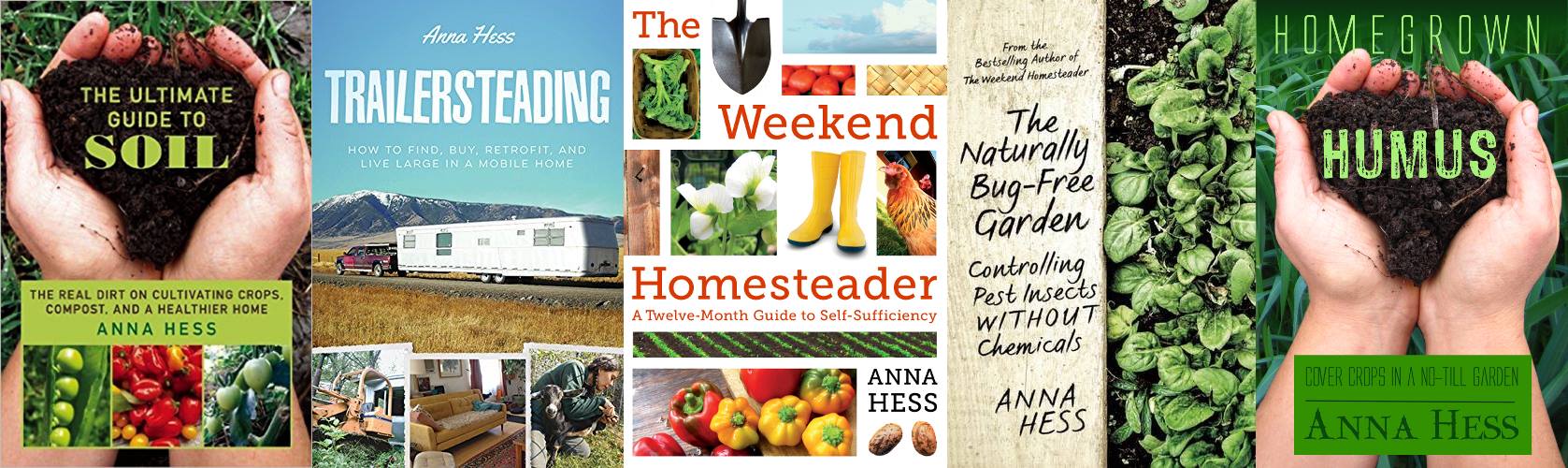
I am new to your blog thing (I can't even tell you how I stumbled across it!) and I have to tell you that it's wonderful! I haven't gotten far enough to find out where you are for sure, but someday I'll get there. It's so interesting to hear about all those things that I sometimes see and sometimes miss. I do have a one year old son, you know! Anyhow, thanks and I hope that I can get signed up for getting this sent to my email.
Sarah Stieren aryyana@hotmail.com
I am just starting to garden in a new area and the soil is drying out way to fast, 12 hours. I have killed more than 1/2 of what I have planted. Some things are doing good in this but others just die, some in less than a day. I do have a compost pile and it is cooking down but is'nt ready yet, is there something else cheep (we live on a fixed income) I can do to help hold the moistor in the soil? I am in zone 8b in southern alabama, it is in the high 80s low 90s daily now.
I hope I can find my way back to get your responce,
To use sandy soil, you need large amounts of organic matter. .. you'll need to provide about 1000 lbs/acre PER YEAR in your climate
Partially cooked compost is great (ideal in fact) as the extra carbon will serve to keep it in the soil for longer, without tying up too many nutrients. People in your area have had good luck with using Vetvier Grass cover crop for a year or two.
Also wood chips (from saw mills) and leaves are great additions.
If you have any Kudzu infestations these would be great to add to the soil...
I think mulch will keep the soil wet for longer, but you may run into insect problems with that.