Rooting trifoliate orange cuttings
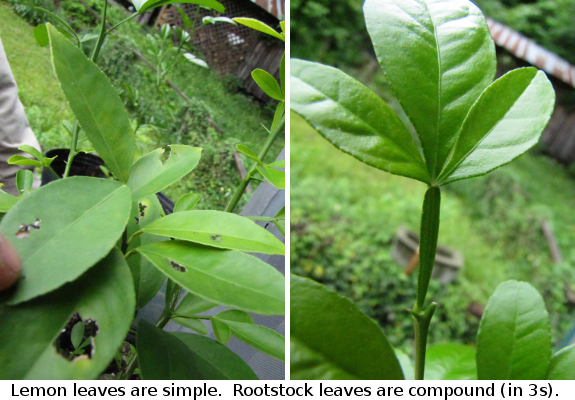
 This summer, our movie star
neighbor proudly displayed dozens of dwarf
lemons he had bought for a song. The trouble was, every
single one had sprouted from the rootstock, and the bushy growth of
trifoliate orange was overshadowing the lemon scionwood. I was
itching to prune, so my neighbor kindly handed me the clippers and let
me play.
This summer, our movie star
neighbor proudly displayed dozens of dwarf
lemons he had bought for a song. The trouble was, every
single one had sprouted from the rootstock, and the bushy growth of
trifoliate orange was overshadowing the lemon scionwood. I was
itching to prune, so my neighbor kindly handed me the clippers and let
me play.
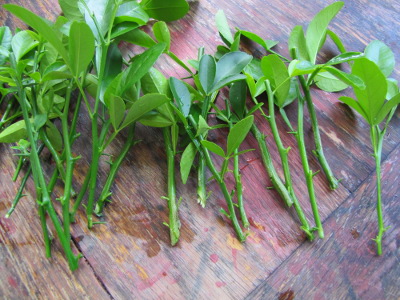
Soon, the little lemon
trees were revealed, and the ground was littered with dozens of 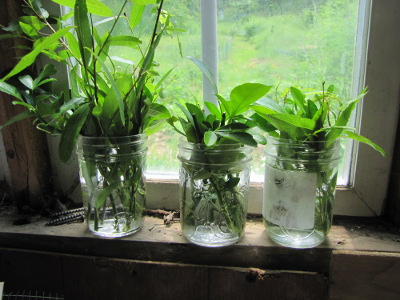 trifoliate orange
branches. The opportunity to root this dwarf citrus species and
use it to create more dwarf lemons was too tempting to resist, even
though Mark reminded me that neither we nor our movie star neighbor
have room for any more dwarf citrus plants.
trifoliate orange
branches. The opportunity to root this dwarf citrus species and
use it to create more dwarf lemons was too tempting to resist, even
though Mark reminded me that neither we nor our movie star neighbor
have room for any more dwarf citrus plants.
There's the right way to
root semi-difficult species like trifoliate orange, and then there's the
homesteading way.
I tend to go for the quick and dirty methods that require no
storebought supplies, even though these techiques give fewer successful
results. If I've only spent half an hour of my time and
absolutely no money, who cares if only 10% of my cuttings make
it? With that in mind, I simply snipped the trifoliate orange
cuttings down to four inch lengths and plopped them in glasses of water
along with a few willow cuttings collected on the walk home.
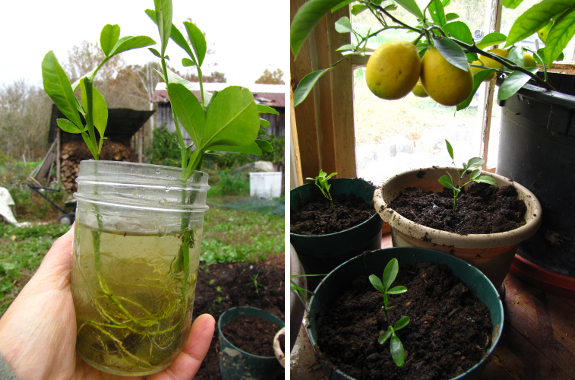
Next, I forgot about
them. The glasses of water dried up repeatedly, but I tended to
remember to add fresh liquid before the cuttings really gave up the
ghost. Months later, I was shocked to see that three of my
trifoliate oranges had grown hefty roots! I potted them up in
some composted manure and will graft on Meyer lemon twigs in a month or
two, once our parent tree has ripened its lemons all the way and starts
putting out new growth.
And then I'll give the
baby lemon trees away because Mark was right --- we really don't have
room for any more potted plants. But it sure is fun to make
something out of nothing!

Or explore more posts by date or by subject.
About us: Anna Hess and Mark Hamilton spent over a decade living self-sufficiently in the mountains of Virginia before moving north to start over from scratch in the foothills of Ohio. They've experimented with permaculture, no-till gardening, trailersteading, home-based microbusinesses and much more, writing about their adventures in both blogs and books.
Want to be notified when new comments are posted on this page? Click on the RSS button after you add a comment to subscribe to the comment feed, or simply check the box beside "email replies to me" while writing your comment.
Very cool that you could get them growing.
That Meyers lemon, do you have to take that inside over the winter, or will that survive in your area? I seem to recall you are zone 6. I'd like to give lemons or oranges a shot, but they can't become too big. I just don't have the space for a big tree.
You still get lemons from it, though, correct?
Those trifoliate oranges, will that produce an edible fruit? Could you graft on an actual orange and grow oranges in your zone?
You do get lemons --- lots of them if you do it right!
A farmer not far from us has a Flying Dragon trifoliate orange outside. This is the most cold hardy citrus and the only one we could grow here in zone 6 if we didn't want to take it inside. However, he wasn't very impressed with the flavor.
You can graft several different kinds of citrus onto this rootstock, but I've yet to see anyone's dwarf citrus other than Meyer lemon that really produced. I bought a dwarf tangerine several years ago, and after waiting a long time, I deduced that the rootstock had sprouted and I wasn't going to get any tangerines. Currently, I'm also experimenting with a dwarf Washington Navel Orange and a dwarf Key Lime --- one is currently blooming, so hopefully it'll fruit for us.
The rooting didn't go as well as I hoped. As you can tell, three grew roots, and I transferred them to pots in October. Then they sat there. Around February, two of them started putting out new leaves, and I got excited, but the leaves were whitish and never grew.
I'm not sure if the problem is that I didn't pay enough attention to them, that it was chilly in the winter, or if they just didn't like the soil (pure composted manure instead of my usual stump dirt/compost mixture.) Either way, I finally gave up on them.
Thank you for the post - quite informative. I managed to root mandarin cutting using (mostly water). Changed the water every 2 days and used a beer bottle that had stained glass (the idea is too limit the sun out). After about 2 weeks it showed signs of callus forming so I just transferred it to potting soil (it had 2 leaves and around 60% humidity in my house).
Anyhow - nice read - I heard that you can make a jam out of trifoliate and in my opinion the limonade si pretty ok - too bad it has so many seeds...