Curing Storage Vegetables
Some of your storage
vegetables need to be cured before storage; some don't. If you
cure vegetables that don't need to be cured, they'll rot. And if
you don't cure vegetables that do need to be cured, they'll rot
too. Time for a good list!
| Vegetable |
Curing
method |
| Beet |
none |
| Cabbage |
none |
| Carrot |
none |
| Garlic |
1 - 2 weeks in a warm, dry place |
| Onion |
2 - 3 weeks in a warm, dry place |
| Parsnip |
none |
| Potato |
2 weeks at 50 - 60 degrees
Fahrenheit and 95% humidity (slightly warmer than a root cellar) |
| Sweet Potato |
2 weeks at 80 - 85 degrees
Fahrenheit (dry) |
| Turnip |
none |
| Winter Squash (including
Pumpkins) |
2 weeks in a warm, dry
place. (Don't cure acorn squash!) |
Curing serves a couple of purposes. In all crops except white potatoes, a primary purpose is to dry the vegetable up so that it won't rot in storage. White and sweet potatoes and winter squashes develop a hard skin during curing that will protect the crop during storage.
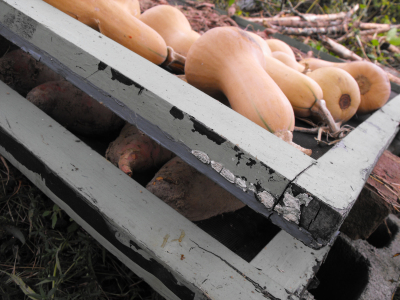 The cheapest and easiest method I've come up
with for curing vegetables is to lay them out on some old window
screens Mom found for me by the side of the road. I put the first
screen on four cinderblocks, cover the screen with drying vegetables,
then put bricks on the four corners of the frame to let me put another
screen on top for a second drying layer. The trick is to get good
air circulation all the way around your vegetables, so don't pile the
roots on top of each other. If you're a good scavenger, you can
recreate my curing rack setup for next to nothing.
The cheapest and easiest method I've come up
with for curing vegetables is to lay them out on some old window
screens Mom found for me by the side of the road. I put the first
screen on four cinderblocks, cover the screen with drying vegetables,
then put bricks on the four corners of the frame to let me put another
screen on top for a second drying layer. The trick is to get good
air circulation all the way around your vegetables, so don't pile the
roots on top of each other. If you're a good scavenger, you can
recreate my curing rack setup for next to nothing.People with more space will get away with drying their vegetables inside, but our trailer just isn't big enough to handle that type of operation. Instead, I harvest my crops a bit earlier than other folks might and put my drying racks under a tarp or roof outside to cure storage vegetables before the frost hits.
| This post is part of our Storage Vegetables lunchtime series.
Read all of the entries: |

Or explore more posts by date or by subject.
About us: Anna Hess and Mark Hamilton spent over a decade living self-sufficiently in the mountains of Virginia before moving north to start over from scratch in the foothills of Ohio. They've experimented with permaculture, no-till gardening, trailersteading, home-based microbusinesses and much more, writing about their adventures in both blogs and books.
Want to be notified when new comments are posted on this page? Click on the RSS button after you add a comment to subscribe to the comment feed, or simply check the box beside "email replies to me" while writing your comment.
Add a comment