A symbiosis of legumes and rhizobia
 "Nitrogen,
nitrogen everywhere, but not a drop to drink," could be a plant's
plaintive song. The atmosphere we breathe is 78% nitrogen, but
plants are incapable of putting the elemental nitrogen to use.
Instead, they need ammonia or nitrate and depend on the useful nitrogen
they can suck out of dead plants and animals as part of the nitrogen
cycle.
"Nitrogen,
nitrogen everywhere, but not a drop to drink," could be a plant's
plaintive song. The atmosphere we breathe is 78% nitrogen, but
plants are incapable of putting the elemental nitrogen to use.
Instead, they need ammonia or nitrate and depend on the useful nitrogen
they can suck out of dead plants and animals as part of the nitrogen
cycle.
Nitrogen-fixing bacteria
are the flip side of the coin. These
microorganisms can take the nitrogen from the air and turn it into a
useful form, but the process takes up vast quantities of energy.
Some bacteria species are able to scavenge the energy on their own, but
others have opted to team up with nitrogen-hungry plants.
The best-known symbiosis
is between rhizobia bacteria and
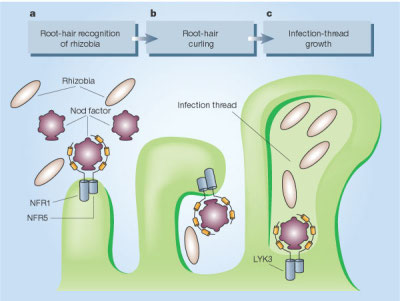
legumes. It all begins when a bacterium senses flavonoids given
off by the legume's roots. "Home for sale!" the flavonoids say,
and the bacterium secretes a chemical in reply --- "I'd like to move
in." "Great!" says the root, and it curls its tiny root hair
around the bacterium to make a safely enclosed root nodule. The
plant fills the nodule with carbohydrates (free energy!), proteins, and
oxygen, and the bacterium responds by fixing atmospheric nitrogen into
ammonia to feed the plant. The pair lives happily ever after.
| This post is part of our Nitrogen Fixing lunchtime series.
Read all of the entries: |
Or explore more posts by date or by subject.
About us: Anna Hess and Mark Hamilton spent over a decade living self-sufficiently in the mountains of Virginia before moving north to start over from scratch in the foothills of Ohio. They've experimented with permaculture, no-till gardening, trailersteading, home-based microbusinesses and much more, writing about their adventures in both blogs and books.
Want to be notified when new comments are posted on this page? Click on the RSS button after you add a comment to subscribe to the comment feed, or simply check the box beside "email replies to me" while writing your comment.