Comfrey for compost and mulch
 Hills
boldly states that no other
plant will produce as much biomass for composting when grow in an out
of the way corner as comfrey. In addition, comfrey is a
much-lauded dynamic
accumulator, able to
stretch its roots deep into the
subsoil and draw up calcium, potassium, phosphorus, and trace minerals
that are out of reach of most other plants. Finally, comfrey's
C:N ratio is so low that it nearly
melts into the soil, creating
compost in next to no time. What's not to like?
Hills
boldly states that no other
plant will produce as much biomass for composting when grow in an out
of the way corner as comfrey. In addition, comfrey is a
much-lauded dynamic
accumulator, able to
stretch its roots deep into the
subsoil and draw up calcium, potassium, phosphorus, and trace minerals
that are out of reach of most other plants. Finally, comfrey's
C:N ratio is so low that it nearly
melts into the soil, creating
compost in next to no time. What's not to like?
When growing comfrey as
the raw material for compost, Hills recommends
taking six to eight cuttings between April and November. If
you're using a highly productive Russian Comfrey variety, you can
produce 100 or more tons of leaves per acre in this manner, and you
could
potentially double or triple that yield in heavily fertilized patches
on a small scale. The plants are cut two inches above the ground
when they are between one and three feet tall, allowed to dry for 48
hours to lower their moisture content, then gathered and
added to the compost pile.
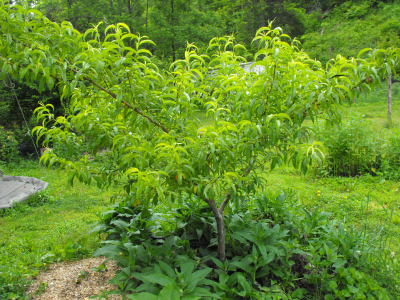 An alternative use of comfrey as a fertility
plant is found in forest
gardening literature, which suggests planting
comfrey below fruit
trees as a sort of
living mulch. Last year, I tried this out, planting comfrey
around the
base of our nectarine, and now I'm cutting the comfrey every week or
two, allowing the leaves to drop down and produce a heavy mulch and
then compost around the tree's trunk.
An alternative use of comfrey as a fertility
plant is found in forest
gardening literature, which suggests planting
comfrey below fruit
trees as a sort of
living mulch. Last year, I tried this out, planting comfrey
around the
base of our nectarine, and now I'm cutting the comfrey every week or
two, allowing the leaves to drop down and produce a heavy mulch and
then compost around the tree's trunk.
On the positive side, I've
noticed that the under-tree area requires nearly no weeding, but I feel
like the comfrey may be competing with the tree more than it's giving
back with my frequent cuttings --- the nectarine's leaves aren't as
vibrantly green as the leaves of our two peach trees.
Unfortunately, I have no other nectarines to compare mine to, so the
data is very inconclusive. However, Hills agrees with my gut
reaction, noting that comfrey will steal potassium from fruit trees and
requires more nitrogen than the tree can handle well. I'm going
to keep searching for some other literature to the contrary, but for
now I'm thinking I would probably be better off planting comfrey beyond
the tree's spread and cutting the leaves to drop around my tree's base.
| This post is part of our Comfrey lunchtime series.
Read all of the entries: |

Or explore more posts by date or by subject.
About us: Anna Hess and Mark Hamilton spent over a decade living self-sufficiently in the mountains of Virginia before moving north to start over from scratch in the foothills of Ohio. They've experimented with permaculture, no-till gardening, trailersteading, home-based microbusinesses and much more, writing about their adventures in both blogs and books.
Want to be notified when new comments are posted on this page? Click on the RSS button after you add a comment to subscribe to the comment feed, or simply check the box beside "email replies to me" while writing your comment.
Robins --- I analyzed this issue in more depth in my post about limiting factors. Comfrey under a more established fruit tree in an area with significantly better soil doesn't seem to cause any problems, so I suspect it's worth trying comfrey under trees in similar situations.
I've also been doing a better job about cutting the comfrey frequently now that I've got a scythe up and running. I suspect infrequent cuttings was part of my issue previously as well.