Worms Eat My Garbage
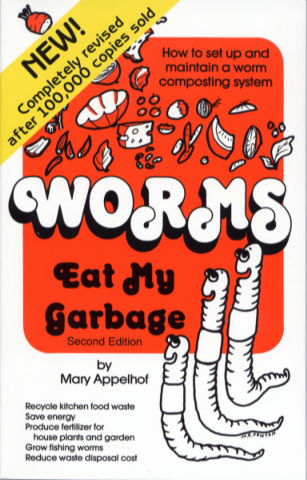 Usually, my non-fiction
reading consists of whatever captures my fancy (and is available), but
this summer, I've been focusing on books I'd been meaning to read for a
while. That focus has resulted in me mining a lot of "beginner"
books in search of possible gaps in my knowledge. I always find
at least one or two tidbits in these basic texts, but some stand up
better to being read by an intermediate audience, and I'm sad to say
that Worms
Eat My Garbage isn't
one of the latter.
Usually, my non-fiction
reading consists of whatever captures my fancy (and is available), but
this summer, I've been focusing on books I'd been meaning to read for a
while. That focus has resulted in me mining a lot of "beginner"
books in search of possible gaps in my knowledge. I always find
at least one or two tidbits in these basic texts, but some stand up
better to being read by an intermediate audience, and I'm sad to say
that Worms
Eat My Garbage isn't
one of the latter.
I suspect that when Mary
Appelhof put out the first edition of this book in 1982, it contained
earth-shattering information, but now vermicompost is old hat for
many. I've dabbled in worm bins for a few years (getting much of
my introductory information from the internet and from Worm Cafe), and I found little to
provoke thought in Appelhof's book. I was also a bit turned off
by the writing style --- it's very basic since the author comes from an
education background and clearly wants teachers to be able to use it
with school kids. On the other hand, if you're just getting
started with worms, this book probably is the one to read to learn all
of the nuts and bolts that we figured out the hard way.
Despite being a bit
disappointed in Worms
Eat My Garbage, I
did learn a few things:
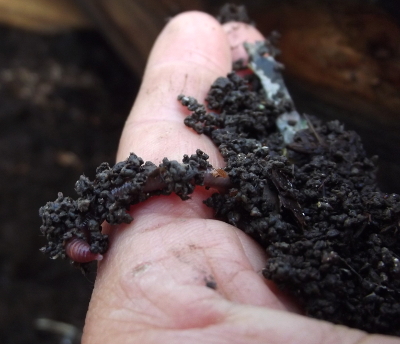 Vermicompost is different from
worm castings. The latter are produced if you let your
worms keep plugging away at the same materials until they die out as a
result of living in their own waste, while the former contains lots of
bits of compost that haven't gone through a worm's gut. The
information I presented in a previous post about not
using pure worm castings on plants (probably because of
concentrated salts) doesn't apply to vermicompost, only to castings.
Vermicompost is different from
worm castings. The latter are produced if you let your
worms keep plugging away at the same materials until they die out as a
result of living in their own waste, while the former contains lots of
bits of compost that haven't gone through a worm's gut. The
information I presented in a previous post about not
using pure worm castings on plants (probably because of
concentrated salts) doesn't apply to vermicompost, only to castings.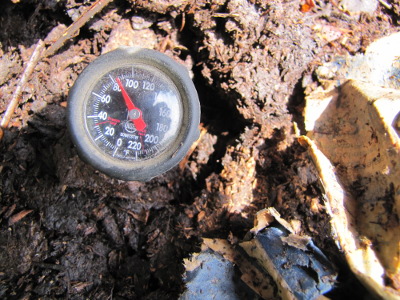 Water manure two days before
adding worms. I learned this the hard way very recently
when we filled a bin with relatively fresh horse manure, soaked the
bedding, added worms, and watched
them die. Appelhof notes that two days is sufficient time for
the manure to heat and cool down, making it safe to add worms.
Water manure two days before
adding worms. I learned this the hard way very recently
when we filled a bin with relatively fresh horse manure, soaked the
bedding, added worms, and watched
them die. Appelhof notes that two days is sufficient time for
the manure to heat and cool down, making it safe to add worms.- You use different techniques to
raise worms or produce compost. When I
accidentally left our worms eating the same food for a long time, I
was using the lowest maintence technique of
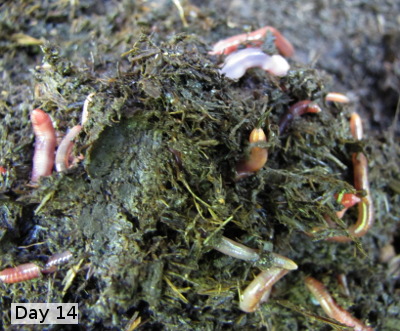 filling a bin and letting it sit
for at least six months, which produces pure castings at the expense of
your worm population. At the other extreme, folks breeding worms
to sell tend to move their stock to fresh bedding every two or three
months, leaving behind unfinished compost. Most people will
prefer to use a middle of the road technique where they let worms work
compost for about four months before moving the worms to a new bin (or pushing
old bedding to one side and filling the other half with fresh bedding).
This third method strikes a balance between producing compost and
keeping your worms happy, and is the one I want to work toward.
filling a bin and letting it sit
for at least six months, which produces pure castings at the expense of
your worm population. At the other extreme, folks breeding worms
to sell tend to move their stock to fresh bedding every two or three
months, leaving behind unfinished compost. Most people will
prefer to use a middle of the road technique where they let worms work
compost for about four months before moving the worms to a new bin (or pushing
old bedding to one side and filling the other half with fresh bedding).
This third method strikes a balance between producing compost and
keeping your worms happy, and is the one I want to work toward.
My final analysis?
As a beginner book, Worms
Eat My Garbage is
worth a read, but there's still space out there for an in-depth text
geared toward a popular audience. Maybe you'll be the one to
write it?
Or explore more posts by date or by subject.
About us: Anna Hess and Mark Hamilton spent over a decade living self-sufficiently in the mountains of Virginia before moving north to start over from scratch in the foothills of Ohio. They've experimented with permaculture, no-till gardening, trailersteading, home-based microbusinesses and much more, writing about their adventures in both blogs and books.
Want to be notified when new comments are posted on this page? Click on the RSS button after you add a comment to subscribe to the comment feed, or simply check the box beside "email replies to me" while writing your comment.
Here in Japan, only about 10 people have heard about vermicomposting. And I taught 9 of them. Just kidding, but I have found Appelhof's book to be a wonderful resource in teaching my students about composting with worms. It is very much a beginner's book, and the 6th grade reading level is perfect for my students who are interested (not many are though).
I agree- if you have dabbled in it before, or researched online, it is a bit redundant. Probably most of the readers here have little need of it. But it is good to recommend to your friends who are just getting started in sustainable lifestyles.