
Smallest wood stoves
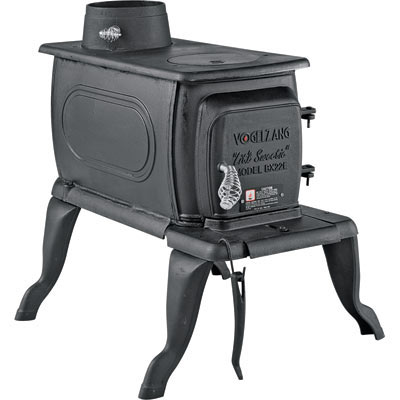 If
you're in the market for a tiny wood stove, the choices are relatively
limited. The smallest stove I've found among mainstream stores is
the Vogelzang
Lit'L Sweetie,
$199 from Northern Tool and Equipment. This cast iron stove is
marked on their website as being eligible for the federal tax credit,
which suggests that it must be efficient, but I can't seem to find any
efficiency data on the internet and the model is small enough that it
is exempt from EPA certification. On the other hand, even this 19
by 25 by 23 inch stove feels too big for us since it's rated at 63,801
BTU. Various reviews also suggest that it isn't very well put
together and may leak smoke or be unsafe.
If
you're in the market for a tiny wood stove, the choices are relatively
limited. The smallest stove I've found among mainstream stores is
the Vogelzang
Lit'L Sweetie,
$199 from Northern Tool and Equipment. This cast iron stove is
marked on their website as being eligible for the federal tax credit,
which suggests that it must be efficient, but I can't seem to find any
efficiency data on the internet and the model is small enough that it
is exempt from EPA certification. On the other hand, even this 19
by 25 by 23 inch stove feels too big for us since it's rated at 63,801
BTU. Various reviews also suggest that it isn't very well put
together and may leak smoke or be unsafe.
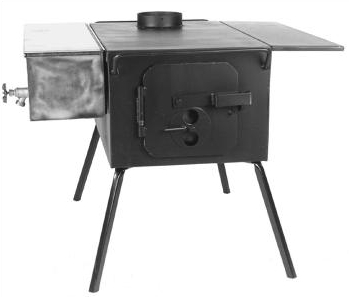 Moving down to smaller
stoves, you'll find the Two, Three, Four, and Five Dog
Stoves.
These stoves are made for use in tents and yurts, so I find them very
difficult to compare to more traditional stoves. The Four Dog
Stove ($305 once you factor in shipping) has a 15.5 by 11.5 by 24 inch
firebox
and "will heat up a 14' X 16' wall tent at -30". Its smaller
siblings heat progressively smaller spaces. All of the stoves in
the Four Dog line have baffles and an airtight gasketed door, which
make the stoves more efficient and safer while also
concentrating heat on a hot spot on the surface for cooking. On
the negative side, the stoves are light-weight with walls made of 3/32
inch hot rolled steel, no fire bricks, and aren't designed to preheat
their combustion air, so they lack some efficiency and maybe
longevity. I wonder if it
would be possible to take a Four Dog Stove (which I suspect might be
too big for us) and retrofit it with fire bricks to turn it into a more
efficient model with a smaller firebox.
Moving down to smaller
stoves, you'll find the Two, Three, Four, and Five Dog
Stoves.
These stoves are made for use in tents and yurts, so I find them very
difficult to compare to more traditional stoves. The Four Dog
Stove ($305 once you factor in shipping) has a 15.5 by 11.5 by 24 inch
firebox
and "will heat up a 14' X 16' wall tent at -30". Its smaller
siblings heat progressively smaller spaces. All of the stoves in
the Four Dog line have baffles and an airtight gasketed door, which
make the stoves more efficient and safer while also
concentrating heat on a hot spot on the surface for cooking. On
the negative side, the stoves are light-weight with walls made of 3/32
inch hot rolled steel, no fire bricks, and aren't designed to preheat
their combustion air, so they lack some efficiency and maybe
longevity. I wonder if it
would be possible to take a Four Dog Stove (which I suspect might be
too big for us) and retrofit it with fire bricks to turn it into a more
efficient model with a smaller firebox.
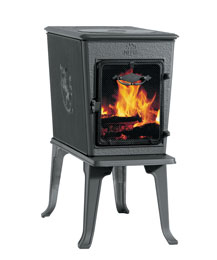 If
we want to spend an arm and a leg, the Jotul
F 602
is just the right size for us, with a 19 by 12.5 inch firebox
(with a guestimated third dimension of around 16 inches) and a heat
output of 28,000
BTU. Due to its baffles, the stove is 75% efficient, has low
emissions
of 5.2 g/hr, and is eligible for the federal tax credit. The
price
seems to be a bit harder to figure out, but one review lists it at $700
(which would end up costing us $490 after the tax credit.) One
website notes that this model is "alcove approved", perhaps because of
its heat shield, which makes me wonder if it might be the safest of the
options to put in a mobile
home. The
Jotul stove even has a
cookplate on top, which is something I'm yearning for as a backup
cooking option.
If
we want to spend an arm and a leg, the Jotul
F 602
is just the right size for us, with a 19 by 12.5 inch firebox
(with a guestimated third dimension of around 16 inches) and a heat
output of 28,000
BTU. Due to its baffles, the stove is 75% efficient, has low
emissions
of 5.2 g/hr, and is eligible for the federal tax credit. The
price
seems to be a bit harder to figure out, but one review lists it at $700
(which would end up costing us $490 after the tax credit.) One
website notes that this model is "alcove approved", perhaps because of
its heat shield, which makes me wonder if it might be the safest of the
options to put in a mobile
home. The
Jotul stove even has a
cookplate on top, which is something I'm yearning for as a backup
cooking option.
I estimate that any of
these stoves would cut our wood use (and the associated labor) at least
in half. However, we would have to install one stove in the
trailer and another one in the East Wing, so the up front cost would be
pretty steep. I'm pondering a Two Dog Stove in the tiny East Wing
($240) and a Jotul F 602 or Four Dog Stove in the trailer, and am
counting on spending a few more hundred dollars on associated hardware
for the safest installation (and we might even splurge beyond that to
pay for a professional to install the stove in the trailer.) If
we went the most expensive but most efficient route (the Jotul), it
would probably take us about six years to pay back the cost through
wood savings, whereas we'd pay ourselves back in five years using the
cheaper option.
| This post is part of our Wood Stove lunchtime series.
Read all of the entries: |
Edited to add:
Learn how to safely install an energy-efficient wood stove in a moibile
home in Trailersteading. Now available for
$1.99 on Amazon.

Or explore more posts by date or by subject.
About us: Anna Hess and Mark Hamilton spent over a decade living self-sufficiently in the mountains of Virginia before moving north to start over from scratch in the foothills of Ohio. They've experimented with permaculture, no-till gardening, trailersteading, home-based microbusinesses and much more, writing about their adventures in both blogs and books.
Want to be notified when new comments are posted on this page? Click on the RSS button after you add a comment to subscribe to the comment feed, or simply check the box beside "email replies to me" while writing your comment.
Consider what you'll have at the end of five years. Jotuls have kept scandinavians warm for what, a century?
We got our Jotul at auction for $150, slightly used. Have you checked craig's list and Iwanna?
I'm very interested in your ongoing research. We only have a need for heat about 1-2 months in the year, but considering that we currently have an electric powered furnace that is VERY ineffiecient, it still might be worth the switch. We're in a pretty small trailer, too, so it's nice to know that there are some options for wood heating.
This isn't something that I've looked into much, I think because I am afraid of the high initial cost of switching over.
Sara --- If you can hold out, you might follow Arthur's advice and shop this coming summer. That might help you find a good deal that would make it more worth your while. Jotul has a fun fuel calculator at http://www.jotul.com/en-us/wwwjotulus/Tools/Fuel-Calculator/ that helps you estimate how much you'd save per year on fuel costs by switching to wood, which should make it easier to crunch the numbers and see if the up front investment in a more efficient wood stove is worth the switch.
Eliza --- I'm glad you're back! Wood stoves certainly do put off a lot of heat, and they survive power outages. Last week's 10 day outage really put the fear of lack of electricity into us.
While price is certainly a factor, I don't think it should be the most important. My old (gas) stove was 23 years old when I replaced it. A shove without moving parts should be able to last as long as that, I'd think. So a break-even time of six years is no big deal.
Remember that it can be very expensive to buy cheap! You get what you pay for, as the saying goes.
BTW, WRT cast iron stoves, woodstoveguide.net is quite critical of them. It claims that the cement seams in cast iron stoves are easily damaged by overheating. I think he's got a point. The welds in a steel body would be just as heat resistant as the original steel. And I don't think the 1/4" steel walls that they recommend would warp easily.
"...even this 19 by 25 by 23 inch stove feels too big for us since it's rated at 63,801 BTU."
I have heated with wood all my life, and in everything from tiny cabins to mobile homes to vans to my current 4500 square foot off-the-grid three-story house. If the stove is physically too large for the available area, then it's too large. But those ratings are always inflated, and under perfect conditions with the very best dry hardwood fuel. Remember, you don't have to fill the fire box! Smaller fires produce less BTUs.
The best stove I ever owned was cast iron with an enamelled tin shell around it. The air-flow was excellent.
BTW, the cheapest and most effective way to increase the heat output from your stove is to add more exposed stove-pipe. You'll have to clean the pipe more often, but you'll have far less heat escaping into the atmosphere. A small fan blowing on that extra pipe is like adding another stove, without using more wood.
In my experience, the key to successful country life is to scratch your head a lot rather than spending more money.
Shas
While you can build a small fire in a big stove, there are limits, and you get maximum efficiency by building a fire of the recommended size. We ended up getting two Jotuls --- one for the trailer and one for our 160 square foot addition. The Jotul is just right in the trailer, but is really too big in the well-insulated addition. Even if we only make a tiny fire, it gets far too hot in there nearly immediately if we use the wood stove when the outside temperature is above freezing. That makes me pretty sure that the Litl' Sweetie, with an output over twice that of the Jotul, would have been very hard to manage to keep us warm without overheating in the trailer.
I think what you have to keep in mind is that we're talking about truly small spaces here. Our trailer is only 500 square feet (and we really only heat about half of that since I like it cold when I sleep and we don't use the office all that much.)
Usually, we're entirely with you about thinking more rather than spending more, but these highly efficient wood stoves have cut our wood consumption in half while increasing the warmth of our home. This is one of the few expensive items I wish we'd bought earlier.
Dear Blogger, I am also seeking the smallest of wood stoves - Our near net zero house is under construction and I have not yet found a small wood boiler for under $1000. I need something like 30,000 to 40,000 BTU. I have looked and looked and cannot find a small, high-efficiency wood boiler. I am amazed - why are mobile homes not needing such an appliance - why is there no market for a wood-fired small boiler capable of replacing the hot water tank in our homes... Thanks LT
The smallest wood stove that I know of is made for use in very tight spaces. It isn't cheap by a long shot but it is interesting to see what can be done. Check out the Solid Fuel Stove at Dickinson Marine http://www.dickinsonmarine.com/Specsheets/SolidFuel-2008.pdf.
In terms of using small stoves, one thing you can do with small, lightweight stoves is to surround them with stacked brick, leaving a bit of an airspace and gaps in the lower bricks for airflow. It adds thermal mass so just running a brief hot fire for maximum burning efficiency of the stove heats the mass for slow dissipation of the heat later. Incidentally, when it comes to heat storage, water offers the highest amount of heat storage per unit volume so a big pot of water on the top of the stove will help a lot....
You might want to talk to a welding shop to see what they would charge you to build you a simple small box stove with baffle or baffles and pre-heated air intake. Made of lighter 1/8" steel (or whatever they have lying around as scrap) and lined with fire brick you might just save yourself some money and get exactly what you want.
I did look into stoves meant for sailboats, but they're expensive. (I mean, even the efficient Jotul we chose was pretty pricey, but the marine ones are obscene.)
We considered getting a four dog stove (plate metal, no insulation) and stacking bricks like you suggested. It probably would have worked to, but I'm in love with our Jotul, so I wouldn't change a thing.
I like the idea of keeping a pot of water on the stove! I see a lot of people doing that, but didn't make the leap to realize it would act as thermal mass when I let the stove go out at night.
Have you thought about surrounding the Jotul with thermal mass. You might be able to manage the overall heat, especially in the well insulated annex. I suspect it would also lower wood consumption, but I'd also guess that you would need to ignite a new fire each day.
I used a small jotul for 4 or five years to heat a 640 sq ft house. I always had to get up to add wood in the wee hours. Looking back I believe if I had added thermal mass, and burnt at a higher rate, the residual heat would have held until morning.
I live in New England, and the house's temperature on cold days was uneven, and thermal mass would have helped there too. We eventually went to a larger stove with a 10 + hour burn.
checkout sardine stoves, made by marine stove. they have 3 sizes, are cast iron, have enamel options, optional glass doors, lightweight, affordable, and gorgeous. I hope I can buy one soon. one even has an oven: http://www.marinestove.com/sardineinfo.htm
We recently bought a Hobbit for our tiny house build. It looks like a really well made stove, however the 4" diameter wood stove pipe and insulated chimney you need to install it safely is EXTREMELY difficult to find, and will double the cost of your stove installation. I've seen some people try to install these with pellet stove pipe, which is NOT THE SAME THING and can cause dangerous zinc fumes to burn off into your home.
We ordered 5' of chimney pipe that was damaged by FedEx in shipping. I just posted it on Ebay. We paid over $350 for this, so you can get yourself a super deal if you don't mind the dings. This is also what you need if you're trying to do a cabin installation of a marine stove by Navigator or Shipmate.
Here's the link to the chimney on Ebay: http://www.ebay.com/itm/Selkirk-High-Temp-Model-HT-4-Insulated-Chimney-/151026956435?pt=LH_DefaultDomain_0&hash=item2329e87893
Thanks! We really enjoy your blog.
Esther
Hi folks,
I'm planning to move to Mongolia next year, and although I grew up with a woodstove as our only source of heat, I really know nothing about them. I'm looking for a small, not super super heavy (if that's possible) wood stove that doesn't have to be fed firewood every half an hour like the Mongolian ones (just maybe 1/4" steel welded, not insulated). I'd like to not have to get up every couple of hours in the night to put ore logs on.
Also need to be able to cook on it - would be used in either a yurt, or a small cabin. The winters are long and cold there, with temps down to -40, so I need something that meets these needs and so I don't go through as much wood there, and will keep me warm. I'll actually use it all year round since I will have to cook on it. I head something about cast iron stoves cracking if you try to boil frozen water on them, so maybe steel is better?
I appreciate any advice! And oh... I can't afford a really expensive one.
To answer a few of your questions pertaining to the four dog.... This past winter was one of the coldest February's on record where I live in Ohio. It got below -20f and I stayed out in my 12X12 Alaknak tent with my Four Dog stove and stayed warm all night. According to their website, Four Dog states they have a lifetime warranty on their stoves from burn out, so that should not be an issue. He claims he has never had one of his stoves burnout. None the less, I bought two coal grates to set side by side at the bottom of my stove just to be sure. Also, to answer one of your questions, of course you can use fire bricks for this stove, or coal grates. Both will help to maintain the stove, but the mfr claims it is not an issue. Hope this helps someone.