When to plant spring crops
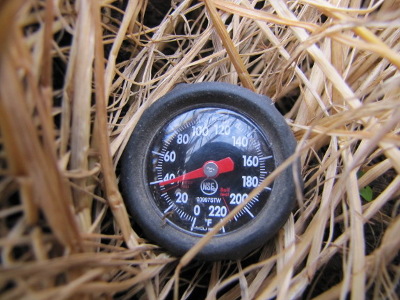 Every
winter is a little different, so I use a soil thermometer to keep an
eye on the temperature of the soil and plant accordingly. The
thermometer pictured here is actually a meat thermometer, bought for
less than $10, but it works just as well as the more expensive soil
thermometers you'll find in gardening stores.
Every
winter is a little different, so I use a soil thermometer to keep an
eye on the temperature of the soil and plant accordingly. The
thermometer pictured here is actually a meat thermometer, bought for
less than $10, but it works just as well as the more expensive soil
thermometers you'll find in gardening stores.
To check the
soil temperature, get up early before the sun has hit the ground and
insert the thermometer into the ground. Wait a few minutes,
then take a reading. If you have garden areas that are more
sunny than others, you'll want to test the soil temperature at
several places–I usually find that our soil is two to five degrees
colder in the shade of our hillside compared to in the sunnier parts
of the garden.
The table below lists the germination temperatures for common spring crops.
| Vegetable |
Minimum
temp. (degrees F) |
Optimum
temp. (degrees F) |
| Beets |
40 |
50-85 |
| Broccoli |
40 |
45-85 |
| Brussels sprouts |
40 |
45-85 |
| Cabbage |
40 |
45-95 |
| Carrots |
40 |
45-85 |
| Cauliflower |
40 |
45-85 |
| Collards |
45 |
70-75 |
| Leeks |
40 |
70-75 |
| Lettuce |
35 |
40-80 |
| Onions |
35 |
50-95 |
| Parsley |
40 |
50-85 |
| Peas |
40 |
40-75 |
| Potatoes |
45 |
60-70 |
| Radishes |
40 |
45-90 |
| Spinach |
35 |
45-75 |
| Swiss chard |
40 |
50-85 |
| Turnips |
40 |
60-105 |
In most cases, you can get away with planting once the soil has reached the minimum germination temperature, but don't plant your seeds if a cold spell is going to set in within a couple of days. You should also be aware that some vegetables will give you spotty germination until the ground was warmed up closer to the optimum temperature --- you might want to double your seeding rate to ensure a good stand if planting near the minimum. Once a seed has sprouted, it's less sensitive to cold soil, so expediting germination by soaking your seeds overnight before planting can also help.
 To plant earlier than
cold soil will allow, many gardeners are tempted
to start seedlings indoors. However, unless you have grow lights
or a heated greenhouse, I recommend that beginners stick to growing
their plants entirely in the earth for the first year. A quick
hoop might be enough to let you plant a couple of weeks earlier than
you otherwise could have, then you can transfer the same protection to
a new bed in April to jumpstart your summer garden.
To plant earlier than
cold soil will allow, many gardeners are tempted
to start seedlings indoors. However, unless you have grow lights
or a heated greenhouse, I recommend that beginners stick to growing
their plants entirely in the earth for the first year. A quick
hoop might be enough to let you plant a couple of weeks earlier than
you otherwise could have, then you can transfer the same protection to
a new bed in April to jumpstart your summer garden.This week's lunchtime series is excerpted from Weekend Homesteader: March. I saved some of my favorite projects for last, so I hope you'll splurge 99 cents to read about growing edible mushrooms, composting, and attracting native pollinators. And, of course, the ebook has the full spring planting chapter in case you just can't wait to read each installment at noon this week.
| This post is part of our Spring Planting lunchtime series.
Read all of the entries: |
Or explore more posts by date or by subject.
About us: Anna Hess and Mark Hamilton spent over a decade living self-sufficiently in the mountains of Virginia before moving north to start over from scratch in the foothills of Ohio. They've experimented with permaculture, no-till gardening, trailersteading, home-based microbusinesses and much more, writing about their adventures in both blogs and books.
Want to be notified when new comments are posted on this page? Click on the RSS button after you add a comment to subscribe to the comment feed, or simply check the box beside "email replies to me" while writing your comment.
- Remove comment
- Remove comment