Soil temperature and vegetable seed germination
 In
the past, I've planted
crops a certain number of days before or after our traditional
frost-free date.
But the more I think about it, the more the date-based approach feels
like eating your meals at set times with no wiggle room if you've been
chopping wood and are starving early or have been loafing around all
day and aren't really hungry at all. By planting seeds on set
dates, I'm trying to estimate times at which the soil temperature is
warm enough to let the seeds germinate and the air temperature is in
the right range to let the seeds grow well. So why not measure
soil temperature and plant seeds when I know it's warm enough?
In
the past, I've planted
crops a certain number of days before or after our traditional
frost-free date.
But the more I think about it, the more the date-based approach feels
like eating your meals at set times with no wiggle room if you've been
chopping wood and are starving early or have been loafing around all
day and aren't really hungry at all. By planting seeds on set
dates, I'm trying to estimate times at which the soil temperature is
warm enough to let the seeds germinate and the air temperature is in
the right range to let the seeds grow well. So why not measure
soil temperature and plant seeds when I know it's warm enough?
The table below tells
the minimum and optimum soil temperatures for germination of most
common vegetable seeds. For spring planting, you can probably get
away with planting at the minimum temperature (especially if you soak
the seeds to get them off to a quick start), but for many of the summer
vegetables it's often best to wait until you reach the optimum
temperature range.
| Vegetable |
Minimum
temp. (degrees F) |
Optimum
temp. (degrees F) |
| Beans |
60 |
60-85 |
| Cabbage |
40 |
45-95 |
| Carrots |
40 |
45-85 |
| Corn |
50 |
60-95 |
| Cucumbers |
60 |
60-95 |
| Lettuce |
35 |
40-80 |
| Muskmelons |
60 |
75-95 |
| Okra |
60 |
70-95 |
| Onions |
35 |
50-95 |
| Parsley |
40 |
50-85 |
| Peas |
40 |
40-75 |
| Peppers |
60 |
65-95 |
| Pumpkins |
60 |
70-90 |
| Spinach |
35 |
45-75 |
| Squash |
60 |
70-95 |
| Swiss chard |
40 |
50-85 |
| Tomatoes |
50 |
70-95 |
| Turnips |
40 |
60-105 |
| Watermelons |
60 |
70-95 |
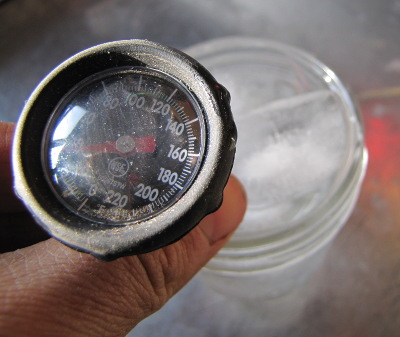 To test your soil
temperature, first calibrate your soil
thermometer in a jar
of ice water to check its accuracy. (The thermometer should read
32 degrees Fahrenheit.) Then stick the thermometer three to four
inches into the soil first thing in the morning and read the
temperature. If you don't have a soil thermometer, you can get a
rough estimate of your soil temperature by looking at this soil
temperature map.
To test your soil
temperature, first calibrate your soil
thermometer in a jar
of ice water to check its accuracy. (The thermometer should read
32 degrees Fahrenheit.) Then stick the thermometer three to four
inches into the soil first thing in the morning and read the
temperature. If you don't have a soil thermometer, you can get a
rough estimate of your soil temperature by looking at this soil
temperature map.If you're like me and are dying to put spring seeds in the ground as soon as possible, you can make the soil warm up more quickly by raking back your mulch, adding a thin layer of dark compost to the surface of the soil, laying down a sheet of black or clear plastic (although I don't like blocking off air to soil microorganisms), or building a cold frame or quick hoop. You should also be aware that the temperature of the upper layer of soil in your garden can change quite quickly --- a couple of degrees per day --- if a cold snap or warm spell hits your area, so even if the soil has reached 35, don't plant lettuce if an arctic blast is forecast for tomorrow.
Or explore more posts by date or by subject.
About us: Anna Hess and Mark Hamilton spent over a decade living self-sufficiently in the mountains of Virginia before moving north to start over from scratch in the foothills of Ohio. They've experimented with permaculture, no-till gardening, trailersteading, home-based microbusinesses and much more, writing about their adventures in both blogs and books.
Want to be notified when new comments are posted on this page? Click on the RSS button after you add a comment to subscribe to the comment feed, or simply check the box beside "email replies to me" while writing your comment.