Planting winter crops too early
 I'd
heard tidbits of Eliot
Coleman's wisdom
secondhand, which is what tempted me to plant
extra mustard greens and leave them be through the fall in hopes of a
winter harvest.
I planted several beds on August 20, then planted more on September
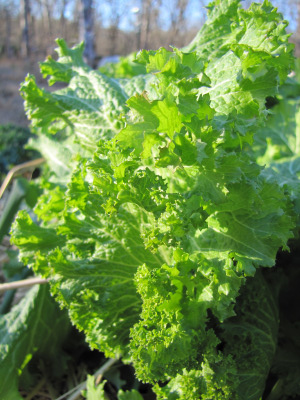
9. Both sets of greens grew beautifully, but the August-planted
mustard greens reached and passed peak maturity before our Persephone
Days began, and soon
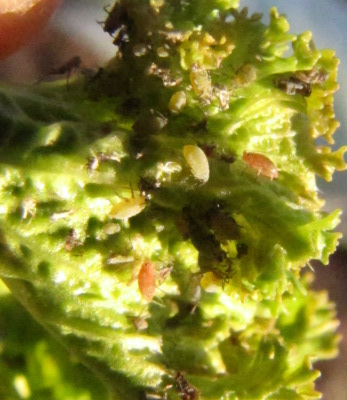
the oldest greens were absolutely loaded with aphids.
I'd
heard tidbits of Eliot
Coleman's wisdom
secondhand, which is what tempted me to plant
extra mustard greens and leave them be through the fall in hopes of a
winter harvest.
I planted several beds on August 20, then planted more on September
9. Both sets of greens grew beautifully, but the August-planted
mustard greens reached and passed peak maturity before our Persephone
Days began, and soon
the oldest greens were absolutely loaded with aphids.
I subscribe to the
belief that insect infestations are a sign that I'm doing something
wrong, especially when it comes to aphids. The question is, which
of the three factors that separate the aphid-covered greens from the
healthy greens is the cause of the infestation?
- Early planting --- Eliot
Coleman advises that crops for winter harvest should just be reaching
maturity as the Persephone Days begin, and the buggy mustard was
overmature. Mustard in the later-planted beds is aphid-free and
vibrant.
- Protected microclimate
--- I used row cover fabric over the buggy plants earlier than I used
it over the non-buggy plants. I wonder if the fabric helped the
aphids survive freezing temperatures.
 Poor soil and shade --- Even though all
of the aphid-coated mustard was planted early, one early-planted bed
skipped the aphid infestation. The buggy beds are at the west end
of the mule garden where they get more shade and where the soil is much
thinner --- the plants were probably already struggling a bit before
the aphids moved in. The happy but elderly mustard is in the
better soil of the east end of the mule garden and receives the most
winter sun.
Poor soil and shade --- Even though all
of the aphid-coated mustard was planted early, one early-planted bed
skipped the aphid infestation. The buggy beds are at the west end
of the mule garden where they get more shade and where the soil is much
thinner --- the plants were probably already struggling a bit before
the aphids moved in. The happy but elderly mustard is in the
better soil of the east end of the mule garden and receives the most
winter sun.
Since I don't know which
factor is the primary cause of my aphid infestation, I'll try to
correct all three for next year. Meanwhile, I've discovered that
you don't even notice the aphids once the greens are cooked --- extra
protein.
Or explore more posts by date or by subject.
About us: Anna Hess and Mark Hamilton spent over a decade living self-sufficiently in the mountains of Virginia before moving north to start over from scratch in the foothills of Ohio. They've experimented with permaculture, no-till gardening, trailersteading, home-based microbusinesses and much more, writing about their adventures in both blogs and books.
Want to be notified when new comments are posted on this page? Click on the RSS button after you add a comment to subscribe to the comment feed, or simply check the box beside "email replies to me" while writing your comment.