
Frozen
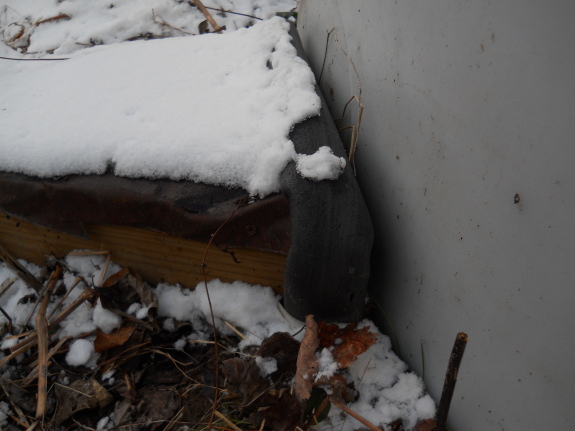
The non potable water line
froze up last night...the first time this winter.
Like Anna said, "the good
news is the drinking water didn't freeze".
It might be this gap that
formed where the tank meets the insulation box as the line arcs down
into a trench. I think I'll let this problem marinate for a few days
while I think of a solution. Maybe it'll be warmer then.

Or explore more posts by date or by subject.
About us: Anna Hess and Mark Hamilton spent over a decade living self-sufficiently in the mountains of Virginia before moving north to start over from scratch in the foothills of Ohio. They've experimented with permaculture, no-till gardening, trailersteading, home-based microbusinesses and much more, writing about their adventures in both blogs and books.
Want to be notified when new comments are posted on this page? Click on the RSS button after you add a comment to subscribe to the comment feed, or simply check the box beside "email replies to me" while writing your comment.
Brian --- that's what I suggested too. Actually, I was also pondering mounding dirt over everything but the door....
Roland --- Excellent point! I bet that'd help with sealing the cracks in the walls of the trailer too.
Make sure you do not fill up every draughty spot. You need ventilation as well for at least two different reasons.
Be aware that polyurethane generates gas when it cures, which makes it foam up. If you put too much foam in a confined place, it can build up considerable pressure and come foaming back at you through the opening you used to spray it in. Been there, done that.
These foam cans usually come with a spray nozzle. Once the material in the nozzle cures, the can becomes unusable. So it is best to finish a can in one go. Make a mental list of all holes to want to fill up, and put some old newspaper down under them to catch any spills. If you've never worked with this stuff, first spray a little on a bit of cardboard so you know how much it expands.
PU foam is very sticky. If you are sealing a gap in the wall and don't want stains on the wall, put some masking- or painters tape around the egdes of the gap beforehand. Remove the tape once the foam has hardened.