
Dark Cornish broilers
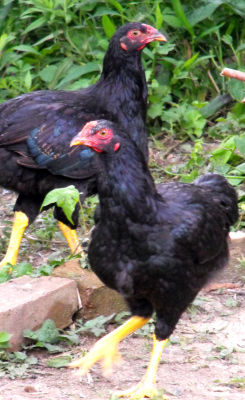 We
dispatched
the first third of our cockerels Tuesday morning. They
were quite small at 12 weeks old, dressing out to only 2.25 pounds
apiece (not counting the necks and giblets), and they clearly don't
compete with grocery store prices at $5.64 per bird. Of course,
we didn't set out to save money with these broilers or we would have
stuck to the traditional Cornish
Cross. The
real test will be
flavor --- can we tell a difference between our pastured chickens and
storebought?
We
dispatched
the first third of our cockerels Tuesday morning. They
were quite small at 12 weeks old, dressing out to only 2.25 pounds
apiece (not counting the necks and giblets), and they clearly don't
compete with grocery store prices at $5.64 per bird. Of course,
we didn't set out to save money with these broilers or we would have
stuck to the traditional Cornish
Cross. The
real test will be
flavor --- can we tell a difference between our pastured chickens and
storebought?
We're going to kill
another third of the cockerels in a month, and then
the last third at 16 weeks old, testing to see how the price per pound
and the flavor of the meat changes over time. Although everyone
is in agreement that Cornish Crosses should be
killed at around eight weeks, the internet lists widely
varying
maturity dates for the Dark Cornish, and I like experimentation.
On the other hand,
despite enjoying the experiment, I don't think we'll
be raising Dark Cornish again. They didn't live up to the hype of
being good foragers --- they mostly sat around and waited for their
feed, even going so far as to run away when I tossed grubs into their
pasture. Instead, I'm torn between several alternatives:
- Cornish Cross --- This is
the traditional way to go, but raising these grain-only-eating broilers
at home is little better for the environment and our bodies than buying
grocery store meat. Also, since they're hybrids, we would have to
buy chicks every year, which doesn't pass the sustainability test.
- Freedom Rangers --- Many small growers swear by this breed, reporting that Freedom Rangers are good foragers (although they said that about Dark Cornish too.) The major downside is that we couldn't create our own breeding flock since Freedom Rangers are a cross of carefully bred parental lines owned by European corporations.
- Create our own Cornish cross
--- We could save back the biggest cockerel and cross him with our
Plymouth Rocks to create our own Cornish
Cross. We might get hybrid vigor, but I can't quite see where the
foraging ability would come from, and I'm bound and determined to grow
chickens without such large inputs of grain.
- Eat the roosters from our layer
flock
--- Traditionally, farmers used to just raise dual purpose breeds and
eat the roosters from their flock along with the old hens. We've
been well trained to think we want big breasts and tender meat, so
I'm not sure if we could stomach this option. But it would
definitely be the most sustainable, and probably the best for our
health if we stuck to a good forager like Rhode Island Red.
What do you think?
Have you given some of the above options a
shot and think they've got merit (or should be avoided at all
cost?) We won't be raising another batch of broilers until next
year, but we need to make a decision soon about whether to save back
one of the Cornishes from the chopping block.

Or explore more posts by date or by subject.
About us: Anna Hess and Mark Hamilton spent over a decade living self-sufficiently in the mountains of Virginia before moving north to start over from scratch in the foothills of Ohio. They've experimented with permaculture, no-till gardening, trailersteading, home-based microbusinesses and much more, writing about their adventures in both blogs and books.
Want to be notified when new comments are posted on this page? Click on the RSS button after you add a comment to subscribe to the comment feed, or simply check the box beside "email replies to me" while writing your comment.
Sorry to hear the chickens were not what you had hoped for. Years ago when we raised chickens we tried the quick-growing Cornish Cross (I think they were). We lost a few to heart attacks, they grew so fast. It almost seems cruel the way the gain weight and sometimes their legs give out. If we saw one turning blue we butchered him before he keeled over (poor fellow). They were the best chicken we've ever had then or since but I think they cost us $10. a pound :).
One time we bought some chickens from someone who raised them - they weren't meat birds at all but rather layers she sold us (so I think). They were so tough that, even in the crock pot, one leg was sticking out and simmering them all day made no difference. Maybe a pressure cooker would have helped but they weren't edible.
I think I read about some people foraging the white meat birds (Joel Salatin maybe?) and this surprised me. If you could feed them something other than grain I would go for the meat birds but maybe one that doesn't gain weight so fast.
Whatever kind you choose should be healthier than store-bought, since you don't stuff them with hormones and antibiotics, as seems to be the norm at large scale growers.
The more I read about intensive animal breeding, the happier I am to be a vegetarian!
Personally though, I consider the thought of creating a hybrid that has a good chance of essentially dying of overweight in a couple of weeks repulsive.
Heather ---
That's the biggest downside of Cornish Crosses. Like Roland said, breeding a bird so that it gains weight so quickly it basically kills itself doesn't quite fit the humane category, even if we were able to get them to forage. I think that Joel Salatin's version of foraging merely means they nibble on enough grass to get a few vitamins.
I suspect the chickens you bought that turned out tough were old. (That's probably why they were being sold --- they had probably reached the end of their economical laying life.) We turn old chickens into potstickers or something else sausage-like. Grinding the meat before cooking it is essential!
I've roasted a Barnevelder rooster, and it was really good. They seem to be pretty good foragers, and then hens lay reasonably well.
Australorps are supposed to pretty good for both egglaying and eating (and foraging!) too.
I'm not sure what's going on with the people reporting super-tough chickens. We made stew from a 2.5-year-old ISA Brown (hybrid layer) recently - sure, it needed a long slow cook, but it certainly wasn't tough.
Thanks for sharing your experiences, Dave! I need to try sprouting more --- you're right that it's great for increasing protein content and digestability (although it does cut down on carbs, although that's not so much of a worry.)
Those are some big chickens you bred! Over four pounds at 16 weeks! Is that a live weight or a carcass weight?
I wonder what their feed to meat conversion rate is. Did you keep any data on how much grain you fed them?