Autumn cover crops
 As
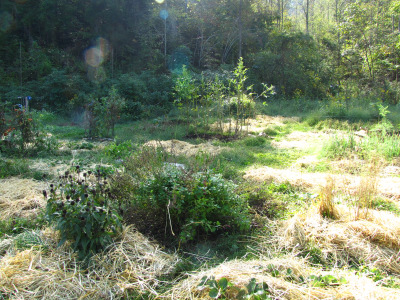
the days shorten, the sun quickly dips behind the hill and provides
only a smattering of sunlight to our upper garden. I took this
picture yesterday at 11:30 am when a third of the upper garden was
still in shadow --- no wonder the summer plants like okra are starting
to give up the ghost despite this garden's prime soil.
As
the days shorten, the sun quickly dips behind the hill and provides
only a smattering of sunlight to our upper garden. I took this
picture yesterday at 11:30 am when a third of the upper garden was
still in shadow --- no wonder the summer plants like okra are starting
to give up the ghost despite this garden's prime soil.
Since the front garden
is mostly out of the running until April or May, I decided to see
whether I could put at least some of those chilly months to good use by
growing cover 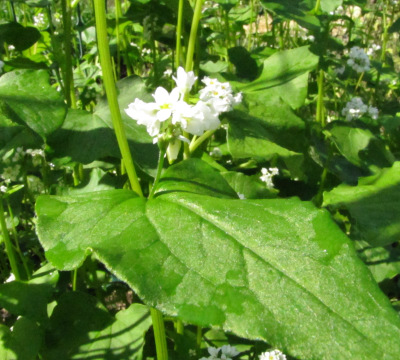 crops.
Cool weather cover crops need around 6 to 10 weeks to produce optimal
biomass, and our first killing frost is due anytime between early and
late October. Planting cover crops now is another gamble on a
warm fall, but any growth at all will be appreciated.
crops.
Cool weather cover crops need around 6 to 10 weeks to produce optimal
biomass, and our first killing frost is due anytime between early and
late October. Planting cover crops now is another gamble on a
warm fall, but any growth at all will be appreciated.
As you may recall, I
have four experimental cover crops already planted in various parts of
the garden, seeded between mid August and the first of September.
Here are my early thoughts on their productivity:
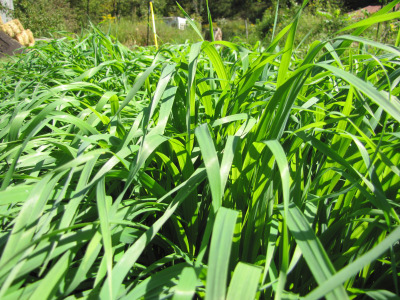 Oats - So far,
I'm very happy with the growth of oats, which took to our waterlogged
back garden soil like ducks to water. The plants are knee high,
but have fallen in on themselves a bit, perhaps because I planted them
too close together or gave them too much fertility. Despite the
lodging, there is clearly a lot of biomass already above ground, and
weeds are nonexistent.
Oats - So far,
I'm very happy with the growth of oats, which took to our waterlogged
back garden soil like ducks to water. The plants are knee high,
but have fallen in on themselves a bit, perhaps because I planted them
too close together or gave them too much fertility. Despite the
lodging, there is clearly a lot of biomass already above ground, and
weeds are nonexistent.
- Buckwheat - My second planting redeemed itself in the upper
garden, where the buckwheat is twice as tall as the contemporaneously
planted oats. Our honeybees and wild bumblebees are lapping up
the nectar, making buckwheat the most versatile summer cover crop, even
if it
failed in the waterlogged back garden.
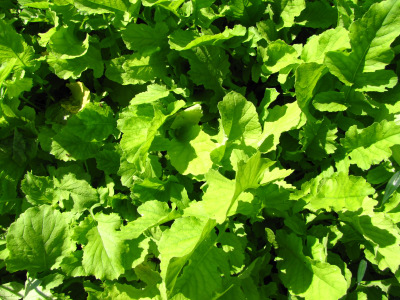 Oilseed Radishes
- In just four weeks, this cover crop has seemingly produced as much
biomass as the neighboring oats which have been in the ground half
again as long. I can tell that any weed that had the
nerve to sprout in the radish beds has long ago choked and died.
Oilseed Radishes
- In just four weeks, this cover crop has seemingly produced as much
biomass as the neighboring oats which have been in the ground half
again as long. I can tell that any weed that had the
nerve to sprout in the radish beds has long ago choked and died.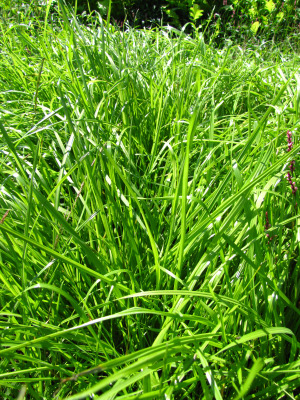 Annual Ryegrass --- I put in a few beds of
ryegrass on a whim at the same time I planted the radishes. The
ryegrass beds look like a pretty lawn, but seem to have produced
significantly less bulk than the neighboring radishes and oats.
Annual ryegrass is the least likely to winterkill in zone 6, so I may
have to deal with resprouting ryegrass in the spring. On the
positive side, wet soil didn't phase the ryegrass one bit.
Annual Ryegrass --- I put in a few beds of
ryegrass on a whim at the same time I planted the radishes. The
ryegrass beds look like a pretty lawn, but seem to have produced
significantly less bulk than the neighboring radishes and oats.
Annual ryegrass is the least likely to winterkill in zone 6, so I may
have to deal with resprouting ryegrass in the spring. On the
positive side, wet soil didn't phase the ryegrass one bit.
This week, I put in more
oats, radishes, and ryegrass in the front garden, skipping the frost
sensitive buckwheat since I'm already pushing the envelope. I
scattered cover crop seeds on the few sweet potato beds not filled with
garlic, slipped cover crops in between squash plants soon to keel over,
and even seeded an understory below buggy beans and fading okra.
Despite the new cool, wet weather, I went ahead and spread a thin layer
of damp compost over the seeds to hasten their sprouting. I'll
let you know how much mulch each crop leaves behind on the soil surface
once the real cold weather hits.

Or explore more posts by date or by subject.
About us: Anna Hess and Mark Hamilton spent over a decade living self-sufficiently in the mountains of Virginia before moving north to start over from scratch in the foothills of Ohio. They've experimented with permaculture, no-till gardening, trailersteading, home-based microbusinesses and much more, writing about their adventures in both blogs and books.
Want to be notified when new comments are posted on this page? Click on the RSS button after you add a comment to subscribe to the comment feed, or simply check the box beside "email replies to me" while writing your comment.