Turning part of a basement into a root cellar
 If you already have a
basement, you may be able to convert a small section over to
root-cellar conditions at a minimal cost. Emily Springfield spent $220 creating
a root cellar in her Michigan (zone 5b) basement. By
opening and closing the window to the outdoors, she could keep
potatoes and other root vegetables in good shape all winter
long.
If you already have a
basement, you may be able to convert a small section over to
root-cellar conditions at a minimal cost. Emily Springfield spent $220 creating
a root cellar in her Michigan (zone 5b) basement. By
opening and closing the window to the outdoors, she could keep
potatoes and other root vegetables in good shape all winter
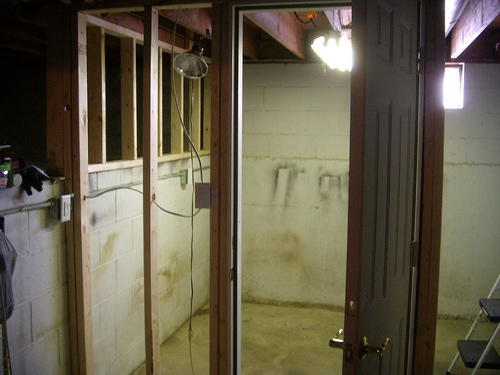
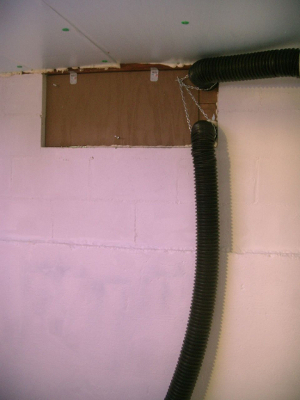
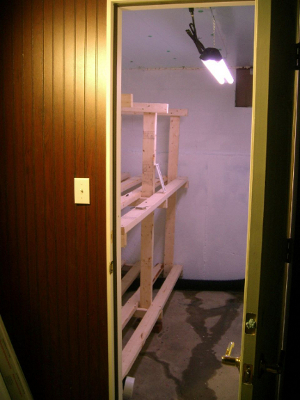
long.The long version of Emily's renovation is detailed in $10 Root Cellar, but the short version is that she walled off and insulated a section of her basement. The trickiest part turned out to be ventilation, which she initially attempted using the pipe arrangement shown on the right. However, she soon found that the pipes weren't allowing cold air to flow in fast enough to keep the root cellar chilled. Emily's solution was to remove the pipes and simply open and close the whole window as needed. A thermometer in the root cellar with a remote readout in the kitchen made it easy to learn the way the root cellar responded to weather.
 Emily's biggest trial with her
in-basement root cellar was humidity. "I can't seem to
get the humidity in the room to stay above 50% now that winter
has set in, even with bins of damp sand on the floor, so
instead I’m trying to keep the local humidity around the
produce high," she wrote. She experimented with storing
produce between layers of newspapers, straw, damp cedar
shavings, damp peat moss, and damp sand.
Emily's biggest trial with her
in-basement root cellar was humidity. "I can't seem to
get the humidity in the room to stay above 50% now that winter
has set in, even with bins of damp sand on the floor, so
instead I’m trying to keep the local humidity around the
produce high," she wrote. She experimented with storing
produce between layers of newspapers, straw, damp cedar
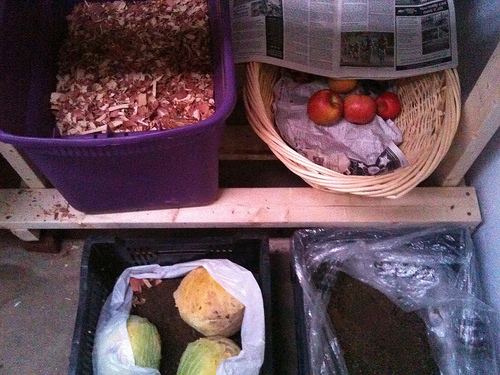
shavings, damp peat moss, and damp sand.Carrots and parsnips in straw didn't last long, beets did a bit better in damp cedar shavings, and potatoes seemed to prefer being stored between layers of newspaper in a basket. Cameo apples kept well under the same conditions as potatoes, with only a few on the edges going mealy by February. Rutabagas were more like beets (although a bit hardier), preferring the damp cedar shavings.
In February 2011, Emily concluded "Overall, I am very pleased with the root cellar I built last spring. It's keeping temperature well, not showing signs of mold or infestation, and
 most of the produce
is in very good shape." She added that the root cellar
was really far too big for a family of two (a 3-by-8-foot
structure would have been sufficient), but that "it was
actually easier to do it this way than to make it smaller."
most of the produce
is in very good shape." She added that the root cellar
was really far too big for a family of two (a 3-by-8-foot
structure would have been sufficient), but that "it was
actually easier to do it this way than to make it smaller."Since that report, Emily and her husband have moved away from their homemade root cellar. She wrote: "I love our new house (lots of passive solar features!) but I'm having a hard time living without a root cellar now! Anything stored in the unfinished-basement utility room is sprouting or going bad (too warm). I'm having better luck with stuff hanging out in cardboard boxes in the workroom (unheated detached garage), but I'm afraid if we get a cold snap it'll all freeze. So I may have to rebuild this root cellar at the new place. It'll be a little more difficult because I'll need to make a hole to the outside somehow, and that makes me nervous. But a cold room is so awesome to have, I may just have to figure that out!"
| This
post is part of our $10
Root Cellar lunchtime series.
Read all of the entries: |
Or explore more posts by date or by subject.
About us: Anna Hess and Mark Hamilton spent over a decade living self-sufficiently in the mountains of Virginia before moving north to start over from scratch in the foothills of Ohio. They've experimented with permaculture, no-till gardening, trailersteading, home-based microbusinesses and much more, writing about their adventures in both blogs and books.
Want to be notified when new comments are posted on this page? Click on the RSS button after you add a comment to subscribe to the comment feed, or simply check the box beside "email replies to me" while writing your comment.
Add a comment