Second generation polycultures
 The best part of Paradise Lot is that Toensmeier is
completely honest about which parts of his forest gardening experiments
succeeded and which parts failed. It turns out that he had nearly
as many growing pains building polycultures in the forest garden as I
did, and came to some of the same conclusions. For example,
Toensmeier recommends letting trees and shrubs get established for a
year or two before adding anything to compete with them, and likes to plant
sun-loving annual vegetables in young forest gardens to take advantage of the
light before the canopy closes up and to keep your attention tuned to
these spots. He also intentionally places vigorous species in
subpar habitat to slow them down so they won't take over the world.
The best part of Paradise Lot is that Toensmeier is
completely honest about which parts of his forest gardening experiments
succeeded and which parts failed. It turns out that he had nearly
as many growing pains building polycultures in the forest garden as I
did, and came to some of the same conclusions. For example,
Toensmeier recommends letting trees and shrubs get established for a
year or two before adding anything to compete with them, and likes to plant
sun-loving annual vegetables in young forest gardens to take advantage of the
light before the canopy closes up and to keep your attention tuned to
these spots. He also intentionally places vigorous species in
subpar habitat to slow them down so they won't take over the world.
On the other hand,
Toensmeier was more tenacious than I've been and came up with some polycultures he considers a success, such
as:
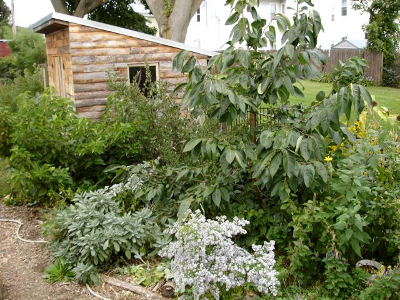
- Hidcote Blue dwarf running
comfrey and walking onions under jostaberries. The
jostaberries are tall enough that they can handle the understory, and
the comfrey and onions are vigorous enough that neither outcompetes the
other.
 Ramps, toothwort, and hog peanuts under
pawpaws. The ramps and toothwort take over in the early
spring, then die back just as the hog peanuts begin vining over the
ground.
Ramps, toothwort, and hog peanuts under
pawpaws. The ramps and toothwort take over in the early
spring, then die back just as the hog peanuts begin vining over the
ground.- Jerusalem artichokes and hog peanuts. The Jerusalem artichokes are tall enough and grow fast enough in the spring that the nitrogen-fixing hog peanuts don't choke them out, and both need to be dug at the same time in the fall to harvest the tubers.
- Comfrey and mint.
Toensmeier planted this in his much-travelled alley since the two
vigorous growers can handle quite a lot of abuse.
Although it's not a
polyculture, I was also intrigued by so-called fodder banks --- dense
plantings of trees and shrubs that are coppiced one or more times per
year to produce leaves for livestock or people. Toensmeier
planted littleleaf linden, edible-leaf mulberry, and fragrant spring
tree to produce people food, but I've been planning a similar system
with mulberries to feed the chickens in their pastures.
| This post is part of our Paradise Lot lunchtime series.
Read all of the entries: |
Or explore more posts by date or by subject.
About us: Anna Hess and Mark Hamilton spent over a decade living self-sufficiently in the mountains of Virginia before moving north to start over from scratch in the foothills of Ohio. They've experimented with permaculture, no-till gardening, trailersteading, home-based microbusinesses and much more, writing about their adventures in both blogs and books.
Want to be notified when new comments are posted on this page? Click on the RSS button after you add a comment to subscribe to the comment feed, or simply check the box beside "email replies to me" while writing your comment.
- Remove comment