Dividing up The Dirty Life
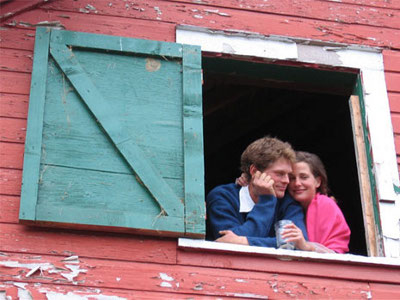 "This book is the story of
two love affairs that interrupted the trajectory of my life: one with
farming --- that dirty, concupiscent art --- and the other with a
complicated and exasperating farmer I found in State College,
Pennsylvania."
"This book is the story of
two love affairs that interrupted the trajectory of my life: one with
farming --- that dirty, concupiscent art --- and the other with a
complicated and exasperating farmer I found in State College,
Pennsylvania."
This is my opportunity
to admit that I read chick lit from time to time, but find 99% of it so
unsatisfying I swear off ever trying another book in the genre.
The trouble isn't even that the women are totally outside my frame of
reference, talking about name brand handbags the way I glow about
cucurbits and pollinators. The real issue is that these novels
are supposed to be love stories that trump my own, but the authors'
idea of wish fulfillment doesn't hold a candle to my real life. I
always compare the storied love interest to my own husband and find the
fictional heroes sadly lacking.
My Mark still trumps the
Mark in The Dirty Life, but at least I can see the
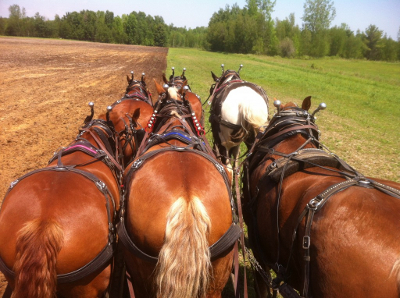
latter's appeal. When visiting our heroine in New York, he chafes
at her city life, but finally finds a facet he enjoys:
 Which is all a long way of
saying --- if you're a romantically-inclined homesteader, you'll love The
Dirty Life.
Which is all a long way of
saying --- if you're a romantically-inclined homesteader, you'll love The
Dirty Life.But what if you want something more solid? Don't worry, there are thought-provoking themes threaded through the humor and nail-biting plot. For example, take Kristin's analysis of Mark's theory on economics:
"[Mark would] like to imagine a farm where
no money traded hands, only goodwill and favors. He had a theory
that you had to start out by giving stuff away --- preferably big
stuff, worth, he figured, about a thousand dollars. At first, he
said, people are discomfited by such a big gift. They try to make
it up to you, by giving you something big in return. And then you
give them something else, and they give you something else, and pretty
soon nobody is keeping score. There is simply a flow of things
from the place of excess to the place of need. It's personal, and
it's satisfying, and everyone feels good about it. This guy is
completely nuts, I thought. But what if he's right?"
 Hopefully you've hunted down
your copy of The
Dirty Life and
are trying to decide if it's worth cracking open. This post is
your incentive to go for it! We'll be discussing the prologue and
part one next Wednesday, but I suspect that, like me, you will have
gulped down the whole book without being able to take a break. I
hope you enjoy it as much as I did.
Hopefully you've hunted down
your copy of The
Dirty Life and
are trying to decide if it's worth cracking open. This post is
your incentive to go for it! We'll be discussing the prologue and
part one next Wednesday, but I suspect that, like me, you will have
gulped down the whole book without being able to take a break. I
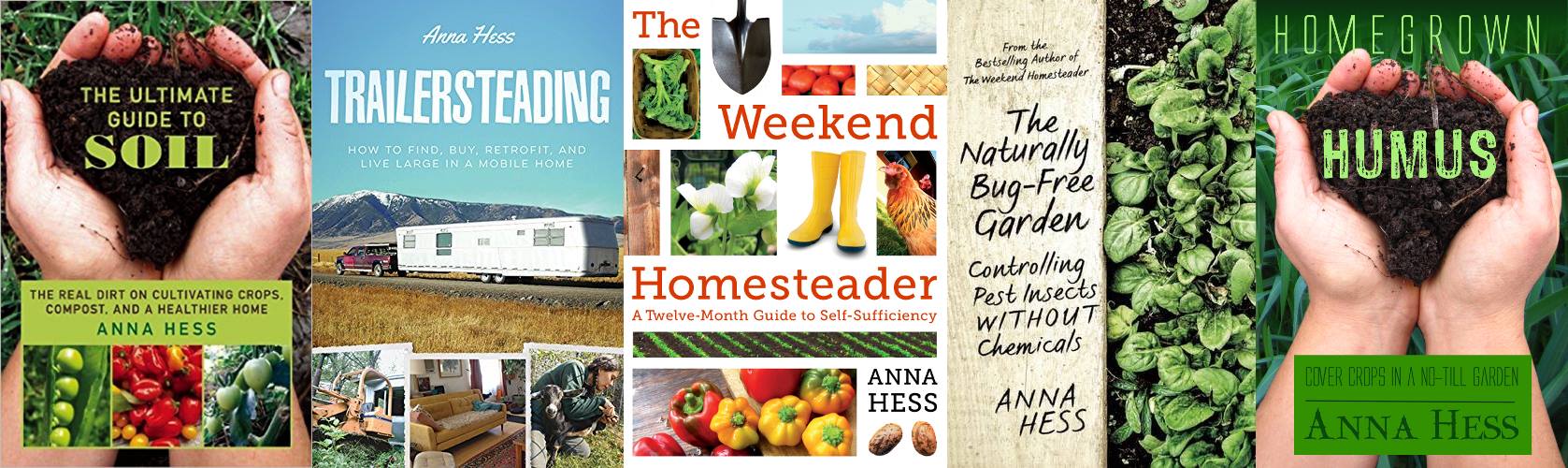
hope you enjoy it as much as I did.While you're hunting down books, don't forget to check out my paperback, with fun and easy projects to make self-sufficiency less daunting.
Or explore more posts by date or by subject.
About us: Anna Hess and Mark Hamilton spent over a decade living self-sufficiently in the mountains of Virginia before moving north to start over from scratch in the foothills of Ohio. They've experimented with permaculture, no-till gardening, trailersteading, home-based microbusinesses and much more, writing about their adventures in both blogs and books.
Want to be notified when new comments are posted on this page? Click on the RSS button after you add a comment to subscribe to the comment feed, or simply check the box beside "email replies to me" while writing your comment.
I actually read this book last month. The thing I liked the most about the book was it's acknowledgment of the strain that is inherent with working with your spouse on a farm. Also, that in the end you are growing food that couldn't be purchased--food that is so real that it doesn't exist anywhere but in our own gardens anymore. We don't farm commercially but we do raise almost all of our own meat, with orchards, gardens, and timber products on a tiny little 1 1/2 acres. This book took what we are trying to do for our family to an unbelievable scale for their community. Honestly I don't know how it is possible--but it does point out kharma (which is important but be careful to only give what you can afford to not attach strings to), and I do believe that by staying out of debt and working hard it is at least TRYable.